
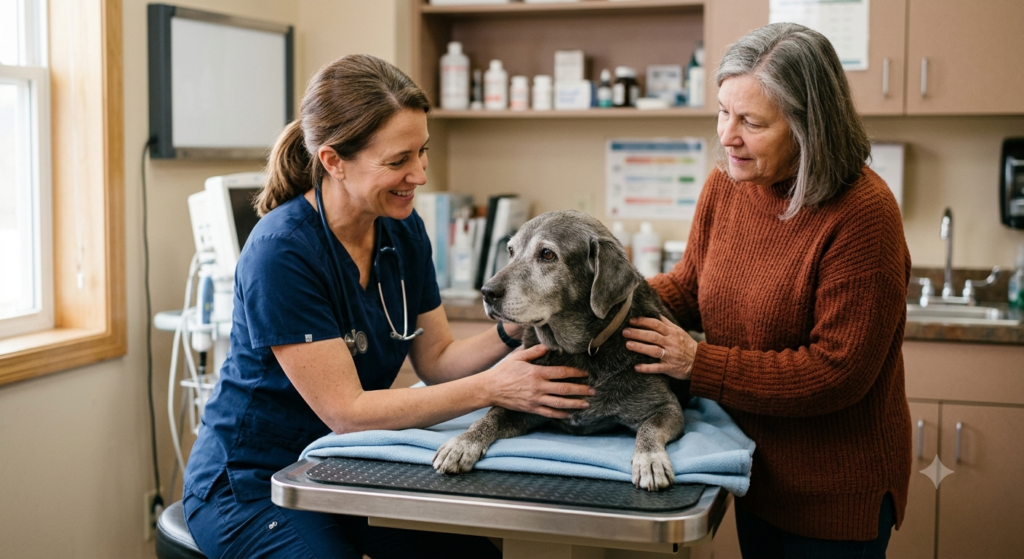
Watching a pet move from their playful middle years into their senior chapter is one of the quieter shifts of pet ownership. It happens gradually, a little more sleeping, a little less enthusiasm for stairs, until one day you realize your companion is officially a senior. At Dixie Animal Hospital, we work with Mississauga families through every stage of that transition, and this guide walks through what aging actually looks like in dogs and cats, what senior wellness visits involve, and how to keep your companion comfortable for as many good years as possible.
What Counts as a Senior Pet?
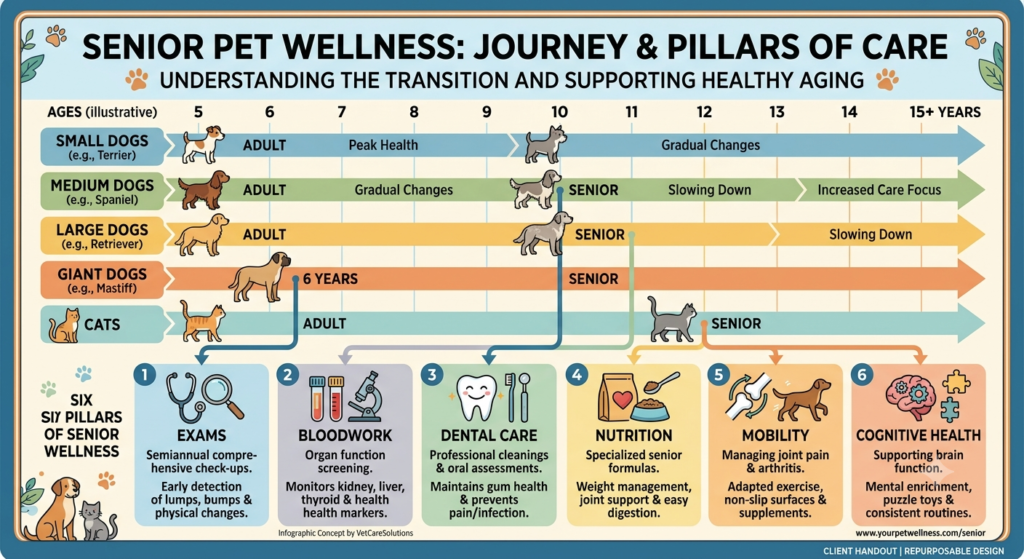
Age alone does not tell the whole story. Small dogs and cats are generally considered senior around 10 to 12 years, while large and giant breed dogs often reach that stage closer to 6 or 7 years because their bodies age faster. According to the American Animal Hospital Association, senior dogs and cats now make up nearly half of the overall pet population, a reflection of how much longer pets are living thanks to better nutrition and preventive medicine.
That longer lifespan is good news, but it also means more years where age-related conditions can quietly develop. Aging itself is not a disease. It is a life stage that deserves its own care plan, the same way puppyhood or kittenhood does.
Recognizing the Signs of Aging in Dogs and Cats
Owners often notice small changes long before they mention them at an appointment. Watch for the following:
- Slower movement or stiffness, especially after resting or first thing in the morning
- Cloudy eyes or reduced night vision, which can make pets more hesitant in dim rooms
- Weight changes, either gradual gain from slowing metabolism or unexplained loss
- Increased thirst or urination, which can point to kidney or endocrine changes
- Bad breath or visible tartar, often the first sign of dental disease
- Disorientation or changes in sleep patterns, which may signal cognitive decline
- Reduced interest in play or social interaction, sometimes mistaken for a personality shift
None of these changes are things to simply wait out. The American Veterinary Medical Association notes that behavior changes in senior pets often stem from discomfort, sensory decline, or disease rather than personality shifts, which is exactly why each one is a signal worth discussing at your pet’s next visit.
Senior Pet Care Services in Mississauga
Our senior pet care services are built around a single idea: catching problems while they are still manageable rather than after they become emergencies. A senior care plan typically covers several connected areas of health.
Senior Wellness Exams and Bloodwork
Twice-yearly exams, rather than the annual visit typical for younger adult pets, give our veterinarians a clearer picture of gradual change. Bloodwork, urinalysis, and blood pressure screening help detect kidney disease, diabetes, thyroid imbalance, and early organ changes before symptoms become obvious at home. Establishing a baseline while a pet is still healthy makes it far easier to spot a meaningful shift later.
Dental Care for Senior Pets
Periodontal disease becomes more common with age and can quietly affect appetite, comfort, and even heart and kidney health if bacteria enter the bloodstream. Our dental care protocols include pre-anesthetic bloodwork so older pets can undergo cleanings and extractions safely. For cat owners specifically, our guide on feline dental health explains why cats tend to hide oral pain particularly well.
Nutrition and Weight Management
Senior metabolisms slow, and lean muscle mass naturally declines with age. Our nutritional counseling team builds feeding plans around joint-supporting nutrients, easily digestible protein, and portion control to prevent the extra weight that worsens arthritis and heart strain.
Arthritis and Mobility Support
Joint pain is one of the most under-reported conditions in aging pets, largely because the changes creep in slowly. Multimodal pain management, weight control, and home modifications such as ramps or orthopedic bedding can meaningfully improve daily comfort for a stiff or arthritic pet.
Cognitive Health and Behavior Changes
Confusion, nighttime pacing, house soiling after being reliably trained, or staring blankly at walls can all point to cognitive dysfunction, a condition with real similarities to dementia in people, according to Cornell’s Riney Canine Health Center. Pets showing signs of disorientation also face a higher risk of wandering off during a moment of confusion, which is one more reason permanent identification through pet microchipping matters even more once a pet reaches their senior years.
Geriatric Pet Care Near Me: What a Senior Visit Actually Looks Like
Pet owners searching for geriatric pet care near me are usually looking for a clinic that treats aging as a specialty rather than an afterthought. A thorough senior visit at our pet wellness exams appointments includes a full physical assessment covering weight, coat condition, joint flexibility, heart and lung sounds, and abdominal palpation, paired with a conversation about any behavior or appetite changes you have noticed at home. That combination of hands-on exam and owner observation is often what catches a subtle problem early.
Senior Dog vs. Senior Cat Checkups: A Comparison
| Aspect | Senior Dogs (7+ years, earlier for large breeds) | Senior Cats (10+ years) |
|---|---|---|
| Exam frequency | Every 6 months | Every 6 months |
| Most common conditions | Arthritis, dental disease, obesity, heart murmurs | Kidney disease, hyperthyroidism, dental disease |
| Screening priorities | Joint mobility, weight, bloodwork, blood pressure | Bloodwork, urinalysis, blood pressure, thyroid panel |
| Behavior watch points | Stiffness, reluctance on stairs, house soiling | Reduced grooming, hiding, litter box changes |
| Nutrition focus | Joint-supporting, calorie-controlled diets | High-quality protein, kidney-conscious formulas |
Real Patient Case Study: Bailey’s Story
Bailey, a 12-year-old Labrador retriever, came in for a routine senior wellness exam after his owner mentioned he had been slower to get up in the mornings. A physical exam revealed mild joint stiffness in both hips, and senior bloodwork picked up early kidney values that had not yet caused any outward symptoms. Because the changes were caught during a proactive visit rather than an emergency one, our veterinary team was able to start Bailey on a joint-support protocol and a kidney-conscious diet right away. Six months later, at his follow-up exam, Bailey’s mobility had visibly improved and his bloodwork had stabilized. His case is a good example of why twice-yearly senior exams matter: the goal is to find problems while they are still easy to manage.
Common Health Conditions in Toronto Senior Pet Care
Pet owners across the Toronto senior pet care landscape encounter a fairly consistent list of age-related conditions, and Mississauga pets are no exception. Arthritis, chronic kidney disease, dental disease, hyperthyroidism in cats, heart disease, and certain cancers all become more common with age. Chronic kidney disease alone affects a large share of older cats, and according to Cornell’s Feline Health Center, cats often show no obvious symptoms in the early stages, which is precisely why routine senior bloodwork matters so much. Our in-house diagnostics allow us to run bloodwork, urinalysis, and imaging on-site, which shortens the time between noticing a symptom and getting an answer. When a senior pet does experience a sudden decline such as collapse, repeated vomiting, or difficulty breathing, that situation moves from a wellness concern to an urgent one, and our emergency pet care guide outlines what to watch for and how to respond.
Practical Tips for Supporting Your Aging Pet at Home
- Keep a consistent routine. Predictable feeding, walking, and sleeping schedules reduce anxiety in pets showing early cognitive changes.
- Modify the environment for mobility. Non-slip rugs over hardwood, ramps for the car or bed, and raised food bowls all ease strain on aging joints.
- Watch body condition, not just weight. A visible waist and easily felt ribs matter more than a single number on a scale.
- Keep dental home care going. Brushing and dental-specific treats remain useful even after professional cleanings.
- Track changes in a simple log. Noting appetite, water intake, and activity level over weeks makes it much easier for your veterinarian to spot a real trend versus a bad day.
- Do not dismiss slowing down as “just old age.” Many signs owners attribute to normal aging are actually treatable pain or disease.
Frequently Asked Questions
-
At what age is my dog or cat considered a senior pet?
Cats and small dog breeds are generally considered senior around 10 to 12 years old, while large and giant breed dogs reach that stage earlier, often by 6 or 7 years, because bigger dogs tend to age faster. Your veterinarian can give you a more precise timeline based on your pet’s breed, size, and overall health history during a wellness visit.
-
What does a senior pet wellness exam include?
A senior wellness exam includes a full physical assessment of weight, coat, joints, heart, lungs, and abdomen, along with bloodwork, urinalysis, and blood pressure screening. The goal is to establish a health baseline and catch early signs of arthritis, kidney disease, thyroid imbalance, or other age-related conditions before they progress into more serious problems.
-
How often should senior pets see the vet?
Most senior pets benefit from wellness visits every six months instead of the annual schedule typical for younger adults. Twice-yearly checkups allow veterinarians to track gradual changes in bloodwork, weight, and mobility over time, which makes it far easier to catch a developing condition early rather than after it becomes advanced or symptomatic.
-
What are the early signs of cognitive decline in older pets?
Early signs include disorientation, staring at walls, house soiling after being reliably trained, changes in sleep-wake cycles, increased vocalization at night, and reduced interest in family interaction. These behaviors are sometimes dismissed as normal aging, but they can indicate cognitive dysfunction, a condition that is manageable with early veterinary support and environmental adjustments.
-
Can senior pets still receive dental cleanings safely?
Yes. Age alone does not rule out anesthesia for a dental cleaning. Pre-anesthetic bloodwork identifies any underlying concerns, and anesthesia protocols are tailored to each pet’s individual health status. Many senior pets benefit significantly from dental care that removes chronic infection and pain, often becoming noticeably more comfortable and energetic afterward.
-
What nutrition changes help aging dogs and cats?
Senior pets typically benefit from diets with controlled calories, high-quality digestible protein, and joint-supporting nutrients such as omega-3 fatty acids. Because metabolism slows and muscle mass naturally declines with age, portion sizes often need adjustment even if activity levels have not changed much, which is why a personalized nutrition plan matters more in the senior years.
-
How can I find geriatric pet care near me in Mississauga?
Look for a clinic that offers dedicated senior wellness protocols, twice-yearly exam scheduling, on-site diagnostics, and veterinarians experienced in managing arthritis, cognitive changes, and chronic disease. Dixie Animal Hospital provides comprehensive geriatric pet care for Mississauga dogs and cats, combining physical exams, bloodwork, and personalized care plans under one roof.
-
What health conditions are most common in senior pets?
The most common senior conditions include arthritis, dental disease, chronic kidney disease, hyperthyroidism in cats, heart disease, obesity, and cognitive dysfunction. Many of these conditions develop gradually and share early warning signs, which is why regular senior wellness exams and bloodwork play such an important role in catching them before they significantly affect quality of life.
Aging is not something to fix, it is a stage worth supporting, one wellness visit at a time.