
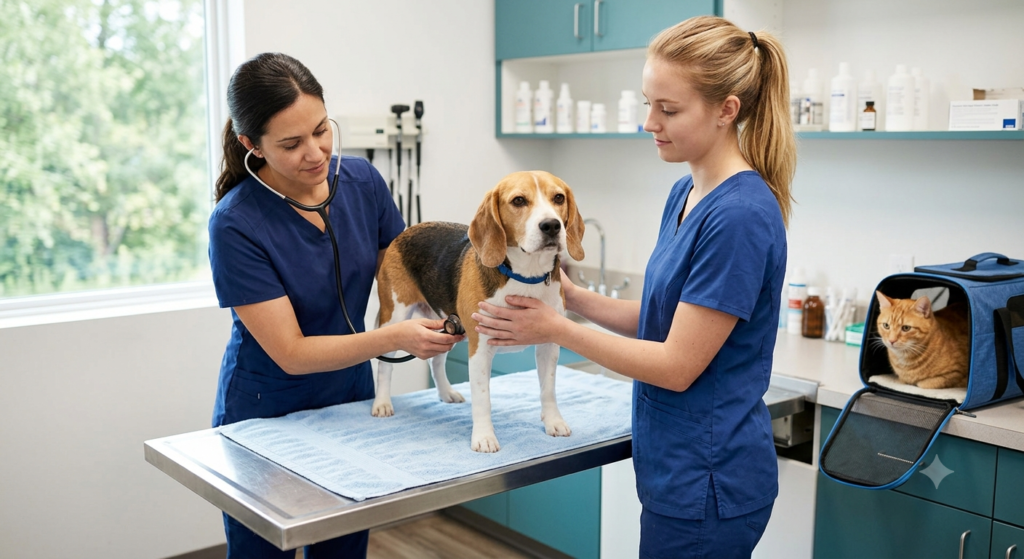
A wellness exam is easy to put off when a pet seems perfectly fine. No limping, no vomiting, no obvious reason to worry, so the appointment slides from this month to next month to whenever. The trouble is that dogs and cats are experts at hiding illness, and by the time a symptom is visible at home, a condition has often been developing quietly for a while. Pet wellness exams in Mississauga exist to catch exactly that gap, and the team at Dixie Animal Hospital builds every wellness visit around finding small issues long before they become expensive, painful, or urgent ones.
This guide covers what actually happens during a wellness exam, how often dogs and cats really need one, what the research says about preventive care, and how a routine checkup in Mississauga differs from a sick visit.
What Actually Happens During a Pet Wellness Exam
A wellness exam is not a quick glance and a vaccine. It is a structured, head to tail physical assessment paired with a conversation about your pet’s daily life.
The visit typically starts with a review of diet, activity level, water intake, litter box or bathroom habits, and any subtle behaviour changes you may have noticed at home. This history matters as much as the hands on exam, since owners often notice small shifts long before they show up as a clinical sign.
The physical exam itself covers:
- Eyes, ears, and mouth, checking for discharge, redness, tartar buildup, and early gum disease
- Heart and lungs, listened to for irregular rhythms, murmurs, or abnormal breathing sounds
- Abdomen, palpated to check organ size and detect any unusual masses
- Skin and coat, examined for lumps, parasites, dryness, or signs of allergy
- Joints and mobility, assessed for stiffness, pain response, or early arthritis
- Weight and body condition score, tracked over time to catch gradual weight gain or loss
Depending on age and risk factors, the veterinarian may also recommend bloodwork, a fecal parasite check, or a urinalysis to look at what cannot be seen from the outside.
Why Pet Wellness Exam Near Me Searches Are Climbing in Mississauga
Search volume for pet wellness exam near me and similar phrases has grown steadily across the Greater Toronto Area, and it is not hard to see why. More households have adopted pets in recent years, more owners are aware that annual vaccines alone are not the same as a full wellness visit, and there is growing awareness that catching a problem early is almost always less stressful and less involved than treating an advanced one.
Mississauga’s mix of established neighbourhoods and newer developments also means a wide range of pet ages and backgrounds walking through clinic doors, from young puppies just settling into a new home to senior dogs who have lived their whole lives in the same house. A wellness checkup near me search usually reflects a simple, sensible instinct: get ahead of problems instead of reacting to them.
How Often Does My Pet Need a Wellness Checkup?
Puppies and Kittens
Young animals need more frequent visits during their first year, typically every few weeks during the vaccination series, since their immune systems and bodies are changing quickly. These early visits are also when a veterinarian screens for congenital issues, parasites, and developmental concerns while they are easiest to address. If you are bringing home a new puppy or kitten, our guide on what to expect at your pet’s first vet visit walks through that first appointment in detail.
Adult Dogs and Cats
Once a pet reaches adulthood, most veterinary organizations recommend a minimum of one wellness exam per year. According to guidelines jointly published by the American Animal Hospital Association and the American Veterinary Medical Association, annual health examinations should be considered the baseline for apparently healthy adult dogs and cats, with more frequent visits recommended depending on individual risk factors, breed, and lifestyle.
Senior Pets
Pets are generally considered senior somewhere around seven years of age, though this varies by breed and size. At this stage, most veterinarians recommend moving to a twice yearly schedule rather than an annual one, since age related conditions can progress quickly between visits. Our senior pet care team builds these biannual exams around the specific risks that come with aging, including arthritis, kidney disease, and cognitive changes.
The Case for Preventive Care: What the Research Shows
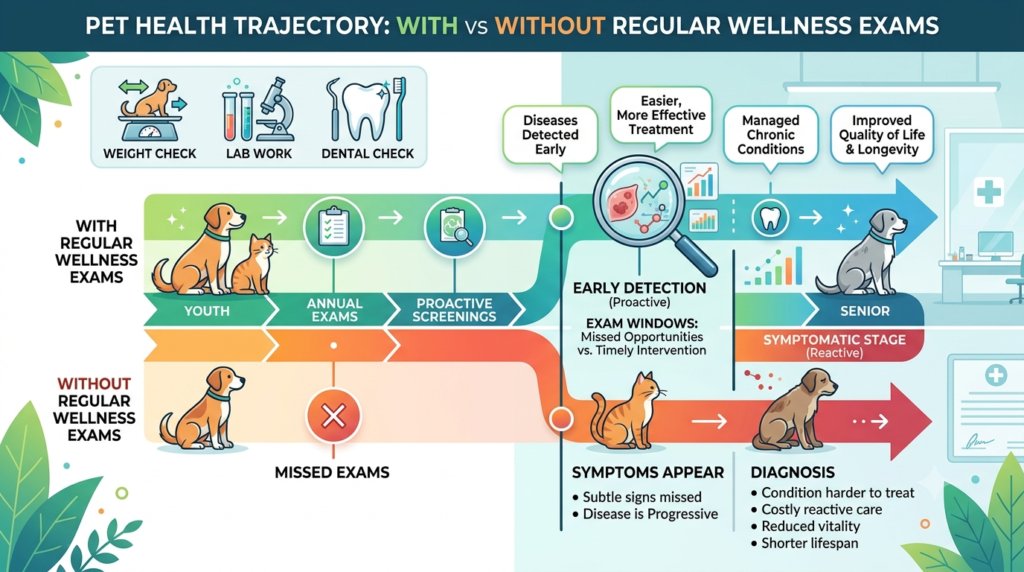
The push for regular wellness exams is not just a scheduling preference. It reflects a body of veterinary research showing that early detection genuinely changes outcomes. The American Animal Hospital Association notes that cancer is the leading cause of illness and death in older pets, affecting roughly half of dogs and close to a third of cats over the age of ten. Many of these cases are found incidentally, during a routine physical exam or bloodwork panel, well before an owner notices anything unusual at home.
This is the core argument for wellness visits: a pet that looks completely normal on the outside can still be in the early stages of something serious, and a hands on exam combined with baseline lab work is often the only way to catch it while treatment options are still broad and outcomes are still favourable.
Pet Wellness Exams Mississauga: What’s Included Beyond the Physical
A comprehensive wellness visit often extends past the physical exam itself, especially for adult and senior pets. Depending on age, breed, and history, this can include baseline bloodwork to establish normal values for future comparison, a urinalysis to screen kidney and bladder health, and a fecal exam to check for intestinal parasites.
Parasite screening deserves particular attention in this region. The Companion Animal Parasite Council recommends preventive physical examinations at least every six to twelve months alongside routine fecal testing, since young animals and pets with outdoor access face a higher risk of picking up intestinal parasites that often show no obvious symptoms at home.
Nutrition counseling and a discussion of weight trends round out most wellness visits, since body condition changes are one of the earliest and most reliable indicators that something in a pet’s health has shifted.
Wellness Checkup Near Me vs. Sick Visit: What’s the Difference
Pet owners sometimes assume a wellness exam and a sick visit are more or less the same appointment. In practice, they serve different purposes and are structured differently.
| Feature | Wellness Exam | Sick Visit |
|---|---|---|
| Purpose | Prevent and detect early | Diagnose and treat a specific problem |
| Pet’s condition | Appears healthy | Showing symptoms |
| Timing | Scheduled in advance, routine | Booked as needed, often urgent |
| Typical focus | Full body assessment, baseline testing | Targeted exam based on the complaint |
| Outcome | Establishes a health baseline | Diagnosis and treatment plan |
Neither visit replaces the other. A wellness exam builds the baseline that makes a future sick visit faster and more accurate to diagnose, since the veterinarian already has recent bloodwork, weight history, and a known normal to compare against.
How Breed and Lifestyle Shape a Wellness Exam
No two wellness exams look exactly alike, because no two pets carry the same risk profile. Large and giant breed dogs, common across many Mississauga households, are watched more closely for early joint changes and hip or elbow issues, since these conditions tend to progress silently for months before a limp becomes noticeable. Brachycephalic breeds such as French Bulldogs and Pugs get extra attention on airway sounds and breathing effort, given their higher baseline risk of respiratory strain.
Lifestyle factors matter just as much as breed. A dog that spends most weekends at an off leash park has a different parasite and injury risk profile than one that mostly stays in a condo and takes short leash walks. Multi-pet households, recent additions to the family, and pets who travel or board regularly all shift what a veterinarian pays closer attention to during the exam and what preventive recommendations make sense going forward. This is part of why a wellness visit works better as a conversation than a checklist, since the same age and breed can still call for a different plan depending on how a pet actually lives day to day.
Annual Checkup for Pets Mississauga: Local Considerations
Local geography plays a role in what a Mississauga veterinarian looks for during a wellness visit. The city’s numerous off leash parks, waterfront trails, and green spaces mean regular exposure to ticks, fleas, and other pets, which raises the relevance of parasite screening and prevention discussions during almost every checkup. Dense residential living also means indoor cats are common, which shifts some of the wellness conversation toward weight management and environmental enrichment rather than outdoor exposure risks.
Seasonal changes across the Greater Toronto Area also affect timing. Spring and early summer wellness visits often include a closer look at flea and tick prevention plans, while cooler months are a common time to review weight and activity levels after a change in routine.
A Mississauga Pet Owner’s Story
One long time client brought in an eight year old Labrador for what she expected to be a routine annual visit. The dog was eating normally, playing in the yard, and showing no outward signs of illness. During the physical exam, our veterinarian noted a slightly enlarged abdomen and recommended baseline bloodwork along with an ultrasound. The results showed an early stage mass on the spleen, caught well before it had grown large enough to cause the abdominal pain, lethargy, or sudden collapse that often bring these cases in as emergencies. Because it was found early, surgical removal was straightforward, and the dog recovered fully. The owner has said more than once that if she had skipped that “unnecessary” annual visit, the outcome could have looked very different. It is a story that plays out in some form at almost every veterinary clinic, and it is the clearest possible illustration of why a pet that seems fine still benefits from being checked.
Combining Your Pet’s Wellness Visit With Other Preventive Care
Because a wellness exam already involves a full physical assessment, it is a natural time to handle other preventive care at once. Many owners use the same appointment to update core and non-core vaccinations and parasite prevention, review nutrition and weight goals, and ask about any behaviour changes they have noticed since the last visit. Bundling these together into one visit reduces the number of separate trips and gives the veterinary team a fuller picture of your pet’s health in a single sitting.
What to Expect at Your Pet’s Wellness Exam at Dixie Animal Hospital
A pet wellness exam at our clinic starts with a conversation about how your pet has been doing at home, followed by the full head to tail physical assessment described above. Depending on age and health history, our veterinarians may recommend bloodwork, a fecal check, or other baseline testing during the same visit. Before you leave, you will get a clear summary of any findings, along with recommendations tailored to your pet’s age, breed, and lifestyle rather than a generic checklist.
Frequently Asked Questions About Pet Wellness Exams in Mississauga
-
How long does a typical pet wellness exam take?
Most wellness exams run between twenty and forty minutes, depending on your pet’s age, temperament, and whether additional testing like bloodwork or a fecal check is being done during the same visit. Puppies, kittens, and senior pets often need a bit more time, since there is more history to review and, in senior pets, more baseline testing typically involved.
-
Does my indoor cat still need an annual wellness exam?
Yes. Indoor cats are just as susceptible to dental disease, weight related conditions, kidney changes, and age related illness as cats with outdoor access. Because cats are especially skilled at masking discomfort, a regular physical exam is often the only way subtle changes in weight, mobility, or organ function are caught before they become noticeable at home.
-
What should I bring to my pet’s wellness exam?
Bringing any previous medical records, a list of current medications or supplements, and a recent stool sample if requested in advance is helpful. It is also worth jotting down any behaviour changes you have noticed, even minor ones like drinking more water or seeming less interested in play, since these small details often guide what the veterinarian checks more closely.
-
Is bloodwork always part of a wellness exam?
Not always for young, healthy adult pets, but it becomes increasingly common as pets age. Baseline bloodwork establishes normal values that make future results easier to interpret, and for senior pets it is typically recommended at every visit to screen for early organ or metabolic changes before symptoms appear at home, giving the veterinary team a much clearer picture over time.
-
Can a wellness exam catch problems that blood tests alone would miss?
Yes. Many findings, including heart murmurs, joint pain, dental disease, skin masses, and abdominal changes, are picked up through the physical exam itself rather than bloodwork. This is why a hands on assessment and lab testing are considered complementary rather than interchangeable parts of a complete wellness visit, and why skipping one in favour of the other leaves real gaps in coverage.
-
How is a wellness exam different from a vaccine appointment?
A vaccine appointment can be brief and narrowly focused, while a full wellness exam includes a complete physical assessment, a review of diet and behaviour, and often baseline testing. Many owners combine both into a single visit, since vaccines are frequently updated during a scheduled wellness exam rather than as a separate standalone appointment.
-
My pet seems perfectly healthy. Why book a wellness exam at all?
Pets are instinctively good at hiding signs of illness, which is a survival trait carried over from their wild ancestors. A pet that appears completely normal at home can still be in the early stages of dental disease, arthritis, or an internal condition that a physical exam and simple lab work can catch well before it becomes obvious or urgent.
-
Do senior pets really need two wellness exams a year instead of one?
Yes, this is a widely recommended standard among veterinary organizations. Age related conditions such as arthritis, kidney disease, and certain cancers can progress meaningfully within just six months in an older pet, so a biannual schedule gives the veterinary team a much better chance of catching and managing changes early.
A pet that seems fine today does not need to convince anyone of that with a clean bill of health. Regular wellness exams are simply how “seems fine” gets confirmed, and how anything hiding underneath gets found while there is still time to act.