
A collar can slip off. A tag can fall into the grass at an off leash park and never be seen again. Pet microchipping in Mississauga has become one of the simplest ways local pet owners protect their dogs and cats from becoming a permanent statistic in a shelter system, and the team at Dixie Animal Hospital sees the difference it makes every week, from panicked calls about an escaped cat to happy reunions that happen within hours instead of days.
This guide walks through what a microchip actually is, why Mississauga pet owners are searching for it more than ever, how the procedure works for dogs and cats, and what local bylaws and national databases mean for keeping your pet’s information current.
What Pet Microchipping Actually Involves
A microchip is a small radio frequency identification transponder, roughly the size of a grain of rice, placed just beneath the skin between a pet’s shoulder blades. It carries no battery and no GPS tracking function. It simply sits dormant until a handheld scanner passes over it, at which point it transmits a unique identification number.
That number means nothing on its own. It only becomes useful once it is linked, through a national pet recovery database, to the owner’s current contact information. This is the part many pet owners misunderstand, and it explains why some microchipped pets still never make it home: the chip works perfectly, but the registration behind it was never completed or was left outdated after a move or a new phone number.
The implantation itself takes only a few seconds and feels similar to a routine vaccination injection. No sedation or anesthesia is required for a standalone appointment, though many owners choose to combine it with another procedure while their pet is already at the clinic.
Why Pet Microchipping Near Me Searches Are Rising in Mississauga
Search interest in pet microchipping near me has grown steadily across the Greater Toronto Area, and it tracks closely with two local trends: a growing population of rescue and shelter adoptions, and a rise in pets who travel with their families for work relocations, vacations, or cross border moves.
Mississauga’s mix of dense residential neighbourhoods, busy roads, and a large number of off leash parks along the waterfront and near Dixie and Eglinton also plays a role. A startled dog can cover a surprising distance in a short amount of time, and a cat that slips out an open door in an unfamiliar building may not find its way back on its own. Owners searching for pet microchipping near me are usually looking for a fast, low stress way to close that gap in protection, and a general practice animal hospital is typically the most convenient place to have it done alongside an existing wellness visit.
The Numbers Behind Microchip Recovery Rates
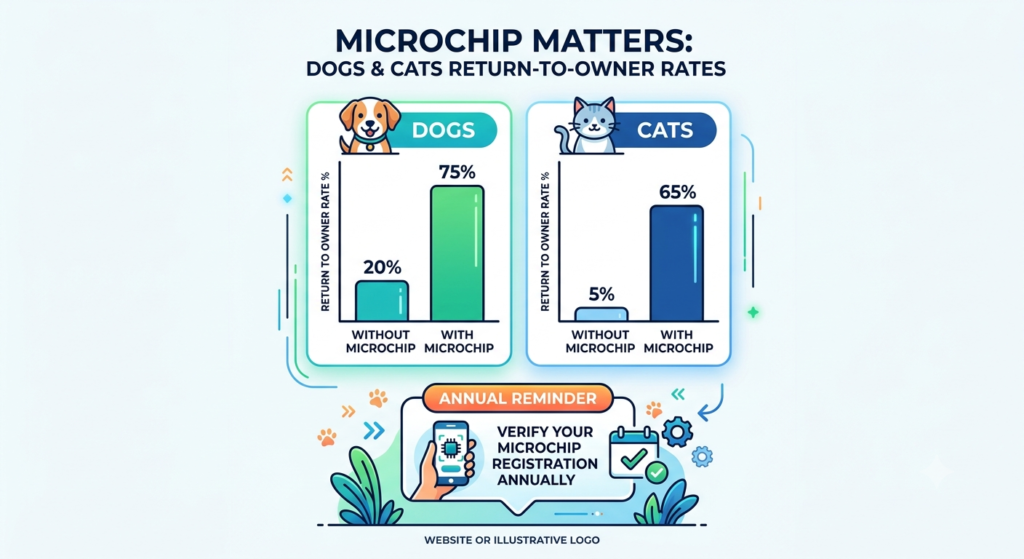
The case for microchipping is not just anecdotal. According to research published by the American Veterinary Medical Association, roughly one in three pets will go missing at some point during their lifetime. A widely cited study of thousands of stray animals across dozens of shelters found that microchipped dogs were reunited with their owners at more than double the rate of dogs without chips, and the gap was even wider for cats, where microchipped cats were reunited at a rate many times higher than cats with no identification at all.
The same research consistently points to one weak link: registration. A meaningful share of microchips scanned in shelters turn out to be linked to disconnected phone numbers or old addresses. The chip itself cannot expire, but the data behind it needs occasional attention.
Dog Microchip Mississauga: What to Expect for Puppies and Adult Dogs
Best Age to Microchip a Puppy
Most veterinarians recommend microchipping during one of the early puppy wellness visits, often at the same appointment as a vaccination round. There is no minimum weight requirement that rules out young puppies, and getting it done early means one less thing to schedule later.
Microchipping Adult and Rescue Dogs
Adult dogs, including recent rescues and dogs adopted from outside the region, benefit just as much. A dog microchip Mississauga appointment for an adult dog is identical to the puppy procedure. Many rescue organizations already implant a chip before adoption, but the registration is sometimes still listed under the shelter or a previous foster, which makes updating the record right after adoption an important first step for new owners.
Cat Microchip Mississauga: Why Indoor Cats Need One Too
Cat owners sometimes assume microchipping is unnecessary if their cat never goes outside. In practice, indoor cats make up a large share of lost pet cases, usually after slipping out during a move, a home renovation, a delivery at the door, or a moment of panic during a fire alarm or a visit from unfamiliar guests. Unlike dogs, cats rarely wear collars consistently, which makes a cat microchip Mississauga appointment one of the only reliable forms of permanent identification available for them.
Microchip vs. Collar and ID Tags: Which Is Better?
The honest answer is that they serve different purposes and work best together, not as substitutes for one another.
| Feature | Collar & ID Tag | Microchip |
|---|---|---|
| Visible to anyone who finds the pet | Yes, instantly readable | No, requires a scanner |
| Can fall off or be removed | Yes | No |
| Works if the pet is found by a neighbour | Yes | Only if brought to a clinic or shelter |
| Requires a vet or shelter scan | No | Yes |
| Permanent for the pet’s lifetime | No | Yes |
| Needs owner information kept current | Depends on tag | Yes, through the registry |
A collar with a current tag gives anyone who finds a pet an immediate way to make contact. A microchip is the backup that still works once the collar is long gone, which is why most veterinary organizations recommend using both together rather than relying on either alone.
Universal Scanners and Chip Compatibility
Not all microchips have always been readable by every scanner. Older chips sold in North America used a mix of frequencies, and a clinic or shelter with an outdated scanner could miss a chip entirely, even with the pet standing right in front of them. This was a real problem for years, and it is part of why the American Animal Hospital Association has pushed for universal scanner adoption across veterinary clinics and animal shelters.
Today, the vast majority of Mississauga and GTA area clinics, including Dixie Animal Hospital, use universal scanners capable of reading ISO standard chips regardless of the original brand or manufacturer. This matters if your pet was chipped elsewhere, adopted from another province, or came from a breeder or rescue outside Ontario. If you are ever unsure whether your pet’s existing chip is ISO compliant or scannable at a Canadian clinic, a quick check during a wellness visit will confirm it.
Common Microchip Myths, Debunked
A surprising number of pet owners hesitate to microchip based on ideas that are not actually accurate.
- “My pet never leaves the yard, so it does not need one.” Fences get left open, gates get pushed through, and dog walkers occasionally lose grip on a leash. Most lost pet cases start with an ordinary moment, not a dramatic escape.
- “A microchip lets me track my pet’s location.” As covered above, a chip has no GPS capability. It only identifies a pet once it has already been found and brought somewhere to be scanned.
- “Microchipping requires anesthesia and downtime.” A standalone microchip appointment needs neither. It is a quick injection with no sedation required.
- “Once it is implanted, there is nothing else to do.” The chip itself needs no maintenance, but the registration linked to it does. An unregistered or outdated chip is far less useful than a properly maintained one.
Clearing up these misconceptions is often the difference between a pet owner booking an appointment this week versus putting it off indefinitely.
Pet Microchip Canada: Registration, Databases, and Keeping Info Updated
Every pet microchip Canada owners register goes into a national recovery database rather than a single local list, which matters if a pet ever goes missing while traveling outside Mississauga. The registration step is separate from the implantation itself, and it is the owner’s responsibility to keep contact details current after any move, phone number change, or transfer of ownership.
For families who travel internationally with a pet, or who plan to import or export an animal, the Canadian Food Inspection Agency requires an ISO compliant microchip for pets entering Canada from a number of countries, and many destination countries have similar requirements before issuing a health certificate for pets leaving. Confirming that a chip meets ISO standards, and that registration is complete, is worth doing well before any travel date.
Mississauga Pet Licensing and Microchipping: Two Different Requirements
A common point of confusion among local pet owners is whether a microchip replaces the need for a city pet licence. It does not. The City of Mississauga requires every dog and cat to carry a valid, visible licence tag on its collar regardless of microchip status, and pet owners can face a fine if a pet is found without one. A microchip and a city licence work as complementary layers of identification rather than one replacing the other, and Mississauga’s own guidance to residents specifically recommends microchipping cats as an added layer of protection during emergencies like an open door or an accidental escape.
A Mississauga Family’s Reunion Story
One family who visits our clinic regularly for wellness care had their cat slip out during a moving day chaos, when the front door was propped open for hours while furniture was carried in and out. The cat, an indoor only tabby with no collar habit, was gone before anyone noticed. A neighbour found the cat two streets over the next morning and brought her to a nearby veterinary clinic to be scanned. Because the microchip registration had been updated just months earlier during a routine visit, the family received a call within the hour. The cat was home again before the movers had even finished unloading the truck. It is a small story, but it reflects exactly the scenario microchipping is designed for: an ordinary, unplanned moment where a pet ends up somewhere unfamiliar with no way to explain who they belong to.
Combining Microchipping With Other Veterinary Visits
Because the procedure takes only seconds and requires no special preparation, many owners choose to add it onto an appointment they already have scheduled. It pairs naturally with core vaccination and parasite prevention visits, since your pet is already at the clinic and comfortable with the visit. Pets undergoing spay and neuter surgery are also commonly chipped during the same anesthetic event, which means one less separate appointment and one less moment of stress for a nervous pet.
What to Expect During Your Pet’s Microchipping Appointment at Dixie Animal Hospital
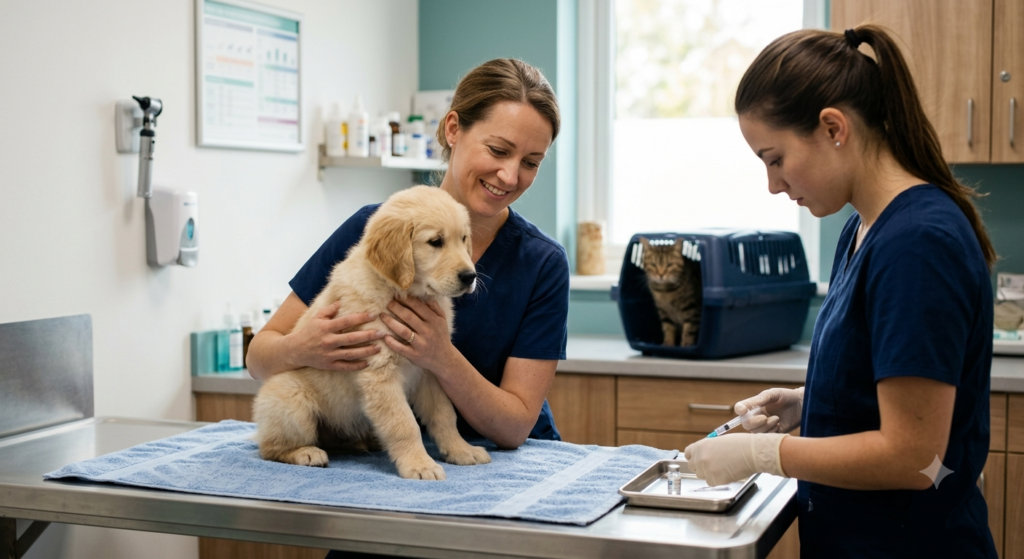
A pet microchipping appointment is brief and straightforward. The chip is loaded into a sterile, single use applicator and placed with a quick injection beneath the skin between the shoulder blades. Most pets barely react, and there is no recovery time needed. Before you leave, our team confirms the chip is scanning correctly and walks you through completing the registration so your contact information is linked to the chip from day one.
Frequently Asked Questions About Pet Microchipping in Mississauga
-
Does microchipping hurt my pet?
Most pets show only a brief flinch, similar to a routine vaccination. The needle used is slightly larger than a standard vaccine needle, but the injection itself takes a second or two, and no sedation is required for a standalone appointment. Cats and small dogs sometimes react a little more than larger breeds, but discomfort passes almost immediately with no lasting effects.
-
Can a microchip move around inside my pet’s body?
Very rarely, a chip can shift slightly from the original placement site, most often in the first few weeks after implantation while tissue settles. This does not affect how the chip functions or how it is scanned. Our team checks chip placement and scan accuracy at follow up wellness visits as part of a routine physical exam.
-
Is a microchip the same as a GPS tracker?
No, and this is one of the most common misunderstandings about the technology. A microchip has no battery, no GPS function, and cannot track a pet’s live location on a map at any point. It only stores a unique ID number that becomes readable when a scanner is passed directly over it, typically at a veterinary clinic, shelter, or animal control facility, not remotely.
-
What happens if I move or change my phone number?
Your pet’s microchip number stays the same for life, but the registration linked to it needs to be updated any time your contact details change, including a new address, a new phone number, or a change in ownership. This can usually be done directly through the registry’s website in a few minutes, and our team can help confirm your information is current during any wellness visit.
-
Do indoor only cats really need a microchip?
Yes. A large share of lost cat cases involve cats that were considered strictly indoor pets before an accidental escape through an open door, a torn screen, or a moment of panic. Since cats rarely wear collars consistently, a microchip is often the only reliable form of permanent identification they carry.
-
Does a microchip replace my Mississauga pet licence?
No, these are two separate requirements. The City of Mississauga requires a valid, visible pet licence tag on the collar of every dog and cat regardless of microchip status, and pet owners can be fined if a pet is found without one. A microchip and a city licence serve different purposes and are meant to work together as layered protection, not as substitutes for one another.
-
How long does the microchip last?
A microchip is designed to function for the entire lifetime of a pet, with no battery to replace, no signal to lose, and no physical maintenance required once it is implanted. It will scan correctly for as long as your pet lives. The only ongoing responsibility on the owner’s side is keeping the linked registration information accurate and current after any change in contact details.
-
Can I get my pet microchipped without booking a separate appointment?
In most cases, yes. Microchipping can typically be added onto an existing wellness exam, vaccination visit, or surgical procedure such as a spay or neuter, since it takes only a moment and requires no additional preparation or recovery time. Simply mentioning it when you book, or asking during check in, is usually all that is needed to have it done the same day.
A microchip cannot promise a pet will never go missing, but it gives every lost pet story in Mississauga the best possible chance of ending the way it should, back home.