
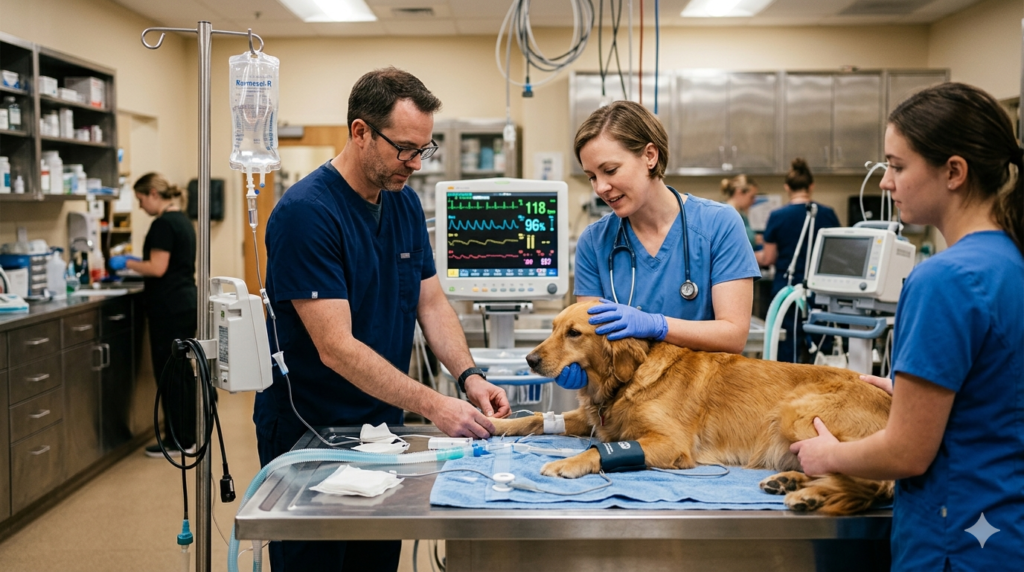
Nobody plans a pet emergency. It happens at the worst possible time — your dog swallows a sock at 10 PM on a Saturday, your cat starts breathing heavily on a holiday Monday, or your senior pet collapses in the middle of the night. In those moments, the difference between a good outcome and a devastating one often comes down to one thing: whether you already know where to go.
If you live in Mississauga and you have never looked into emergency vet care options before something goes wrong, this guide is for you. It covers what qualifies as a genuine pet emergency, how to evaluate an animal hospital in Mississauga for urgent situations, what happens when you walk through the door, and how to prepare before that moment ever arrives.
Because the reality is simple — when your pet is in distress, you should not be Googling. You should already have a plan.
What Actually Counts as a Pet Emergency
Not every health concern warrants an urgent visit. A minor scratch, a single episode of vomiting after eating too fast, or a slightly runny eye can usually wait for a scheduled appointment. But certain symptoms demand immediate attention, and recognizing them quickly can save your pet’s life.
According to the American Veterinary Medical Association, these situations require emergency veterinary care without delay: difficulty breathing or choking, severe bleeding that does not stop within five minutes, suspected poisoning or toxin ingestion, loss of consciousness or collapse, seizures lasting more than a few minutes, inability to urinate or defecate, a swollen or distended abdomen (which may indicate bloat, a life-threatening condition in dogs), severe trauma such as being hit by a vehicle, and eye injuries with visible changes to the eye.
There are also grey-area symptoms that are not immediately life-threatening but should not wait until tomorrow. Persistent vomiting or diarrhea for more than 24 hours, sudden refusal to eat, pronounced lethargy or disorientation, visible pain when walking or being touched, and laboured breathing that worsens over several hours — all of these warrant a call to your veterinary clinic, and in many cases, a same-day visit.
The challenge for most pet owners is that animals mask pain. A dog that seems mildly off at dinner might be in serious trouble by midnight. When in doubt, it is always safer to call your clinic and describe what you are seeing than to wait and see.
Why “Emergency Vet Near Me” Is the Wrong Time to Start Searching
This is a pattern we see regularly at Dixie Animal Hospital. A pet owner arrives in a panic, having driven across Mississauga — sometimes from Brampton or Etobicoke — because the first few clinics they called were either closed, full, or unable to handle urgent cases. By the time they walk in, they are stressed, their pet has been in distress for an extended period, and valuable time has been lost.
The emergency veterinary care market is now valued at over $20 billion globally, and demand has risen sharply since the pandemic-era surge in pet ownership. Yet despite this growth, access remains uneven. Many general practice clinics close by 6 PM on weekdays and do not offer weekend coverage. Standalone emergency hospitals exist, but they are often located far from residential areas, charge significantly higher fees, and — critically — have no prior relationship with your pet.
That is why the most important decision you can make for your pet’s emergency care is to make it before the emergency happens. Identify a veterinary clinic near you that offers extended hours, has on-site diagnostic equipment, and can handle both routine wellness and urgent situations. A clinic that already has your pet’s medical records, vaccination history, and baseline bloodwork can make faster, more accurate decisions when every minute matters.
What to Look for in an Animal Emergency Clinic
Not all clinics that advertise emergency care deliver the same level of service. When evaluating your options for urgent pet care in Mississauga, these are the factors that matter most.
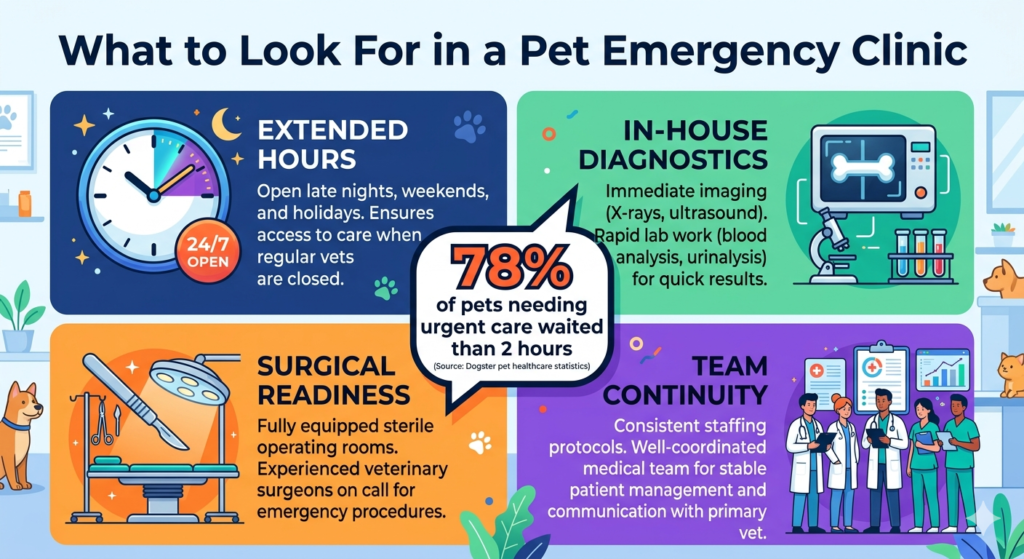
Extended and consistent hours. A clinic that closes at midnight is far more useful for the average pet owner than one that closes at 5 PM — most emergencies happen outside of standard business hours. Confirm that emergency hours apply seven days a week, including weekends and statutory holidays. Ask whether walk-ins are accepted for urgent cases or whether appointments are required even in emergencies.
On-site diagnostic capability. When a pet arrives in distress, time spent waiting for external lab results is time lost. A clinic equipped with in-house diagnostics — digital X-rays, ultrasound imaging, and rapid bloodwork — can identify internal injuries, organ failure, toxin exposure, and other critical conditions within minutes rather than days. This is not a luxury. In emergency medicine, it is the standard of care.
Surgical readiness. Some emergencies require immediate surgical intervention — a foreign body obstruction, internal bleeding, or a complicated labour. A facility with a fully equipped surgical suite staffed by experienced veterinarians and licensed technicians can move from diagnosis to pet surgery without the delays involved in transferring your pet to a separate hospital.
Team continuity. This is the factor that standalone emergency hospitals cannot replicate. When the veterinarian who stabilizes your pet at 9 PM on a Wednesday is the same team that managed their dental cleaning last month or their vaccination update last year, that continuity of care improves decision-making. The team already knows your pet’s temperament, medical history, and drug sensitivities. There is no intake lag, no information gap, and no risk of critical details getting lost in a referral.
Urgent Care vs. Emergency Care: Understanding the Difference
Pet owners often use these terms interchangeably, but in veterinary medicine, they describe different levels of severity — and understanding the distinction helps you respond appropriately.
Emergency care addresses life-threatening situations that require immediate stabilization. Think: difficulty breathing, uncontrolled bleeding, seizures, suspected poisoning, severe trauma. These are cases where delays of even 30 minutes can change the outcome. Emergency care typically involves triage, IV fluid therapy, oxygen support, emergency surgery, and intensive monitoring.
Urgent care covers conditions that are serious and need professional attention the same day, but are not immediately life-threatening. A deep cut that has stopped bleeding, persistent vomiting without other alarming symptoms, a sudden limp, an ear infection that has worsened overnight, or eye discharge with swelling — these qualify as urgent. They cannot safely wait three days for a scheduled opening, but they also do not require the full trauma protocol.
The practical advantage of choosing a full-service Mississauga veterinary hospital is that you do not need to make this distinction yourself in a moment of stress. You bring your pet in, the clinical team performs triage, and they determine the appropriate level of care based on what they find — not based on what category you assigned to the problem over the phone.
| Situation | Category | Examples | What to Do |
|---|---|---|---|
| Immediately life-threatening | Emergency | Choking, collapse, uncontrolled bleeding, toxin ingestion, seizures, bloat | Go to the clinic immediately — do not wait |
| Serious but stable | Urgent | Persistent vomiting, deep wound, sudden limp, painful abdomen, eye injury | Call the clinic, come in the same day |
| Minor or stable | Routine | Single vomiting episode, mild lethargy, minor scratch, slight limp | Schedule a regular appointment |
How to Prepare Your Household for a Pet Emergency
Preparation takes 20 minutes and can save your pet’s life. Here is what every Mississauga pet owner should have in place before trouble arrives.
Know your clinic’s emergency contact and location. Save the number in your phone contacts — not just on a fridge magnet. For families who use Dixie Animal Hospital, that number is (905) 270-5444, and the clinic is at 1760 Dundas St E, Mississauga, ON L4X 1L8. Make sure every adult in the household has this information.
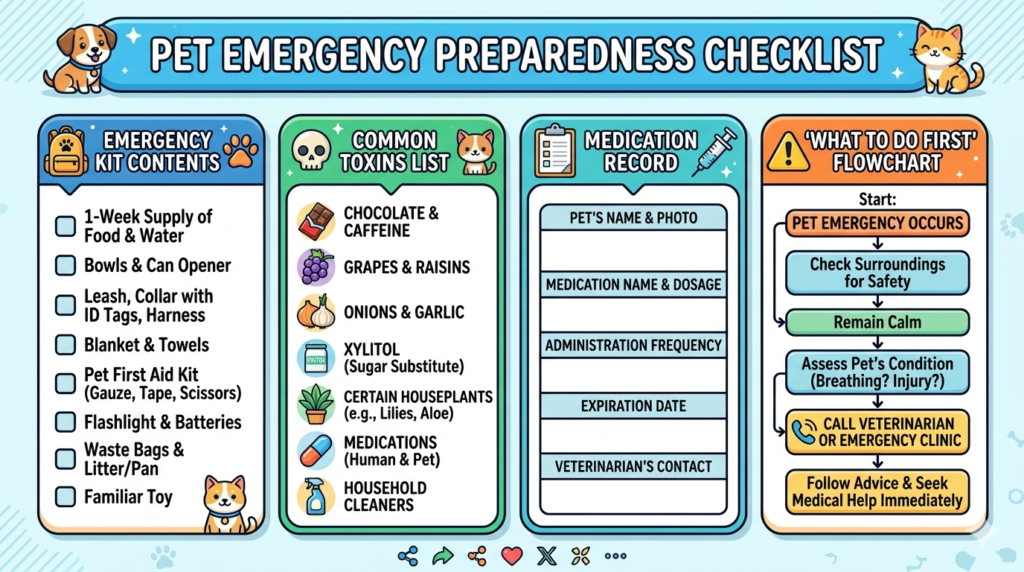
Keep a pet emergency kit at home. This does not need to be elaborate. Include gauze and adhesive tape, hydrogen peroxide (for inducing vomiting only when directed by a veterinarian), a digital thermometer, a clean towel or blanket for wrapping an injured pet, and your pet’s current medication list. A basic kit gives you something to work with during the drive to the clinic.
Maintain current medical records. If your pet’s records are at a clinic you have never visited in an emergency, you are starting from zero. A clinic that manages your pet’s preventive care — annual exams, bloodwork, vaccine records — already has the baseline data they need to make fast, informed decisions during a crisis. This continuity is one of the strongest arguments for choosing a single full-service clinic over separate providers.
Know the common household toxins. The Ontario Poison Centre can assist with human exposure, but for pets, the most common culprits are chocolate, xylitol (found in sugar-free gum and some peanut butters), grapes and raisins, certain houseplants (lilies are particularly dangerous for cats), human medications including NSAIDs and acetaminophen, and antifreeze. Knowing this list in advance can help you act faster if you catch your pet ingesting something suspicious.
Consider pet identification. In an emergency involving an escaped or disoriented pet, a microchip dramatically increases the chances of being reunited. It takes seconds to implant and provides permanent identification that collars and tags cannot.
A Real Case: Why Preparation Changes Outcomes
A family recently brought their dog into our clinic with what they initially described as mild gastrointestinal discomfort. They had noticed vomiting earlier in the day and increasing lethargy by evening. Rather than waiting until morning, they called us. Because we had their dog’s complete health history on file — including a recent wellness exam and baseline blood panels — our veterinarian was able to compare current diagnostic results against the dog’s established normals within minutes of arrival.
The team identified the issue, developed a treatment plan, and stabilized the pet that same evening. The family later told us that the staff walked them through every option clearly, never pressured them into unnecessary procedures, and followed up with phone calls over the following days to check on the dog’s recovery. That level of coordinated, transparent care is only possible when a clinic already knows the patient.
Had they gone to an unfamiliar emergency facility, the intake process alone would have added time. No prior records. No baseline comparisons. No relationship with the attending veterinarian. The medical outcome might have been the same — but the experience, the speed, and the family’s confidence in the care their pet received would have been very different.
What Happens When You Arrive at an Emergency Vet Clinic
Understanding the process in advance reduces anxiety for both you and your pet. Here is a typical emergency visit sequence at a well-equipped Mississauga veterinary hospital.
Triage. The clinical team assesses your pet’s condition immediately — heart rate, respiratory rate, temperature, pain level, and mental status. This determines how urgently your pet is seen relative to other patients in the facility.
Diagnostics. Based on the triage findings, the veterinarian orders the necessary tests. Digital X-rays reveal fractures, foreign objects, or fluid accumulation. Ultrasound helps evaluate organ condition. Rapid bloodwork identifies organ dysfunction, infection markers, or toxin exposure. Results typically come back within the same visit when the clinic has in-house laboratory capability.
Stabilization and treatment. This may include IV fluids, pain medication, oxygen therapy, wound management, toxin decontamination, or emergency surgery. The veterinarian explains each step, discusses the treatment plan and expected outcomes, and provides a transparent estimate before proceeding.
Discharge and follow-up. You receive clear instructions for home care, medications with dosing schedules, and information about when to return for follow-up. A clinic that values long-term patient relationships — not just single-visit revenue — will check in after the visit to ensure recovery is progressing as expected.
Caring for Senior Pets in Emergency Situations
Older pets are disproportionately represented in emergency visits. Conditions like kidney failure, cardiac events, diabetic crises, and acute arthritis flare-ups tend to escalate faster in animals over seven years old, and their response to treatment can be less predictable than in younger pets.
If you have a senior dog or cat, establishing a relationship with a clinic that offers dedicated senior pet care — including biannual wellness exams, organ function monitoring, and pain management protocols — means the team already has a longitudinal view of your pet’s health trends. When a crisis hits, they are not interpreting a single snapshot. They are comparing today’s results against months or years of documented baselines, which dramatically improves diagnostic accuracy and treatment planning.
Research from the Canadian Veterinary Medical Association reinforces that the veterinarian-client-patient relationship — built through ongoing, proactive care — is the foundation for effective emergency medicine, particularly in geriatric patients.
Making the Call: When to Go and When to Phone First
If your pet is showing any of the emergency symptoms listed earlier — difficulty breathing, collapse, severe bleeding, suspected poisoning, seizures, or inability to urinate — go directly to the clinic. Do not call first. Do not wait to see if it improves. Time is the variable you cannot get back.
For urgent but non-life-threatening situations, calling the clinic first is the better approach. Describe the symptoms clearly and honestly. The team can advise you on whether to come in immediately or whether the situation can safely be monitored for a few hours. This phone conversation also allows the clinic to prepare for your arrival, which speeds up the process when you walk through the door.
If you are searching for a vet clinic near me that handles both scheduled and urgent cases, confirming the clinic’s hours, walk-in policy, and diagnostic capabilities in advance saves critical time later.
For a broader guide to evaluating veterinary clinics in Mississauga — including what to look for in communication, diagnostic capability, and long-term care — this resource on finding a trustworthy vet clinic in Mississauga covers the topic in depth.
Frequently Asked Questions
-
What qualifies as a pet emergency versus something that can wait?
Any situation involving difficulty breathing, uncontrolled bleeding, loss of consciousness, seizures, suspected poisoning, severe trauma, or inability to urinate is a genuine emergency requiring immediate veterinary attention. Conditions like persistent vomiting lasting more than a day, sudden limping, or worsening eye discharge are urgent and should be seen the same day. A single vomiting episode or minor scratch with no other symptoms can usually wait for a scheduled visit.
-
How do I find an emergency vet in Mississauga that is open late?
Look for a full-service animal hospital that offers extended evening and weekend hours, including statutory holidays. Confirm that their urgent care hours apply to walk-in emergency visits, not just pre-booked appointments. Clinics with on-site diagnostics, surgical capability, and an established medical team will provide faster, more coordinated emergency care than facilities where your pet has never been seen before.
-
What should I bring when rushing my pet to an emergency vet?
Bring your pet’s vaccination records and any current medications in their original containers. If your pet ingested something, bring the packaging or a photo of the substance. A clean towel or blanket helps keep an injured pet warm and calm during transport. If your pet has an existing relationship with the clinic, your records will already be on file, which saves critical time during intake.
-
Is it better to go to a standalone emergency hospital or a full-service clinic for urgent pet care?
A full-service clinic that offers both routine and emergency care has a significant advantage: they already know your pet. Medical records, vaccination history, baseline bloodwork, and drug sensitivities are immediately accessible. Standalone emergency hospitals provide capable care, but the intake process is longer, there is no prior relationship with the attending vet, and follow-up care typically requires transferring back to your regular clinic.
-
How can I prepare my household for a pet emergency before one happens?
Save your veterinary clinic’s phone number in every adult’s phone contacts. Assemble a basic pet first aid kit with gauze, tape, a thermometer, and a list of your pet’s medications. Learn the common household toxins that are dangerous for pets. Most importantly, choose a full-service veterinary clinic for your pet’s ongoing care so that when an emergency arises, the team already has the baseline health data they need to act quickly and accurately.
-
Are senior pets more likely to need emergency veterinary care?
Yes. Pets over seven years old are more susceptible to acute health events including organ failure, cardiac incidents, diabetic emergencies, and severe arthritis pain. These conditions escalate faster in older animals and require more nuanced treatment. Regular wellness exams — ideally twice a year for senior pets — help detect underlying conditions early and provide veterinarians with the longitudinal data needed to manage a crisis effectively when one occurs.
Dixie Animal Hospital is located at 1760 Dundas St E, Mississauga, ON L4X 1L8. For urgent concerns, call (905) 270-5444 or email petcare@dixieanimalhospital.ca.