
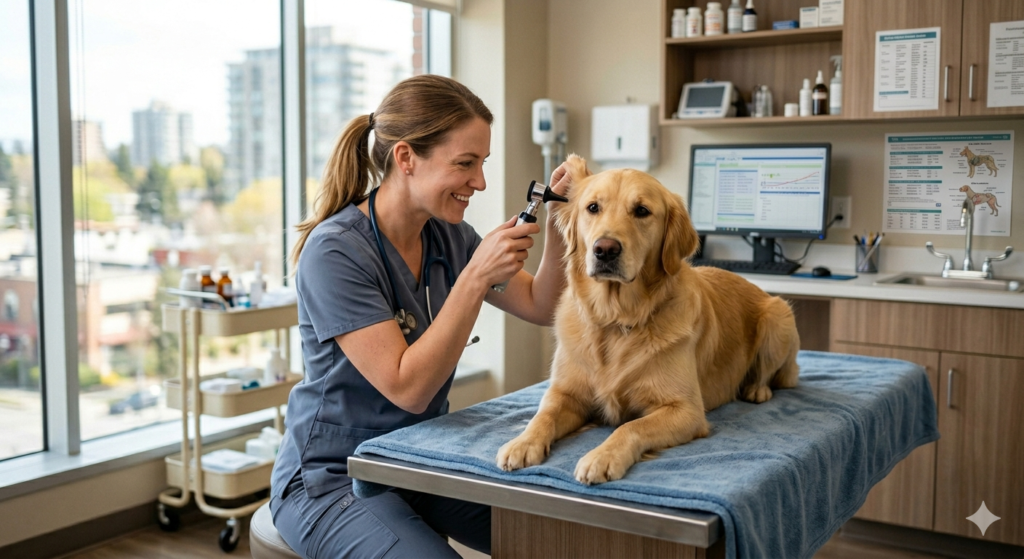
If you have recently moved to Mississauga, adopted your first pet, or simply feel like your current clinic is not the right fit anymore, the search for a veterinarian who genuinely earns your trust can feel overwhelming. A quick search returns dozens of options, but listings alone will not tell you which clinic actually delivers on its promises when your pet needs care the most.
At Dixie Animal Hospital, we hear this from new clients regularly — they tried one or two clinics before finding a team that communicated well, offered the services they needed, and treated their animal with real attention. That experience is more common than it should be, and it is exactly why a practical guide like this one exists.
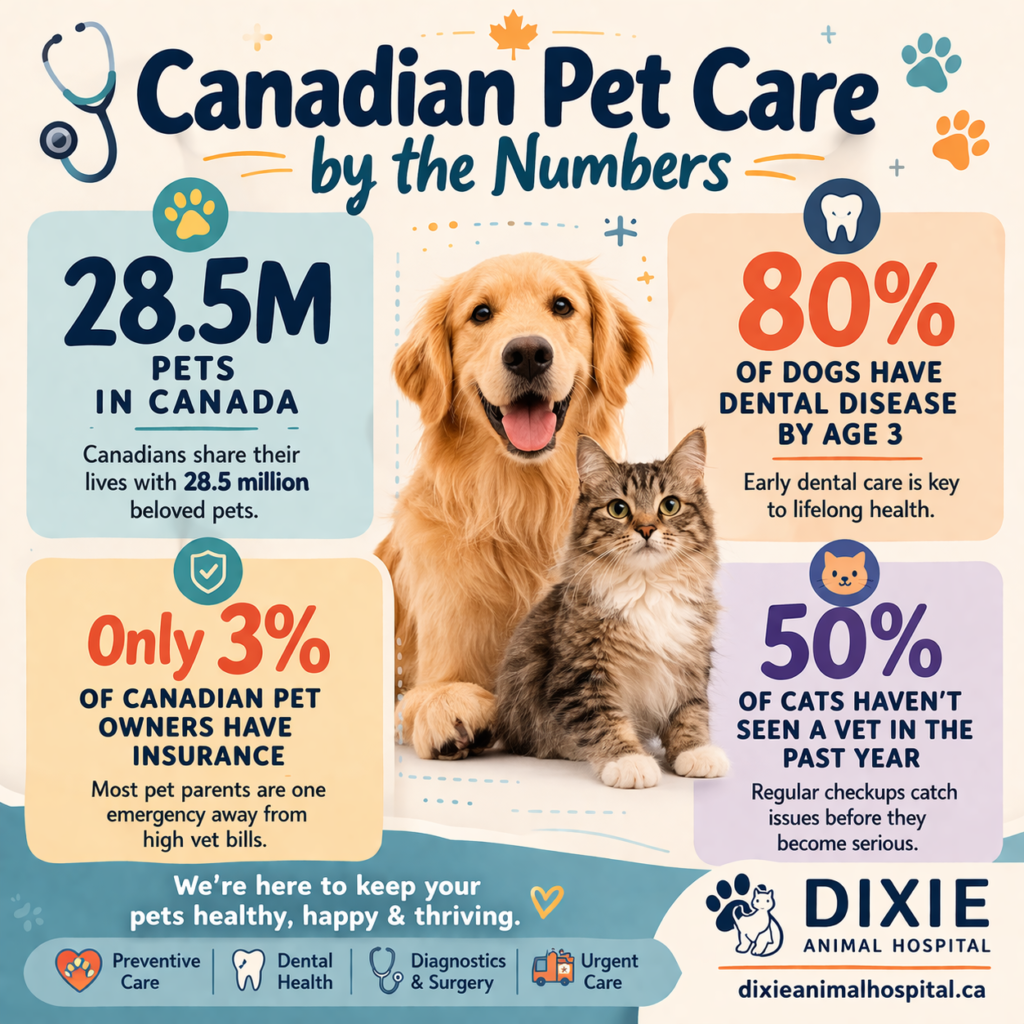
With over 28.5 million pets across Canada as of 2025, and roughly 60 percent of Canadian households owning at least one dog or cat, the demand for quality veterinary care has never been higher. Ontario alone has the largest concentration of pet owners in the country, yet finding the right veterinarian in Mississauga still comes down to asking the right questions and knowing what to look for.
This is not a generic checklist. It is built from real patterns we see in Mississauga pet ownership — what matters, what gets overlooked, and what separates a clinic that simply operates from one that genuinely cares.
Why Choosing the Right Veterinarian in Mississauga Matters More Than You Think
Most pet owners do not spend much time evaluating their veterinary clinic until something goes wrong. A puppy gets into chocolate on a Sunday night. A senior cat stops eating. A dog develops a limp that does not go away on its own. In those moments, the quality of your veterinarian becomes the single most important factor in the outcome.
Consider one case we handled recently: a family brought their dog in after noticing serious gastrointestinal issues that had been worsening for days. As they later described it, our staff were kind and compassionate, walked them through every option without pressure, provided a clear treatment plan to manage at home, and followed up with multiple phone calls to check on the dog’s progress. The symptoms settled. The family avoided a costly emergency referral. That is what a trusted animal hospital looks like in practice — not just reactive medicine, but proactive communication and genuine follow-through.
Mississauga is a sprawling city with a wide range of veterinary options, and the differences between clinics are not always obvious from the outside. Some operate as walk-in-only facilities with minimal diagnostic capability. Others look polished online but lack the staffing or equipment to handle anything beyond a routine checkup. The veterinarian in Mississauga you choose today will shape the healthcare trajectory your pet follows for years. That decision deserves more than a five-second scroll through map listings.
What a Full Service Vet Clinic Should Actually Offer
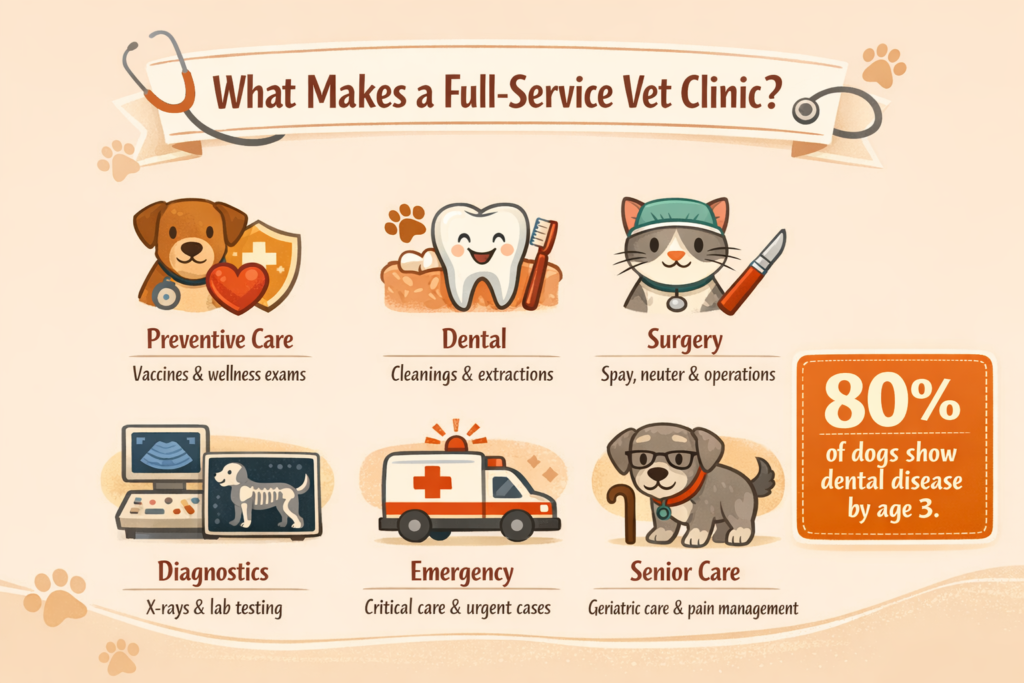
One of the first things to assess when choosing a vet clinic in Mississauga is the breadth of veterinary services available under one roof. Fragmented care — bouncing between a wellness clinic, a dental provider, and an emergency facility — creates gaps in your pet’s medical history and adds unnecessary stress for both the animal and the owner.
A genuinely comprehensive clinic should cover these areas without needing outside referrals for the majority of cases:
Preventive and wellness care. Annual exams, vaccinations and parasite prevention, weight assessments, and early disease screening. The Canadian Veterinary Medical Association emphasizes that the veterinarian-client-patient relationship — built through ongoing preventive visits — is the cornerstone of ethical and effective practice. A good clinic builds individualized plans rather than applying one-size-fits-all protocols.
Dental services. This is one of the most neglected areas of pet care, and the data backs that up. According to clinical research, 80 percent of dogs and 70 percent of cats show signs of periodontal disease by age three. Banfield Pet Hospital’s analysis of over three million patients found that 73 percent of dogs and 64 percent of cats had diagnosed dental issues — and dogs with advanced periodontal disease were 2.3 times more likely to develop chronic kidney disease. A clinic with professional dental capabilities — digital X-rays, ultrasonic cleaning, and extractions when necessary — can prevent infections that otherwise spread to the kidneys, liver, and heart. If you have been searching for a dog dentist near me, make sure the clinic performs dental procedures under proper anesthesia with full monitoring, not just a surface scrape.
Surgical capability. Whether your pet needs a routine procedure through a spay and neuter clinic Mississauga families rely on, or a more complex soft-tissue surgery, you want to know your clinic can handle it. Facilities that offer surgery on-site with modern anesthesia monitoring and dedicated recovery protocols save you from scrambling to find a surgical referral during a stressful moment. For a clear breakdown of what each procedure involves, this guide on the difference between spay and neuter covers the topic in detail.
Diagnostic technology. Ask whether bloodwork is processed in-house or sent to an external lab. Clinics with in-house diagnostics — digital X-rays, ultrasound, and rapid blood testing — deliver results during the same appointment. That speed matters enormously when your pet is visibly unwell and you need answers, not a two-day wait.
Geriatric care. A Canadian demographic study found that roughly 35 percent of cats and 33 percent of dogs in Canadian households are over eight years old — a greying pet population that mirrors human trends. Older pets develop conditions requiring closer monitoring and more nuanced treatment. A clinic offering dedicated senior pet care with biannual exams, arthritis management, and age-specific diagnostics makes a genuine difference in your aging companion’s quality of life.
Communication and Transparency: The Markers of a Trustworthy Clinic
Equipment and service lists matter, but the way a clinic communicates with you is equally revealing. Good veterinary communication directly affects your ability to follow through on treatment plans at home and to notice early warning signs between visits.
Here is what quality communication looks like in practice. The veterinarian explains what they found in language you actually understand — no jargon without context. They walk you through the recommended options before making a decision for you. They tell you what a test is for and what the results mean, rather than just handing you a printout. And when something is beyond their scope, they say so clearly and refer you to a specialist rather than guessing.
Red flags include clinics that rush through appointments without allowing questions, that push services without explaining why they are necessary, or that struggle to provide a clear estimate before a procedure. Transparency in treatment options and costs is not a bonus — it is a baseline expectation.
One family who has been bringing their dog to Dixie Animal Hospital for over eight years described the experience this way: consistently happy with the service and professionalism, particularly praising team members by name for their reliability over time. That kind of long-term relationship — where a family trusts the same team across nearly a decade of their pet’s life — does not happen by accident. It is built on thousands of small interactions where the clinic delivers what it promises.
Extended Hours and Emergency Access: A Factor Most People Underestimate
Pet emergencies do not follow business hours. A dog that inhales a foreign object at 10 PM or a cat showing sudden breathing difficulty on a holiday weekend needs care immediately — not the next morning.
When you are evaluating clinics, check whether their extended hours apply to both routine appointments and urgent situations. Many clinics advertise late hours but only for scheduled wellness visits, leaving you to drive across the GTA for an emergency vet Mississauga families can actually access during a crisis.
Having a single clinic that handles both your pet’s routine wellness and preventive care and urgent situations means the team already knows your animal’s medical history when something goes wrong. That continuity leads to faster, more accurate decisions in high-pressure moments — and it eliminates the problem of arriving at a strange emergency facility where nobody has seen your pet before.
The Ontario Veterinary Medical Association recommends pet owners confirm after-hours emergency protocols with their clinic before a crisis occurs, so there is no confusion when minutes count.
Vet Clinic Comparison: What to Look For at a Glance
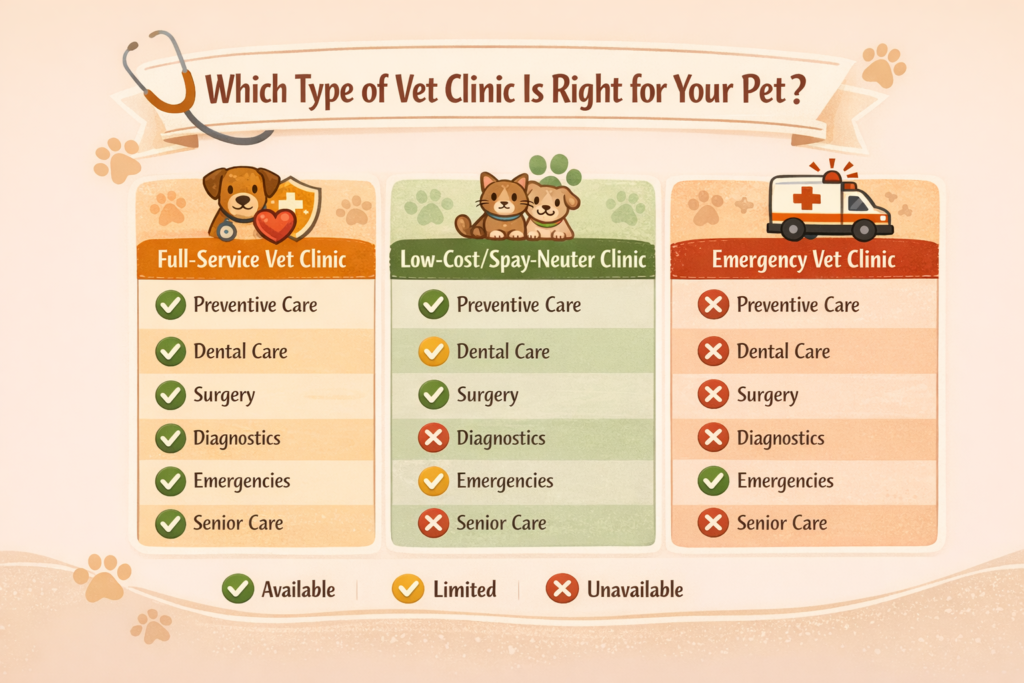
Not all clinics are structured the same way. This comparison breaks down the key differences between the three most common types of veterinary facilities in Mississauga, so you know what to expect before walking in.
| Feature | Basic Wellness Clinic | Standalone Emergency Hospital | Full-Service Animal Hospital |
|---|---|---|---|
| Preventive exams and vaccines | Yes | Limited or none | Yes |
| In-house diagnostics (X-ray, ultrasound, bloodwork) | Rarely | Yes | Yes |
| Dental care (cleaning, X-ray, extractions) | Rarely | Emergency only | Yes |
| Surgery (spay/neuter, soft-tissue) | Referred out | Emergency only | Yes |
| Senior and geriatric care programs | Basic | No | Yes |
| Urgent and emergency care | No | Yes | Yes (during extended hours) |
| Continuity of care (same team, same records) | Yes (limited scope) | No (unfamiliar team) | Yes (full scope) |
| Extended evening and weekend hours | Rarely | Yes (often 24/7) | Varies — confirm with clinic |
A full-service animal hospital that covers preventive, diagnostic, surgical, dental, and urgent care under one roof offers the strongest continuity and the fewest gaps in your pet’s medical history.
How to Evaluate Online Reviews Without Being Misled
Online reviews are useful, but they require a filter. A clinic with a handful of glowing five-star reviews and nothing else may not be telling the full story. A clinic with hundreds of reviews and an average above 4.5 is showing consistency over time and across different types of visits.
Pay attention to how the clinic responds to negative reviews. A defensive or dismissive reply is a warning sign. A calm, professional response that acknowledges the concern and offers resolution reflects a team that takes accountability seriously.
Look for reviews that mention specifics — follow-up calls after surgery, clear explanations of treatment options, staff who remember your pet’s name. Vague praise tells you less than concrete examples of care. According to the American Veterinary Medical Association, transparent communication and consistent follow-up are hallmarks of a quality veterinary practice — exactly the kind of details you should be scanning for in reviews.
The First Visit: What to Bring and What to Look For
Your first appointment at a new clinic is essentially an audition — for both sides. The clinic gets to learn about your pet, and you get to observe how they operate in real time.
Bring any existing medical records, vaccination history, a list of current medications, and notes about recent behaviour changes. If your pet has been treated at another clinic, request that records be transferred ahead of time so the new team has context from day one.
During the visit, pay attention to things that are easy to overlook in the moment. Is the waiting area clean and reasonably calm? Does the staff greet your pet with warmth and patience? Does the veterinarian spend adequate time on the exam, or does everything feel rushed? Are you given a chance to ask questions, and do you get clear, patient answers?
A good first visit should leave you feeling informed, not confused. If you walk out uncertain about what happened or why a specific test was recommended, that is information worth noting.
The Hidden Costs of Choosing the Wrong Clinic
Picking a clinic based on convenience alone often costs more in the long run. Canadian pet owners spent an average of $1,500 on veterinary care for dogs and $1,290 for cats in 2022 — and those figures climb significantly when preventive care is skipped or when conditions are caught late.
A clinic without in-house diagnostics means your pet’s bloodwork gets sent to an outside lab, adding days to the diagnosis timeline and often requiring a second visit to discuss results. A clinic without dental capabilities means a separate referral, a new intake process, and a separate anaesthesia event — all of which increase both cost and risk. A clinic that closes at 5 PM on weekdays forces you into an expensive standalone emergency facility when something goes wrong after dinner.
The math is straightforward: a vet clinic near me in Mississauga that can handle wellness, diagnostics, dental, surgery, and urgent care under one roof eliminates redundant consultations, reduces anaesthesia events, and catches conditions earlier. That is not just better medicine — it is better economics.
What Mississauga Pet Owners Often Overlook
A few things consistently catch pet owners off guard in this city. Parasite season in the GTA runs longer than most people assume — tick and flea prevention should be year-round, not just a summer concern. In Canada, only about 2 percent of dog owners actually brush their pet’s teeth daily, according to AVMA-cited research — which explains why dental disease is the most commonly diagnosed condition in veterinary clinics nationwide.
Then there is the insurance gap. Only around 3 percent of Canadian pet owners carry pet insurance, compared to 25 to 30 percent in the UK and nearly 50 percent in Sweden. That means the vast majority of Canadian families are covering veterinary costs entirely out of pocket — and 71 percent of those who visited an emergency vet in 2022 said the cost felt too high. Choosing a clinic that emphasizes preventive care, early detection, and transparent communication is one of the most practical ways to manage long-term costs without sacrificing your pet’s health.
Senior pets — generally those over seven years old — benefit enormously from twice-yearly exams rather than the standard annual visit, because age-related conditions can develop rapidly between appointments. Yet Canadian data shows that 50 percent of cats and 22 percent of dogs have not visited a veterinarian in the past 12 months. If your pet falls into either category, scheduling a comprehensive exam should be the first step.
When to Switch Vets — And How to Do It Right
Switching veterinary clinics is more common than people realize, and there is absolutely nothing wrong with it. Pet owners change clinics because of a move, because their pet’s needs outgrew the original facility, or because the communication and trust simply were not there.
If you decide to make a change, request a copy of your pet’s full medical records from the previous clinic. Most facilities will provide these on request, either digitally or as a printed file. Having that history at your new clinic ensures no gaps in treatment continuity.
You do not owe your previous clinic an explanation, but it is helpful to be upfront with your new veterinarian about why you switched. If your pet had a bad reaction to a medication, if a diagnosis was missed, or if you felt rushed during visits — all of that context helps the new team do a better job from the start.
For a deeper look at what makes a neighbourhood pet health care provider stand out in Mississauga, that linked guide walks through the day-to-day realities of a full-service clinic from the perspective of the families who use it.
Making Your Decision
Choosing a vet clinic near me in Mississauga is ultimately about finding a team you can rely on for the long haul. Not just for the easy visits, but for the late-night scares, the tough diagnoses, and the ongoing management of chronic conditions.
The right clinic should feel like a partnership — a team that knows your pet, communicates clearly, and can handle everything from a routine vaccine update to a midnight emergency without sending you somewhere else. That kind of relationship takes time to build, but it starts with asking the right questions and paying attention during that first visit.
If you are ready to book a vet appointment or have questions about what to expect as a new patient, reaching out by phone at (905) 270-5444 or visiting 1760 Dundas St E, Mississauga, ON L4X 1L8 is the simplest next step.
Frequently Asked Questions
-
How do I choose a vet in Mississauga if I just moved to the area?
Start by confirming a clinic offers the full range of services your pet needs — preventive care, diagnostics, dental treatment, surgery, and urgent care — under one roof. Check online reviews from other Mississauga pet owners for specific mentions of communication quality and follow-up. Visit the clinic before your pet needs urgent attention so you can evaluate the facility, staff, and overall environment firsthand without the pressure of a health scare.
-
What is the difference between an animal hospital and a regular vet clinic?
An animal hospital typically provides a broader scope of care, including surgical suites, advanced diagnostic equipment such as digital X-rays and ultrasound, and extended or emergency hours. A standard vet clinic may handle routine wellness visits and vaccinations but refer patients elsewhere for surgery, imaging, or after-hours emergencies. For ongoing, comprehensive care, a full-service animal hospital in Mississauga reduces the need for multiple providers and keeps your pet’s entire medical history in one place.
-
What should I bring to my pet’s first vet appointment?
Bring any existing medical records and vaccination history from a previous veterinarian, a list of current medications and supplements, and notes about recent changes in behaviour, appetite, or energy. If your pet is new — a puppy, kitten, or recent adoption — bring any documentation from the breeder, shelter, or rescue organization. This information helps the veterinary team build an accurate baseline and avoid duplicating tests or vaccines your pet has already received.
-
How do I know if my vet clinic is the right fit for my pet?
The clearest indicators are consistent communication, a willingness to explain diagnoses and treatment options in plain language, and follow-up after significant procedures or health events. If you regularly leave appointments feeling confused or pressured, or if the clinic cannot accommodate urgent issues within a reasonable timeframe, those are valid reasons to explore other veterinary options in Mississauga.
-
When should I take my pet to an emergency vet instead of waiting for a regular appointment?
Seek immediate veterinary care if your pet shows difficulty breathing, collapses or loses consciousness, experiences severe bleeding or trauma, ingests a known toxin, has seizures, or is unable to urinate. Persistent vomiting, sudden lethargy, or refusal to eat for more than 24 hours also warrant prompt attention. When in doubt, calling your veterinary clinic first is always the safest course of action rather than waiting to see if the symptoms resolve on their own.
-
Why does my pet need dental care at a vet clinic?
Dental disease affects up to 80 percent of dogs and 70 percent of cats by age three, and it progresses silently. Bacteria from infected gums enter the bloodstream and damage internal organs, including the heart and kidneys. Professional veterinary dental care involves cleaning below the gumline under safe anesthesia — something at-home brushing alone cannot achieve. Regular oral exams catch problems early, before they become painful or require expensive interventions.
-
Is it okay to switch veterinarians if I am not satisfied?
Absolutely. Pet owners switch clinics for many valid reasons — a move, evolving pet health needs, or a mismatch in communication style. Request your pet’s complete medical records from the previous clinic and share them with your new provider to maintain continuity of care. A good veterinary team welcomes new patients and reviews past records carefully to pick up exactly where the previous provider left off.
Dixie Animal Hospital is located at 1760 Dundas St E, Mississauga, ON L4X 1L8. Call (905) 270-5444 or email petcare@dixieanimalhospital.ca to schedule an appointment.