
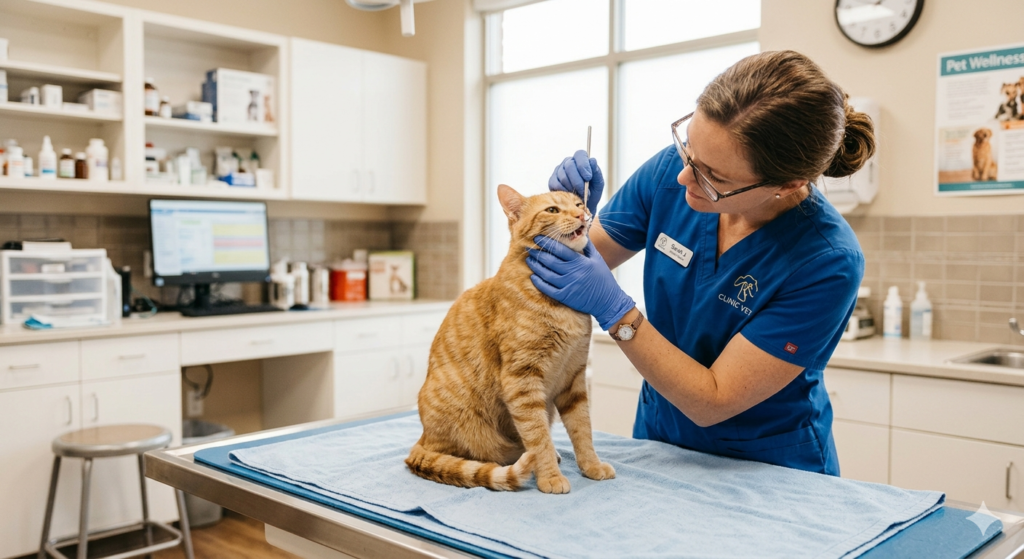
Your cat probably will not tell you when something hurts inside her mouth. Cats are hardwired to hide pain, and dental problems are one of the most common reasons for silent suffering in felines across every age group. At Dixie Animal Hospital, we see the consequences of overlooked oral health every single week. A cat comes in for a routine checkup, and a quick look under the lip reveals inflamed gums, cracked teeth, or lesions that have been developing for months. The reality is that cat dental care in Mississauga is something most owners do not think about until a visible problem appears, and by that point, the disease has often progressed far beyond what a simple cleaning can fix.
This guide breaks down what every cat owner in the Greater Toronto Area needs to know about feline oral health, including what dental disease looks like, why professional cat teeth cleaning matters, and what actually happens during a veterinary dental procedure.
Why Cat Teeth Cleaning Is the Most Overlooked Part of Feline Health
Research from the Cornell Feline Health Center estimates that between 50 and 90 percent of cats older than four years suffer from some form of dental disease. That is an enormous range, and it reflects how underdiagnosed feline oral conditions really are. Dogs tend to get more dental attention because they pant, chew on toys, and let owners peek inside their mouths more easily. Cats are different. They groom themselves, eat quietly, and rarely give you a reason to open their jaw and look around.
This creates a dangerous gap. Plaque builds on a cat’s teeth within hours of eating. Within days, that plaque mineralizes into tartar, which cannot be removed by brushing alone. Tartar pushes against the gum line, causes inflammation, and opens the door to bacterial infection. Left untreated, the bacteria enter the bloodstream and can damage the kidneys, liver, and heart. A 2025 study published by the Feline Veterinary Medical Association confirmed that periodontal disease, gingivitis, and tooth resorption remain the most commonly encountered oral conditions in general feline practice, and that multimodal pain management is now considered standard during any dental procedure.
The bottom line is straightforward. If your cat has not had a dental evaluation in the past year, there is a strong chance something is developing that you cannot see from the outside.
What Dental Disease Looks Like in Cats
One of the biggest challenges with feline dental health is that cats rarely show obvious symptoms until the disease has reached moderate or advanced stages. They continue eating, sleeping, and behaving normally even when dealing with significant oral pain.
The Silent Signs Owners Often Miss
Knowing what to watch for can make the difference between catching a problem early and dealing with a painful extraction later. Here are the most common indicators:
- Bad breath that persists – A slight odor is normal, but consistent foul breath usually signals bacterial buildup or infection beneath the gum line.
- Dropping food or chewing on one side – Cats with a sore tooth will often adjust how they eat rather than stop eating entirely.
- Red, swollen, or bleeding gums – Healthy gums should be pale pink. Any redness along the tooth line is a sign of gingivitis.
- Pawing at the mouth or face rubbing – This is one of the more obvious signs, but many owners attribute it to normal grooming behavior.
- Excessive drooling or saliva staining – Some cats drool slightly, but a sudden increase or brownish discoloration around the chin suggests oral discomfort.
- Reluctance to be touched around the head – A cat that flinches when you scratch near its jaw may be protecting a painful area.
- Weight loss with no dietary changes – Chronic dental pain often leads to reduced food intake, which shows up gradually on the scale.
If you notice any combination of these signs, do not wait for your cat’s next annual appointment. Scheduling a dental evaluation early can save teeth and prevent the kind of systemic infections that turn a dental issue into a medical emergency. For urgent oral symptoms, our emergency vet in Mississauga team can assess your cat the same day.
Cat Dental Cleaning in Mississauga: What the Procedure Involves
Professional cat teeth cleaning is not the same as brushing at home. A veterinary dental procedure is a thorough clinical intervention that addresses plaque, tartar, and disease both above and below the gum line. Here is what the process typically looks like at a well-equipped pet dental care Mississauga clinic:
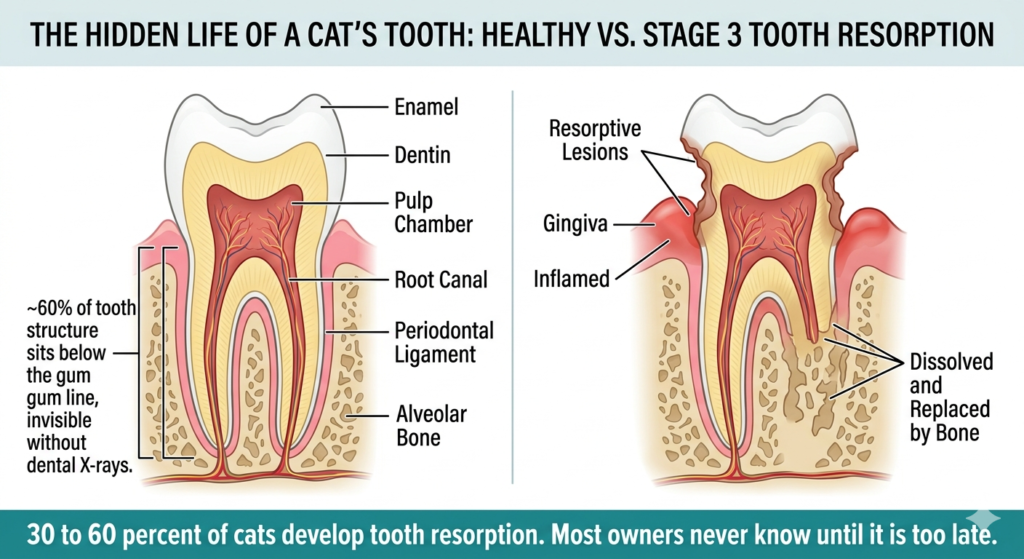
The appointment starts with a pre-anesthetic health assessment. This includes bloodwork to evaluate kidney function, liver enzymes, and overall organ health. These results determine whether your cat is a safe candidate for anesthesia and help the veterinary team customize the sedation protocol. Once your cat is under anesthesia, the veterinarian performs a full oral examination, probing each tooth individually for pockets, mobility, and signs of resorption. Digital dental X-rays are taken to reveal what is happening below the gum line, where roughly 60 percent of each tooth’s structure is hidden from view.
After the assessment, ultrasonic scaling removes tartar deposits from every surface of every tooth, including the subgingival areas that home brushing cannot reach. Each tooth is then polished to smooth microscopic scratches left by the scaler, because rough surfaces attract plaque faster. If damaged or infected teeth are found, extractions are performed during the same procedure to avoid putting the cat under anesthesia a second time.
Why Anesthesia Is Essential for Feline Teeth Cleaning
Some pet owners understandably worry about anesthesia. However, anesthesia-free dental cleaning is not appropriate for cats. Without sedation, a veterinarian cannot probe below the gum line, take diagnostic X-rays, or perform extractions safely. A conscious cat will not hold still for subgingival scaling, and attempting it creates stress, pain, and the risk of incomplete treatment that leaves hidden disease in place.
Modern veterinary anesthesia protocols are remarkably safe. Pre-anesthetic bloodwork screens for underlying conditions, and continuous monitoring of heart rate, blood oxygen, and body temperature ensures your cat stays stable throughout the procedure. For older felines, this monitoring is especially critical, which is why senior pet care services include age-appropriate anesthetic plans designed for cats with reduced organ function.
Tooth Resorption: The Feline Dental Problem Your Cat Cannot Tell You About
Tooth resorption is one of the most common and least understood dental conditions in cats. According to research published in Today’s Veterinary Practice, between 30 and 60 percent of cats are affected by this painful condition, and that number climbs significantly with age.
Unlike cavities in humans, tooth resorption in cats involves the body’s own cells (called odontoclasts) breaking down the structure of the tooth from within. The process typically starts at or below the gum line, making it invisible during a standard visual examination. By the time a lesion becomes visible, the tooth may already be severely compromised.
There are three recognized types. Type 1 resorption shows a normal-looking root on X-ray but with lesions on the crown. Type 2 resorption shows roots that are being replaced by bone, making them appear to merge with the jaw. Type 3 involves characteristics of both. Treatment depends entirely on the type, which is why dental radiography is not optional during a feline dental procedure. It is essential.
The largest study of feline dental disease ever conducted, led by the Royal Veterinary College’s VetCompass Programme and analyzing data from over 1.2 million cats, found that periodontal disease was diagnosed in 15.2 percent of cats annually, with breeds like Siamese, Maine Coon, and British Shorthair showing higher susceptibility. The true number is likely much higher, since many cats never receive a dental examination at all.
Pet Dental Care at Home: Building a Prevention Routine
Professional cleaning is the gold standard, but what happens between annual visits matters too. Home dental care will not replace a veterinary procedure, but it can significantly slow the rate of plaque accumulation and reduce the severity of disease when your cat does go in for treatment.
- Daily tooth brushing – Use a cat-specific toothbrush (or a finger brush) with enzymatic toothpaste made for pets. Human toothpaste contains fluoride and foaming agents that are toxic to cats. Start slowly, letting your cat taste the paste before introducing the brush.
- Dental treats and chews – Look for products carrying the Veterinary Oral Health Council (VOHC) seal of acceptance. These have been tested and proven to reduce plaque or tartar accumulation.
- Water additives – Some enzymatic water additives help control bacterial growth in the mouth. They are not a substitute for brushing, but they add another layer of prevention.
- Diet considerations – Certain prescription dental diets feature kibble designed to mechanically scrub tooth surfaces as the cat chews. Ask your veterinarian during a wellness exam whether a dental diet is appropriate for your cat’s needs.
The key is consistency. Brushing once a week is better than not brushing at all, but daily brushing delivers the best results. Even if your cat resists at first, most felines adjust to the routine within a few weeks when introduced gradually.
Professional Cat Teeth Cleaning vs. At-Home Care
Understanding the difference between home maintenance and clinical intervention helps set realistic expectations.
| Factor | At-Home Care | Professional Veterinary Cleaning |
|---|---|---|
| Plaque removal | Surface-level only | Above and below the gum line |
| Tartar removal | Not possible once mineralized | Ultrasonic scaling removes all deposits |
| Diagnostic capability | Visual observation only | Full-mouth X-rays reveal hidden disease |
| Tooth resorption detection | Cannot be detected at home | Identified through radiography and probing |
| Extractions | Not applicable | Performed under anesthesia when needed |
| Pain assessment | Limited to behavioral observation | Comprehensive probing of each tooth |
| Frequency | Daily brushing recommended | Annual professional cleaning minimum |
| Effectiveness alone | Slows progression, does not treat disease | Treats existing disease, prevents progression |
Both approaches work together. Home care extends the benefits of a professional cleaning, and professional cleaning addresses what home care cannot reach.
Case Study: How Early Detection Saved a Senior Cat’s Teeth
A 10-year-old domestic shorthair named Mango came in for what her owner thought was a routine annual checkup. There were no complaints about eating habits, no visible signs of distress, and no behavioral changes. During the physical examination, the veterinarian noticed mild gum redness along the upper premolars and recommended a dental assessment.
Under anesthesia, full-mouth radiographs revealed two teeth with early-stage Type 1 tooth resorption and one premolar with a deep periodontal pocket indicating active bone loss. The resorptive teeth were extracted before the lesions could progress to a painful stage, and the periodontal pocket was treated with thorough subgingival cleaning.
Mango recovered within 48 hours and returned to her normal eating patterns immediately. Her owner later commented that Mango seemed “more relaxed and playful than she had been in months,” suggesting the cat had been experiencing low-grade discomfort that was only apparent in hindsight.
“We had no idea anything was wrong,” the owner shared. “She was eating fine, purring, acting totally normal. If we had skipped that checkup, those teeth would have gotten so much worse.”
This case illustrates exactly why annual dental evaluations matter, especially for senior cats. Problems that are invisible to an owner become clear under anesthesia and X-ray. Our complete veterinary dentistry guide covers the broader picture of oral health for both dogs and cats.
Frequently Asked Questions About Cat Dental Care in Mississauga
-
How often should my cat get a professional teeth cleaning?
Most veterinarians recommend annual professional cat teeth cleaning for adult cats, starting around age one or two. Cats with a history of dental disease, gingivitis, or tooth resorption may need cleanings every six months. Senior cats especially benefit from more frequent dental monitoring, since age-related oral conditions progress faster and carry higher risks of systemic complications when left untreated.
-
Is anesthesia safe for older cats during dental procedures?
Yes, with proper preparation. Pre-anesthetic bloodwork evaluates kidney and liver function to customize the safest sedation protocol for each individual patient. Modern monitoring equipment tracks heart rate, oxygen saturation, blood pressure, and body temperature throughout the procedure. Veterinary teams experienced with feline patients adjust dosing carefully for older cats, making anesthesia-related complications rare in properly screened patients.
-
What is the most common dental disease in cats?
Periodontal disease and tooth resorption are the two most prevalent feline dental conditions. Periodontal disease involves inflammation and infection of the gum tissue and supporting bone structures around the teeth. Tooth resorption is a progressive condition where the cat’s own cells destroy tooth structure from within. Both conditions cause significant pain and require professional veterinary treatment, including scaling, root planing, or extraction depending on severity.
-
Can I brush my cat’s teeth at home to prevent dental disease?
Home brushing helps slow plaque accumulation between professional cleanings, but it cannot remove mineralized tartar or reach below the gum line where most serious disease develops. Use a soft-bristled cat toothbrush with pet-safe enzymatic toothpaste daily for the best results. Introduce brushing gradually over several weeks so your cat becomes comfortable with the process. Dental treats with the VOHC seal provide supplemental protection.
-
How do I know if my cat needs a dental cleaning right now?
Watch for persistent bad breath, red or swollen gums, drooling, difficulty eating, pawing at the mouth, or any visible brown or yellow buildup along the tooth line. These signs suggest active dental disease that warrants prompt evaluation. Even without visible symptoms, cats over four years old have a high statistical likelihood of harboring hidden oral problems that only dental radiographs can reveal during a professional examination.
-
Does cat dental care in Mississauga include X-rays?
Reputable veterinary clinics always include full-mouth dental radiographs as part of a professional cleaning. Roughly 60 percent of each tooth sits below the gum line, and conditions like tooth resorption, root abscesses, and bone loss are only visible on X-ray. A cleaning without radiographs is incomplete because it leaves the most serious problems undiagnosed and untreated, which defeats the purpose of the procedure entirely.
If your cat has not had a dental evaluation in the past 12 months, that appointment is already overdue — and the longer you wait, the more your cat may be silently enduring.