

“I’ll start his flea and tick medication once it warms up” is one of the most common lines heard at spring appointments, and it’s also one of the most common ways a preventable infestation or tick-borne illness slips through. Parasite risk in Mississauga doesn’t follow a neat spring-to-fall window the way most pet owners assume. This calendar walks through what actually threatens dogs and cats month by month, and how Dixie Animal Hospital builds a protection plan around it rather than a generic start date.
Why “Flea and Tick Season” Is a Myth in Mississauga
Fleas thrive indoors regardless of outdoor temperature. Once a flea makes it into a home, on a pant leg, a visiting dog, or a secondhand piece of furniture, the warm, humid environment of a heated house lets the life cycle continue straight through a Canadian winter. Ticks complicate the picture further. The Companion Animal Parasite Council notes that adult blacklegged ticks, the species responsible for Lyme disease, are actually most active during the fall and winter months, not spring as most pet owners assume, which means treating parasite prevention as a seasonal chore misses real risk on both ends of the calendar.
Locally, the risk isn’t hypothetical. The City of Mississauga has identified the area as an estimated tick risk zone, and Peel Public Health confirms that blacklegged ticks are now established across Peel region, with locally acquired Lyme disease cases reported directly in Mississauga, Brampton, and Caledon in recent years.
Pet Parasite Control Mississauga Families Can Rely On: The Big Three Threats
Effective pet parasite control comes down to understanding three distinct threats, since each one follows its own pattern and requires a slightly different prevention approach. At Dixie Animal Hospital, this kind of protection is built into our broader vaccination and parasite prevention services, so your pet’s plan covers all three threats together rather than treating each one as a separate errand.
Fleas: The Year-Round Indoor Risk
Fleas can complete their entire life cycle indoors in as little as three weeks under typical household conditions. A single female can lay dozens of eggs a day, which is why a flea problem that seems to appear overnight is usually the result of an infestation that’s been building in carpets and bedding for weeks. Dogs face this risk year-round through daily walks and dog park visits, which is covered in more depth in our guide to flea and tick prevention for dogs.
Ticks and Lyme Disease: What Mississauga Pet Owners Should Know
Blacklegged ticks wait in tall grass, leaf litter, and brush, then latch onto a passing dog or cat during a walk, hike, or even a backyard visit near a wooded area. They don’t need summer heat to be active; they simply need temperatures above freezing and bare ground, conditions Mississauga sees well outside the traditional warm-weather window.
Heartworm: Ontario’s Mosquito Season
Heartworm is different from fleas and ticks in that it has a genuinely defined risk window in this region. The University of Guelph’s Ontario Veterinary College notes that in southern Ontario, mosquito-borne heartworm transmission runs from roughly June through November, when temperatures stay warm enough for mosquitoes to survive and transmit larvae.
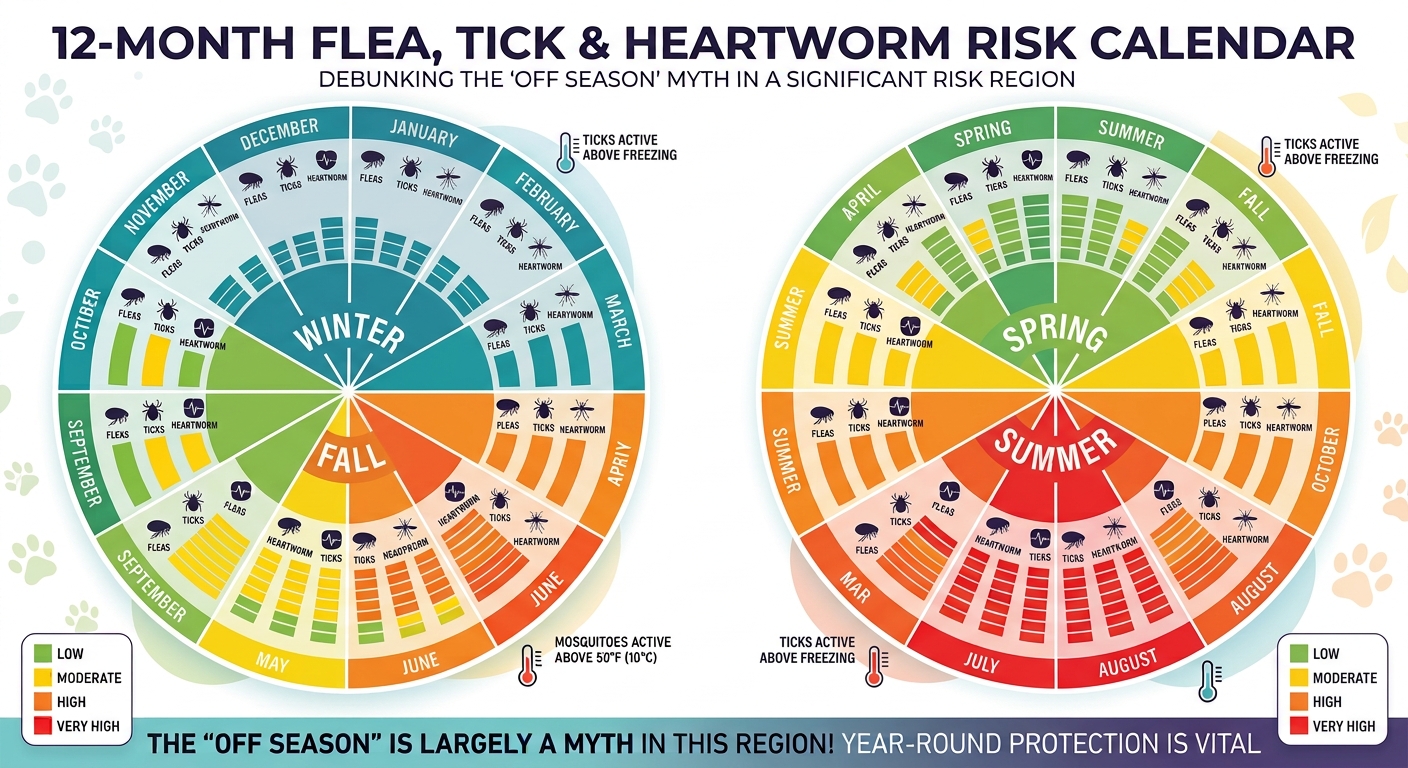
The Month-by-Month Parasite Prevention Calendar
- January and February: Fleas remain a risk indoors; ticks are dormant during hard freezes but can reactivate during winter thaws.
- March and April: Start or confirm heartworm prevention ahead of the transmission season; tick activity resumes as ground temperatures rise above freezing.
- May: Peak tick activity begins as vegetation grows in; continue monthly flea and tick prevention without interruption.
- June through August: Full heartworm, flea, and tick coverage; highest overall exposure risk from outdoor activity, camping, and dog park visits.
- September and October: Adult blacklegged ticks become highly active again; heartworm prevention continues through the tail end of mosquito season.
- November: Final heartworm dose of the season for most Ontario protocols; flea and tick prevention continues uninterrupted.
- December: Indoor flea risk continues; outdoor tick exposure drops but doesn’t disappear during mild winter stretches.
Preventive Vet Care Mississauga Pet Owners Shouldn’t Skip: Annual Testing
Prevention products work best alongside annual testing, not instead of it. A yearly heartworm test, often combined with tick-borne disease screening, catches exposure that prevention alone might have missed due to a missed dose or product gap. This kind of preventive vet care is usually folded into your pet’s wellness and preventive care exam, so testing happens on a predictable schedule rather than as an afterthought.
A few habits worth building into your routine year-round:
- Check your pet after every outdoor outing. Run your hands through their coat, paying close attention to ears, armpits, and between toes where ticks often attach.
- Keep prevention consistent, not seasonal. Gaps of even a few weeks create a window fleas and ticks are quick to exploit.
- Treat the home environment, not just the pet. Vacuuming regularly and washing pet bedding helps break the flea life cycle indoors.
- Confirm product compatibility for multi-pet households. Some flea and tick products are formulated specifically for dogs and are unsafe for cats.
Parasite Protection for Cats: Topical, Oral, and Vaccine-Based Options
Cats need a different approach than dogs, both because their risk factors differ and because some canine parasite products are genuinely dangerous if applied to a cat. Most feline parasite prevention comes down to monthly topical or oral products targeting fleas and, for outdoor or indoor-outdoor cats, ticks and intestinal parasites as well. Our guide to flea and tick prevention for cats covers indoor versus outdoor risk factors in more detail, since an indoor-only cat’s exposure looks very different from a cat with regular outdoor access. There’s no true vaccine against fleas or ticks themselves, but vaccination still plays a supporting role in a cat’s broader protection plan. The feline leukemia vaccine, for instance, guards against a virus transmitted through the close contact outdoor cats are more likely to have while exposed to fleas, ticks, and other cats in the same environment, making it a natural companion to topical parasite control rather than a replacement for it.
Comparing Parasite Prevention Product Types
| Product Type | Targets | Application | Best Suited For |
|---|---|---|---|
| Monthly topical | Fleas, ticks, sometimes heartworm | Applied to skin | Cats and dogs, indoor or outdoor |
| Oral monthly chew | Fleas, ticks, heartworm | Given by mouth | Dogs, especially multi-pet or bathing households |
| Tick and flea collar | Fleas, ticks | Worn continuously | Dogs and cats with consistent outdoor exposure |
| Heartworm-only preventive | Heartworm | Oral or topical | Dogs during June to November transmission season |
A Mississauga Case Study: A “Winter Only” Missed Dose
A family with an active Golden Retriever paused their monthly flea and tick chew every November, assuming the Ontario winter made it unnecessary, and resumed each spring without issue for several years. During a mild February with several weeks of above-freezing days, their dog came in for a routine visit with a small, engorged tick found behind his ear during the exam. Because the family had already restarted him on prevention just days earlier after noticing the mild weather, the tick was removed without complication and testing came back clear. It became a useful reminder for the whole family: Ontario winters increasingly include thaw periods long enough for ticks to reactivate, and a prevention gap doesn’t need to last long to create an opening.
What Happens If You Skip a Month
Missing a single month of prevention doesn’t guarantee a problem, but it does remove the buffer that makes these products effective in the first place. Fleas can establish an indoor infestation within weeks of a gap, ticks only need one unprotected walk to attach, and heartworm risk compounds since a missed dose during peak mosquito months can leave weeks of exposure with no protection at all. If a dose is missed, the safest move is restarting immediately and mentioning the gap at your pet’s next visit rather than waiting to see if a problem develops.
Frequently Asked Questions
-
Do I really need flea and tick prevention in the winter in Mississauga?
Yes, though the reasoning differs by parasite. Fleas can persist indoors regardless of outdoor temperature, since a heated home gives them everything they need to complete their life cycle. Ticks reactivate during winter thaws whenever the ground isn’t frozen, even in January or February. Heartworm risk does drop significantly in deep winter, but fleas and ticks remain a genuine concern well outside the traditional warm-weather season most owners assume.
-
When should heartworm prevention start each year in Mississauga?
Most Ontario veterinary protocols recommend starting by June 1st and continuing through early November, aligned with the region’s mosquito transmission season and the point when overnight frost typically returns. Pets that travel to warmer climates during winter, or that spend extended time somewhere with milder conditions, may need extended or year-round coverage depending on their specific travel schedule and destination.
-
Can I use the same flea and tick product for my dog and my cat?
Not always, and this is one of the more dangerous assumptions pet owners make. Several common canine flea and tick products contain ingredients, particularly certain concentrated permethrin formulas, that are toxic to cats even in small amounts absorbed through grooming or close contact. Always confirm species-specific safety with your vet before applying any product across a multi-pet household, especially one with both dogs and cats sharing the same space.
-
How do I know if my pet has fleas even if I haven’t seen any?
Excessive scratching, small dark specks in the fur that turn reddish-brown when placed on a wet paper towel, and small scabs along the neck or base of the tail are common signs worth checking for. Cats in particular may groom excessively without an obvious infestation being visible at a glance, since their fastidious grooming habits can hide flea dirt and even the fleas themselves from a casual look.
-
What should I do if I find a tick on my pet?
Remove it promptly using fine-tipped tweezers, grasping close to the skin and pulling straight out without twisting. Save the tick in a sealed container if possible, note the date, and monitor your pet for lethargy, joint swelling, or appetite changes over the following weeks, reporting any of these to your vet.
-
Is annual heartworm testing necessary if my dog is always on prevention?
Yes, most vets still recommend annual testing even with consistent prevention, since no product is completely foolproof and a missed or delayed dose can be easy to overlook over the course of a busy year. Testing also confirms the medication is working as expected before starting a new season, catching any gaps in protection before they become a bigger problem.
-
Are natural or essential oil-based flea and tick repellents effective?
Most natural repellents offer limited, short-lived protection compared to veterinary-prescribed preventives, and some essential oils are actually toxic to cats even in small, diluted amounts. They’re generally not a reliable substitute for proven monthly products, particularly in areas with established tick populations like Mississauga, where consistent, verified protection matters more than a pleasant scent.
-
My cat is strictly indoors. Does she still need parasite prevention?
Yes, though her risk profile differs from an outdoor cat’s. Fleas can be carried in on other pets, clothing, or shoes, and indoor cats aren’t automatically exempt from recommended protection just because they don’t go outside. Your vet can help determine whether a lighter protocol is appropriate based on your household’s actual exposure risk, including whether other pets in the home spend time outdoors.
A consistent, year-round prevention routine costs far less in effort than catching up after an infestation or tick-borne illness takes hold.