
Canine Blood Transfusion in Mississauga, ON
When a dog loses blood from an injury or surgery, becomes severely anemic, or cannot clot properly, a transfusion can stabilize them while we treat the cause. Our team blood types every patient, checks compatibility, and monitors your dog closely from start to finish.
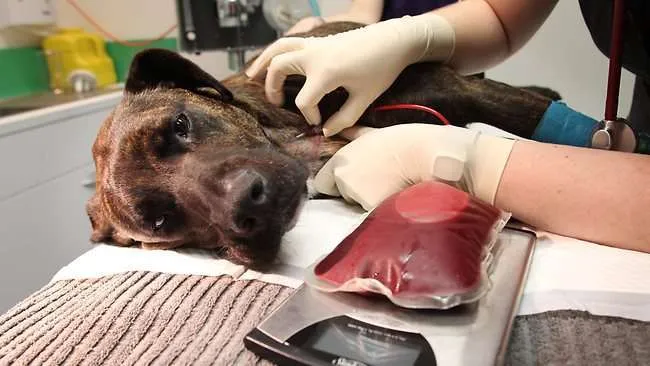
When Does a Dog Need a Blood Transfusion?
A transfusion replaces the part of the blood your dog is missing, whether that is red blood cells to carry oxygen or plasma to help the blood clot. It buys time for your dog to stabilize while our veterinarians treat the underlying problem.
Dogs may need a transfusion for:
- Blood loss from trauma, such as being hit by a car or a deep wound
- Bleeding during or after surgery
- Severe anemia, including immune-mediated hemolytic anemia (IMHA)
- Rat poison (rodenticide) toxicity that stops the blood from clotting
- Bleeding tumours, such as a ruptured spleen mass
- Clotting disorders, such as von Willebrand disease
- Blood loss from tick-borne disease or severe parasite burdens
Signs Your Dog Needs Urgent Care
Call us right away at (905) 270-5444 if your dog has:
- Pale, white or yellow gums
- Sudden weakness, collapse or fainting
- Fast or heavy breathing at rest
- Bleeding that will not stop, or blood in the urine, stool or vomit
- Unexplained bruising or tiny red spots on the skin or gums
- A swollen belly after an injury
Our Canine Blood Transfusion Services
- Blood typing before every transfusion
- Cross-matching for dogs that have had a transfusion before
- Packed red blood cell transfusions
- Fresh frozen plasma transfusions
- Whole blood transfusions
- Continuous monitoring during and after the transfusion
- Diagnostics to find and treat the underlying cause
Blood Types in Dogs
Like people, dogs have blood types. The most important one for transfusions is DEA 1 (dog erythrocyte antigen 1), and dogs are either DEA 1 positive or DEA 1 negative.
We type your dog’s blood before a transfusion so they receive a matched product. If your dog has had a transfusion before, we also run a cross-match, which tests the donor blood against your dog’s blood to lower the risk of a reaction.
What Happens During a Transfusion
- Assessment: Our veterinarian examines your dog and runs bloodwork with our in-house lab to confirm a transfusion is needed.
- Blood typing and cross-match: We find your dog’s blood type and check compatibility with the donor blood.
- IV catheter: A small catheter is placed in a vein so the blood can be given slowly and safely.
- Transfusion: The blood product is given through a filter, starting slowly while we watch for any reaction.
- Monitoring: Our team checks your dog’s temperature, heart rate, breathing and gum colour throughout the transfusion.
- Recheck bloodwork: We repeat bloodwork afterward to see how your dog has responded and plan next steps.
Safe, Screened Blood Products
The blood we use comes from healthy donor dogs that are screened for blood-borne infections before they donate.
Transfusion reactions are uncommon, and close monitoring lets our team act quickly if one happens. Your veterinarian will talk with you about the benefits and risks before the transfusion begins.
Frequently Asked Questions
How do I know if my dog needs a blood transfusion?
Only a veterinarian can tell, using an exam and bloodwork. Pale gums, weakness, collapse or bleeding that will not stop are signs to call us right away.
Is a blood transfusion safe for my dog?
Transfusions are a common, well-established treatment, and serious reactions are uncommon. We lower the risk further with blood typing, cross-matching and close monitoring throughout.
How long does a transfusion take?
Most transfusions run over a few hours, starting slowly so we can watch for any reaction. Your dog usually stays with us afterward for monitoring and recheck bloodwork.
Can any dog give blood to my dog?
No, the donor blood needs to be compatible. We check your dog’s blood type before the transfusion and run a cross-match if your dog has been transfused before.
Will my dog need more than one transfusion?
Some dogs need only one, while others with ongoing conditions such as IMHA may need more. Your veterinarian will explain the plan based on what is causing the problem.
How much does a blood transfusion cost?
Cost depends on your dog’s size, the type and amount of blood needed, and the tests and hospital care involved. Call (905) 270-5444 for an estimate.
Worried About Your Dog?
If your dog is weak, pale or bleeding, call Dixie Animal Hospital right away. We are open 8 am to midnight, every day.