
“My cat never goes outside, so does she really need shots?” It’s one of the most common questions cat owners ask, and the honest answer is more nuanced than a simple yes or no. Indoor cats face real, if smaller, risks, while outdoor and indoor-outdoor cats need a broader protection plan built around what they actually encounter. This guide breaks down core and lifestyle-based cat vaccinations, how a kitten’s schedule differs from an adult cat’s boosters, and what a vaccine visit looks like at Dixie Animal Hospital.
What Core Cat Vaccinations Actually Protect Against
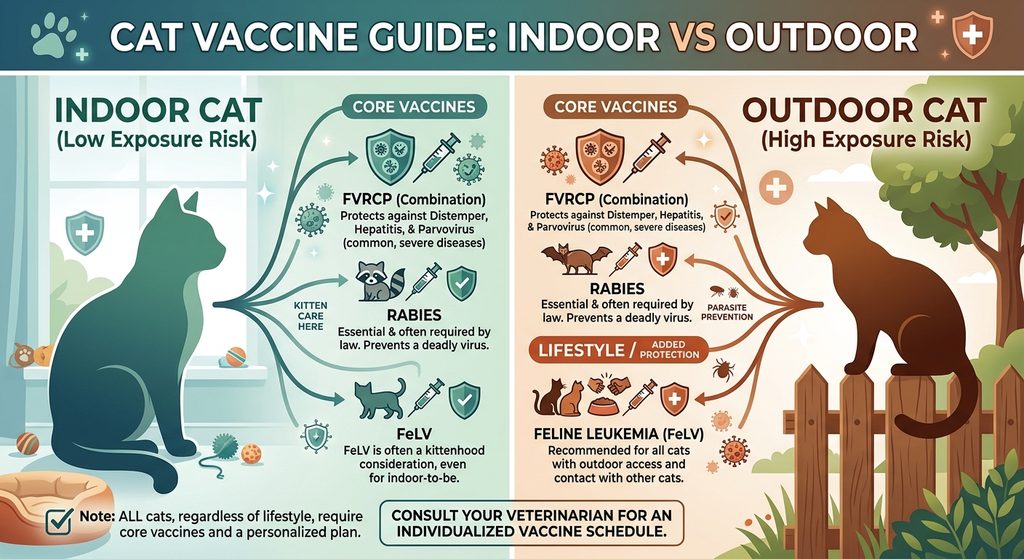
Core cat vaccinations are recommended for every cat, regardless of whether they ever set a paw outside. The American Association of Feline Practitioners groups panleukopenia, herpesvirus, and calicivirus together under the FVRCP vaccine, alongside rabies, as the baseline every cat should carry. Panleukopenia, sometimes called feline distemper, is highly contagious and can be fatal, particularly in kittens with underdeveloped immune systems. Herpesvirus and calicivirus don’t carry the same fatality risk on their own, but they’re behind most of the sneezing, eye discharge, and upper respiratory misery that spreads quickly through multi-cat households and shelters.
Feline leukemia virus, or FeLV, occupies a slightly different spot on the list. Most veterinary guidelines classify it as core for kittens and cats under one year old, since young cats are far more susceptible to becoming permanently infected, then shift it to a lifestyle-based recommendation for adult cats once their actual risk of exposure becomes clearer.
Cat Vaccinations Near Me: Why Indoor Cats Still Need Them
Searching “cat vaccinations near me” often comes from owners assuming an indoor cat is essentially risk-free. Cornell’s Feline Health Center pushes back on that assumption directly, noting that its core vaccine recommendations apply to household cats kept indoors at all times, not just cats with outdoor access. The reasoning is straightforward: pathogens don’t need a cat door to get inside. A bat that slips into an attic or chimney, a foster kitten with an unknown vaccine history, or even a boarding stay can expose an otherwise sheltered cat to disease.
Ontario law adds another layer that indoor status doesn’t exempt anyone from. Under Regulation 567 of the Health Protection and Promotion Act, every cat, dog, and ferret three months of age or older must hold a current rabies vaccination certificate issued by an Ontario-licensed veterinarian, with no carve-out for cats that never leave the house.
Outdoor and Indoor-Outdoor Cats: The FeLV Risk Factor
Cats that spend any real time outside, or that share a household with a cat who does, face measurably higher exposure to feline leukemia virus. The Merck Veterinary Manual notes that infection risk rises specifically among outdoor cats, unneutered males, and cats already dealing with other illnesses, since FeLV spreads through close, prolonged contact like mutual grooming and shared food bowls. Once infected, there’s no cure, only supportive management, which is exactly why prevention through vaccination and testing carries so much weight for this group.
A few lifestyle factors that typically push a cat’s vaccine plan beyond the core list:
- Outdoor or indoor-outdoor access: Raises FeLV exposure risk significantly and often justifies annual FeLV boosters rather than kitten-only doses.
- Multi-cat households with mixed vaccine histories: Increases exposure to FVRCP-related respiratory illness even for cats that stay inside.
- Boarding, cat shows, or foster care: Brief group exposure is enough to justify a broader protocol, even for a mostly indoor cat.
- Unknown background or shelter origin: Warrants FeLV and FIV testing alongside a full vaccine review before assuming any prior protection.
Cats with regular outdoor access also carry higher flea and tick exposure, which pairs naturally with a broader flea and tick prevention plan for cats alongside their vaccine schedule.
Kitten Vaccination Timeline to Adult Boosters
A kitten’s immune system needs several rounds of vaccine before it can mount full protection on its own, which is why the schedule looks more frequent early on than it does later in life.
The Kitten Series
- Weeks 6 to 8: First FVRCP dose, along with a fecal parasite check.
- Weeks 10 to 12: Second FVRCP dose, plus the first FeLV vaccine if lifestyle risk applies.
- Weeks 14 to 16: Final FVRCP dose, first rabies vaccine, and second FeLV dose if started.
- Around 12 months: One-year booster across all vaccines given during the kitten series.
Adult Cat Boosters
Once the one-year booster is complete, most core vaccines shift to a three-year interval for healthy adult cats. FeLV boosters for cats with ongoing outdoor exposure are typically reviewed annually instead, since exposure risk doesn’t taper off the way it does for a cat that transitions to fully indoor living.
Pet Vaccinations Mississauga Families Trust: Finding the Right Clinic
Not every clinic offering cat vaccines near me approaches feline vaccination the same way, and the difference matters more for cats than it does for most other patients. Cats are uniquely prone to a rare but serious reaction called vaccine-associated sarcoma, which is why the injection site, vaccine formulation, and overall protocol should be something your vet actually discusses with you rather than applies as a blanket routine. A clinic worth trusting will ask about your cat’s indoor or outdoor status, any other pets in the home, and travel or boarding plans before recommending anything beyond the core vaccines.
At Dixie Animal Hospital, feline vaccine visits are built into our broader vaccination and parasite prevention services, pairing every vaccine with a physical exam so subtle issues, like early dental disease or a heart murmur, don’t go unnoticed between annual visits.
Core vs. Non-Core Cat Vaccines at a Glance
| Vaccine | Category | Who Needs It | Typical Interval |
|---|---|---|---|
| FVRCP (Panleukopenia, Herpesvirus, Calicivirus) | Core | All cats | Every 3 years after kitten series |
| Rabies | Core | All cats (legally required) | 1 or 3 years, by product |
| FeLV | Core for kittens; lifestyle-based for adults | Kittens, outdoor or indoor-outdoor adults | Annually for at-risk adults |
| FIV | Non-core, no widely recommended vaccine | Testing preferred over vaccination | N/A |
| Bordetella | Non-core | Multi-cat shelters, boarding-heavy lifestyles | As recommended by vet |
What Happens During a Cat Vaccine Visit
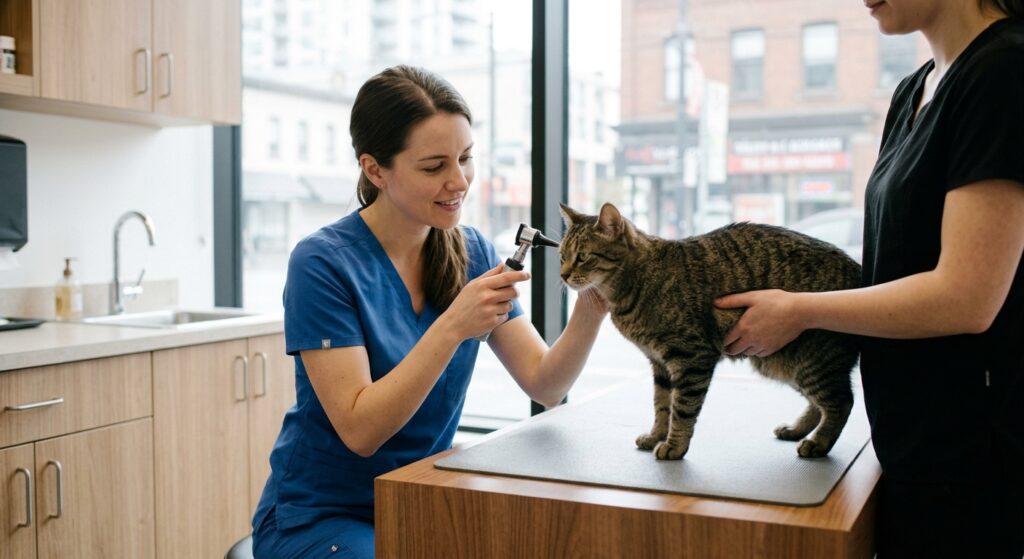
Cats tend to find vet visits more stressful than dogs do, so a well-run vaccine appointment starts with minimizing that stress before anything else happens. Your vet will check weight, listen to the heart and lungs, examine teeth and ears, and ask about litter box habits, appetite, and any behavior changes since the last visit as part of a broader wellness and preventive care exam. This exam matters just as much as the vaccine itself, since cats are notorious for hiding illness until it’s fairly advanced. Once the physical exam is complete, vaccines are given in specific injection site locations recommended by feline vaccine task forces, partly to make any future reaction easier to trace and manage.
A Mississauga Patient Story: An “Indoor Only” Cat With a Habit of Escaping
A three-year-old domestic shorthair came in for her annual visit listed as strictly indoor, but a conversation during the exam revealed she’d slipped out the back door twice that year, once for nearly a full day. Her family hadn’t thought to update her vaccine plan since she “always came back fine.” Given the unsupervised outdoor exposure, her vet added FeLV testing and a booster to her protocol that same visit, alongside a broader conversation about securing the screen door. It’s a common pattern: cats labeled indoor-only often have more outdoor exposure than owners realize, which is exactly why an honest lifestyle conversation at each visit matters more than the label on the intake form.
Vaccine Safety in Cats
Most cats tolerate vaccines with nothing more than mild, short-lived soreness or a day of low energy. Vaccine-associated sarcoma is the reaction unique to cats that deserves genuine attention, though it remains uncommon, occurring in roughly one to four cases per ten thousand vaccinations according to research from Cornell’s Feline Health Center. This is why vaccine site selection and monitoring for any unusual lump that persists or grows after an injection matter more in cats than in most other species. Reporting any swelling that doesn’t resolve within a few weeks lets your vet investigate early, when outcomes are far better.
Frequently Asked Questions
-
Does my indoor-only cat really need core vaccines?
Yes. Indoor status lowers risk but doesn’t remove it entirely. Pathogens can travel in on shoes or clothing, bats occasionally enter homes, and even a brief unsupervised escape or boarding stay creates exposure. Core vaccines protect against diseases serious enough that most veterinarians recommend them regardless of how carefully a cat is kept inside.
-
How much do cat vaccinations cost in Mississauga?
Cost depends on which vaccines are recommended, your cat’s age and lifestyle, and whether the visit includes a full exam or additional testing like FeLV screening. Rather than a flat number, most clinics build a personalized plan after reviewing your cat’s history, then explain exactly what’s included before any vaccine is given.
-
Does my cat need the feline leukemia vaccine if she’s staying indoors permanently?
It depends on her risk profile going forward, not just her current routine. If she has no exposure to other cats and no history of outdoor access, many vets phase out FeLV boosters after the kitten series. If there’s any chance of exposure, including a multi-cat household with mixed histories, continuing the vaccine is usually the safer route.
-
What’s the difference between core and non-core cat vaccines?
Core vaccines protect against diseases considered serious or common enough to warrant giving them to every cat, like FVRCP and rabies. Non-core vaccines, such as FeLV for low-risk adults or bordetella, are recommended selectively based on a cat’s actual lifestyle, environment, and exposure to other animals rather than applied universally.
-
Can kittens be vaccinated before they’re fully weaned?
The first FVRCP dose is typically given around six to eight weeks, often close to or slightly before weaning, since maternal antibodies begin fading around this age and leave kittens vulnerable. Your vet will time the full series based on your kitten’s specific age and health status rather than a single fixed date.
-
Is it normal for my cat to be lethargic after a vaccine?
Mild, short-lived tiredness or reduced appetite for a day is common and not usually a concern. Persistent vomiting, facial swelling, difficulty breathing, or a lump at the injection site that doesn’t shrink within a few weeks are signs that warrant a call to your vet rather than a wait-and-see approach.
-
Do I need to test my cat for FeLV and FIV before vaccinating?
Testing is generally recommended at least once in a cat’s lifetime, and definitely before starting the FeLV vaccine series if her history is unknown, since vaccinating an already-infected cat won’t provide any benefit. Rescue and shelter cats, along with any cat with outdoor exposure, are usually the highest priority for this testing.
-
What records should I bring if I’m switching vets in Mississauga?
Bring your cat’s most recent rabies certificate and any available vaccination history, even if it’s incomplete or from a previous clinic in another city. Without records, most clinics can run a titer test to check existing immunity before deciding whether to restart the vaccine series, which helps avoid unnecessary duplicate doses.
A vaccine plan that actually reflects how your cat lives, indoors, outdoors, or somewhere in between, protects her far better than a generic checklist ever could.