
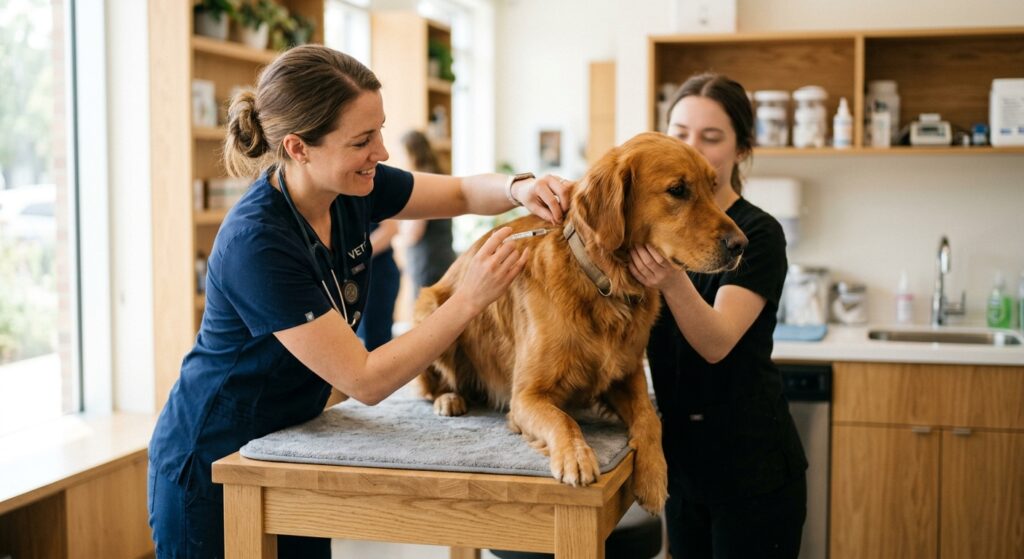
Few decisions protect a dog’s long-term health as much as staying current on vaccines. Whether you just adopted a puppy or your senior dog is overdue for a booster, understanding which shots are essential and when they’re due takes the guesswork out of preventive care. This guide walks through core and lifestyle vaccines, a realistic pet vaccination schedule, and what to expect at your appointment, drawing on guidance the team at Dixie Animal Hospital follows for every dog that walks through the door.
What Core Dog Vaccinations Actually Protect Against
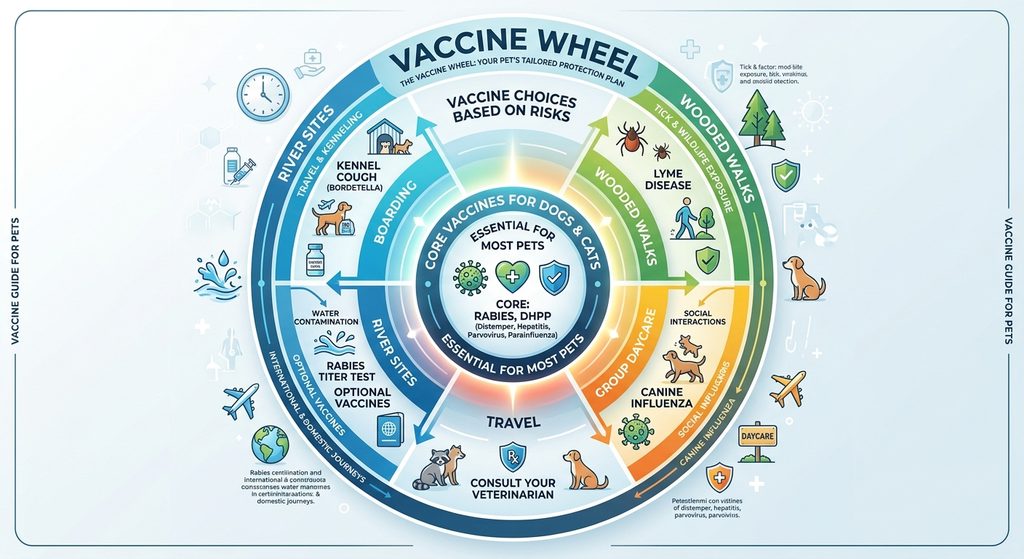
Core vaccines are the shots every dog needs, regardless of breed, size, or how much time they spend outdoors. The American Animal Hospital Association’s canine vaccination guidelines recommend that all dogs receive protection against distemper, adenovirus, and parvovirus, with parainfluenza included in many protocols. Rabies rounds out the core list for every dog. A notable update came in 2024, when leptospirosis was added to the recommended core vaccines for all dogs, reflecting how common the bacterial infection has become in suburban and urban environments alike.
These four to five vaccines target diseases that are either widespread, severe, or transmissible to people. Parvovirus is a strong example of why core protection matters. Left untreated, canine parvovirus is nearly always fatal, and even with treatment the mortality rate can exceed 90 percent for dogs that go without care. A peer-reviewed surveillance study of more than 1,400 confirmed cases found an overall case fatality rate of roughly 42 percent, underscoring why prevention through vaccination remains far safer and less costly than treating the disease after exposure.
Dog Vaccinations Near Mississauga: Local Rules You Can’t Skip
Searching for “dog vaccinations near me” usually means you’re weighing convenience alongside compliance, and in Ontario, compliance isn’t optional. Pet vaccinations mississauga residents rely on aren’t just about disease prevention; provincial law makes at least one of them mandatory.
Ontario’s Rabies Law and What It Means for Your Dog
Under the province’s Health Protection and Promotion Act, Ontario Regulation 567 requires every dog, cat, and ferret three months of age or older to hold a current rabies vaccination certificate, and the vaccine must come from a veterinarian licensed in the province. This isn’t a suggestion your local animal vaccine clinic can waive. If your dog was vaccinated outside Canada, Ontario law still requires proof that the vaccine was administered by a veterinarian registered in Canada or the United States using a licensed product, which matters for anyone who adopted a rescue dog from outside the country. If you’re unsure whether an imported pet’s paperwork meets Ontario’s standard, our emergency and urgent care team can help confirm what documentation is still needed.
Pet Vaccination Schedule: From Puppy Shots to Adult Boosters
A pet vaccination schedule isn’t one-size-fits-all, but the framework is consistent across most healthy dogs.
Puppy Vaccination Timeline
Puppies are born with limited immunity passed from their mother, which fades gradually and unpredictably. That’s why the early series is spaced out rather than given all at once.
- Weeks 6 to 8: First round of the distemper, adenovirus, and parvovirus combination vaccine.
- Weeks 10 to 12: Second combination dose, plus deworming and parasite screening as needed.
- Weeks 14 to 16: Final combination booster and the first rabies vaccine, since maternal antibodies can interfere with earlier doses.
- Around 12 months: A one-year booster to lock in long-term immunity.
Spacing doses this way reduces the chance that leftover maternal antibodies neutralize the vaccine before a puppy’s own immune system can respond.
Adult Dog Booster Schedule
Once a dog completes the puppy series and one-year booster, most core vaccines shift to a three-year interval, while rabies boosters depend on the product used and municipal requirements. Lifestyle vaccines, covered next, are typically reviewed annually since risk factors like boarding, travel, or new dog parks can change year to year.
Non-Core Vaccines Based on Your Dog’s Lifestyle
Not every dog needs every vaccine. A dog that spends weekends at daycare or the dog park faces different risks than one that rarely leaves a fenced yard. Non-core vaccines fill that gap:
- Bordetella: Recommended for dogs that board, attend daycare, or visit groomers, since kennel cough spreads quickly in group settings.
- Leptospirosis: Now considered core by many practices due to rising prevalence, particularly for dogs with access to standing water or wildlife-heavy areas.
- Canine influenza: Worth discussing if your dog regularly interacts with unfamiliar dogs at daycare or boarding facilities.
- Lyme disease: Relevant for dogs walked in wooded or tick-heavy areas; pairs well with a broader flea and tick prevention plan for dogs.
Finding the Right Animal Vaccine Clinic in Mississauga
Not every animal vaccine clinic approaches scheduling the same way, and the difference usually shows up months later, when a boarding facility asks for proof of a vaccine nobody discussed at your last visit. A few things worth checking before you commit to a clinic:
- A full lifestyle review, not just a checklist. The right clinic asks about daycare, travel, and neighborhood wildlife before recommending anything beyond core vaccines.
- Accessible digital records. Boarding kennels, groomers, and out-of-town vets often need proof on short notice, so records should be easy to pull up.
- A physical exam paired with every vaccine visit. A vaccine given without an exam can miss early signs of unrelated health issues.
- Clear explanations, not just injections. You should leave the appointment understanding why each vaccine was or wasn’t recommended for your dog.
At Dixie Animal Hospital, vaccine appointments are folded into our broader vaccination and parasite prevention services, so bloodwork, parasite screening, and booster planning happen in the same visit rather than requiring a separate trip.
Core vs. Non-Core Vaccines at a Glance
| Vaccine | Category | Who Needs It | Typical Interval |
|---|---|---|---|
| Distemper, Adenovirus, Parvovirus | Core | All dogs | Every 3 years after puppy series |
| Rabies | Core | All dogs (legally required) | 1 or 3 years, by product |
| Leptospirosis | Core (updated) | All dogs | Annually |
| Bordetella | Non-core | Dogs in daycare, boarding, grooming | Every 6 to 12 months |
| Canine Influenza | Non-core | Dogs with frequent group exposure | Annually |
| Lyme Disease | Non-core | Dogs in tick-prone areas | Annually |
What Happens During a Vaccination Visit
A vaccine appointment starts with a physical exam, not a needle. Your vet checks weight, temperature, heart and lung sounds, and asks about any changes in appetite, energy, or behavior since the last visit. This matters because a vaccine given to a dog fighting an unrelated infection may not build the intended immunity, and a thorough exam often catches early signs of dental disease, ear infections, or weight changes long before they become obvious at home. Once cleared, the vaccines are administered, and most dogs are monitored briefly in the clinic afterward for any immediate reaction before heading home.
A Mississauga Patient Story: Catching Leptospirosis Risk Early
A two-year-old Labrador mix came in for a routine annual visit after her family moved to a home backing onto a ravine trail. During the lifestyle review, our veterinary team flagged the property’s proximity to standing water and wildlife traffic, something the previous vaccination protocol hadn’t accounted for. Leptospirosis was added to her plan that same visit. Eight months later, a local outbreak linked to raccoon activity was reported in the neighborhood. Because her protection was already current, her family avoided the anxious wait many nearby pet owners faced while scrambling to book last-minute appointments. It’s a small example of why a vaccine visit works best as a conversation about lifestyle, not a fixed checklist.
Vaccine Safety and Common Side Effects
Most dogs handle vaccines without incident. Mild soreness at the injection site, brief lethargy, or a slightly reduced appetite for a day are the most common responses, and they typically resolve on their own. More serious reactions, such as facial swelling or vomiting shortly after vaccination, are uncommon but treatable when caught early, which is another reason clinics ask owners to wait briefly before leaving. Skipping vaccines to avoid these mild, short-lived effects trades a small, manageable risk for a much larger one: exposure to diseases like parvovirus or rabies that carry far higher stakes.
Frequently Asked Questions
-
How much do dog vaccinations cost in Mississauga?
Cost varies by clinic, the specific vaccines recommended, and whether the visit includes a full physical exam or bloodwork. Rather than quoting a flat number, most veterinary teams prefer to build a plan after reviewing your dog’s age, lifestyle, and vaccination history, then walk you through exactly what’s included before the appointment so there are no surprises.
-
Can I get my dog’s rabies vaccine anywhere, or does it need to be from a specific vet?
Ontario law requires the rabies vaccine to be administered by a veterinarian licensed in Ontario using a product approved for use in Canada. If your dog was vaccinated elsewhere, including outside the country, your local clinic can review the certificate to confirm it meets provincial requirements before it’s considered valid.
-
What happens if my dog misses a scheduled booster?
A missed booster doesn’t always mean starting the entire series over, but it depends on how much time has passed, your dog’s age, and which vaccine was missed. Your vet will review the gap in your dog’s history and recommend either a single catch-up dose or a modified restart, prioritizing your dog’s immune protection over simple convenience or a quick fix.
-
Is it safe to vaccinate a puppy that hasn’t finished its full series yet?
Yes, but with sensible precautions in place. Puppies partway through the series have partial protection at best, so most vets recommend limiting exposure to unknown dogs, busy dog parks, and high-traffic public areas until the final puppy dose and the two-week window afterward have passed, when full immunity is more reliably established and your puppy can safely explore.
-
Do indoor dogs still need core vaccines?
Yes. Rabies exposure can happen through an open door, a window screen, or a bat that gets inside, and parvovirus can survive for months and be tracked indoors on shoes, clothing, or another pet’s paws. Indoor living reduces overall risk but doesn’t eliminate it, which is why core vaccines remain recommended regardless of how much time a dog actually spends outside.
-
How do I know if my dog needs lifestyle vaccines like bordetella or Lyme?
This comes down to a conversation about routine, not a fixed rule. Boarding, daycare, grooming visits, hiking trails, and even the wildlife activity in your neighborhood all factor in. Bring up your dog’s typical week at the annual exam so your vet can match recommendations to actual risk rather than a generic checklist.
-
Are vaccine side effects common in older dogs?
Older dogs generally tolerate vaccines well, though a thorough pre-vaccine exam becomes more important since underlying conditions like kidney or heart disease can be more common with age. Vets often adjust timing or spacing between individual vaccines for senior dogs to reduce cumulative stress on a single visit, rather than skipping protection altogether once a dog reaches its senior years.
-
What records should I bring if I’m switching vets in Mississauga?
Bring your dog’s most recent rabies certificate and any vaccination history you have on hand, even partial or handwritten records from a previous clinic. If records are missing entirely, most clinics can run a titer test to check existing immunity levels before deciding whether to restart a vaccine series, which helps avoid unnecessary duplicate doses and unnecessary cost.
A vaccination schedule built around your dog’s actual life, not a generic form, is one of the simplest ways to keep them protected for years to come.