
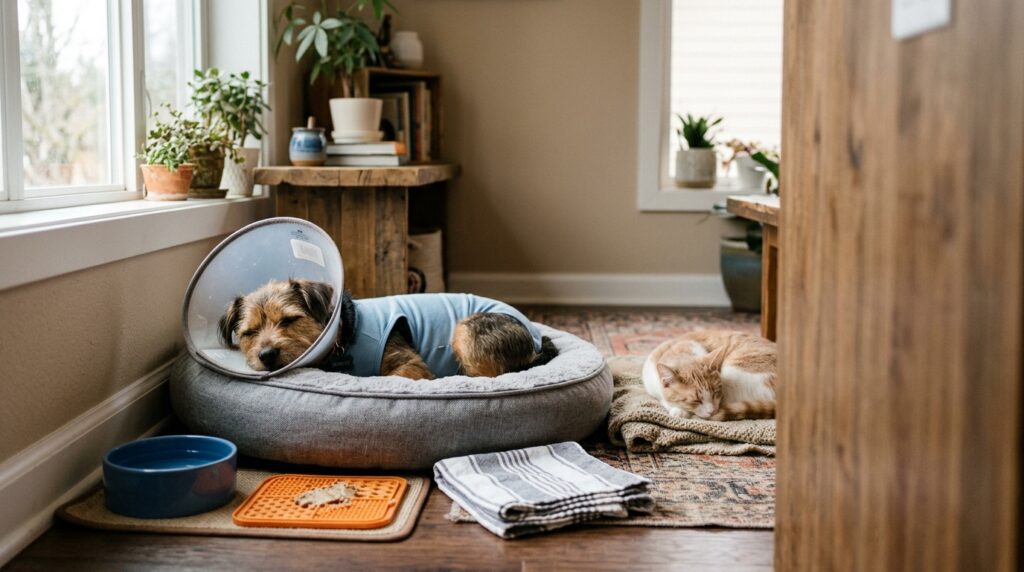
Spay surgery recovery usually takes 10 to 14 days, and what you do at home during that window matters as much as what happens in the operating room. Most pets go home the same day, a little groggy and very ready for a nap. Over the next two weeks, the incision closes, the internal tissue heals and your pet slowly returns to normal energy. Problems tend to come from too much activity too soon, or from a pet that gets a few unsupervised minutes to lick the incision. If you are looking for an animal hospital near me to guide your pet through surgery, this guide explains what is removed during each procedure, a realistic day-by-day timeline, the warning signs worth a phone call and practical ways to keep your dog or cat comfortable while they heal.
What Do They Remove in a Spay?
It helps to know what was actually done, because the type of surgery shapes the recovery. The American Veterinary Medical Association groups these procedures under the term gonadectomy, meaning the removal of the reproductive organs that produce sex hormones.
Spay Surgery: Ovaries and Uterus
A spay is performed on female dogs and cats. In an ovariohysterectomy, the most common approach in North America, the veterinarian removes both ovaries and the uterus through an incision on the belly. Some veterinarians perform an ovariectomy instead, which removes only the ovaries. Either way, a spay is abdominal surgery, which is why it calls for the most careful recovery.
Neuter Surgery: Testicles
A neuter, also called castration, removes both testicles in male pets. In dogs, the incision is usually made just in front of the scrotum. In cats, two small incisions are made in the scrotum itself and are often left to heal without stitches. Because the abdomen is not opened, neuter surgery is generally quicker to recover from. The exception is a male with a retained testicle, which may require an abdominal incision similar to a spay.
| Factor | Spay | Neuter |
|---|---|---|
| Pet | Female | Male |
| What is removed | Ovaries and usually the uterus | Both testicles |
| Incision location | Abdomen | In front of or on the scrotum |
| Surgical complexity | Abdominal surgery | Usually less invasive |
| Typical activity restriction | 10 to 14 days | 10 to 14 days, though many males feel better sooner |
| Hormone change | Heat cycles stop | Testosterone falls over the following weeks |
For a deeper look at how the two procedures compare, see our breakdown of the difference between spay and neuter.
Spay-Neuter Surgery Day: What Happens Before Your Pet Comes Home
Knowing the routine of surgery day takes some of the worry out of drop-off. At a well-equipped clinic providing spay neuter near me, the day typically follows this sequence:
- Pre-surgical exam: A veterinarian checks heart, lungs and overall condition on the morning of surgery.
- Bloodwork: Pre-anesthetic blood tests confirm the organs can safely process anesthesia.
- Fasting: Food is usually withheld the night before, as directed by your clinic.
- Anesthesia and monitoring: Trained technicians track heart rate, blood pressure, oxygen levels and body temperature throughout the procedure.
- Pain control: Pain relief is given before, during and after surgery, not only once your pet wakes up.
- Waking up: Pets recover in a warm, quiet area under observation until they can stand and swallow normally.
- Discharge: You receive written home-care instructions, any medications and a plan for follow-up.
Many owners choose to have a microchip placed while their pet is already under anesthesia. If you have been meaning to arrange a dog microchip in Mississauga, surgery day is a convenient time to ask.
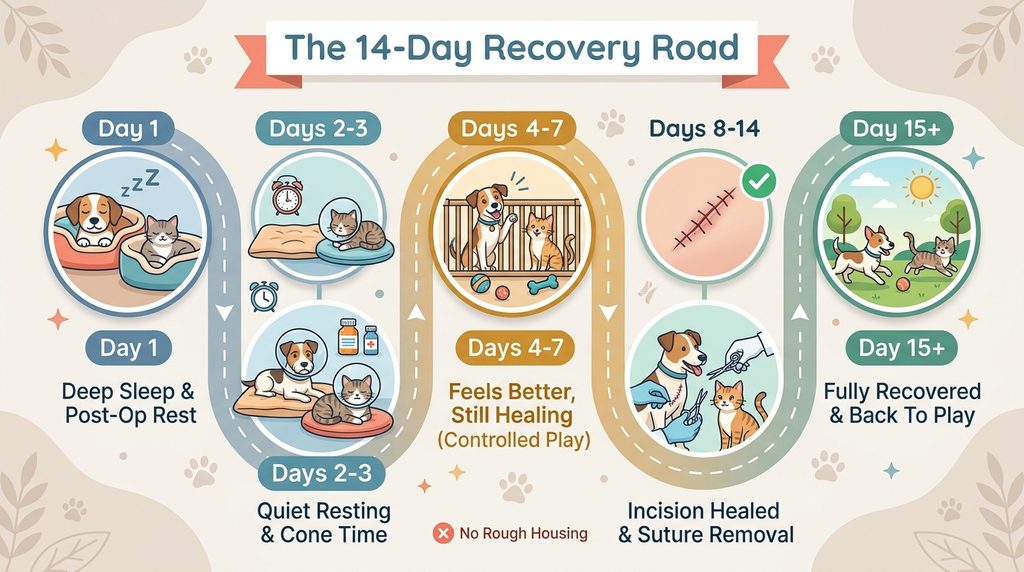
Spay Neuter Surgery Recovery Timeline: Day by Day
Every pet heals at a slightly different pace, but most follow a predictable pattern. Aftercare guidance from the Tufts Lerner Spay/Neuter Clinic lines up closely with the stages below.
| Timeframe | What Is Normal | What You Should Do |
|---|---|---|
| First 24 hours | Drowsiness, wobbly walking, a reduced appetite, a mild cough from the breathing tube | Keep your pet warm, quiet and indoors. Offer a small meal and water once fully awake. |
| Days 2 to 3 | Energy returning, mild redness or slight bruising at the incision, no bowel movement yet | Continue medications on schedule. Check the incision twice a day. |
| Days 4 to 7 | Pet feels much better and wants to play | Keep activity restricted. This is when most incisions get damaged. |
| Days 8 to 14 | Incision looks closed and pale pink | Keep the cone on. Book suture removal if non-dissolving stitches were used. |
| After 14 days | Full healing in most pets | Return to normal exercise only after your veterinarian confirms healing. |
Spay Surgery vs Neuter Surgery: How Recovery Differs
Dogs vs Cats
Cats tend to be more independent patients. They often rest on their own and hide discomfort well, so watching appetite and litter box habits is especially important. Dogs, particularly young and energetic breeds, usually feel ready to run well before their tissue has healed. Controlling a dog’s activity is the biggest challenge most owners face.
Males Can Stay Fertile for a Few Weeks
Neutering stops sperm production, but sperm already stored in the reproductive tract can survive for several weeks. Keep a newly neutered male away from intact females for at least a month. Hormone-driven behaviours such as marking or roaming also fade gradually rather than overnight.
Puppies, Adults and Large Breeds
Younger pets generally bounce back faster than adults. Spaying and neutering are often recommended between four and six months of age, although timing can vary with breed, size and health, and some large-breed dogs benefit from waiting longer. Older or overweight pets may need a slightly longer, more cautious recovery.
How to Help Your Pet Heal at Home
These eight habits prevent most of the complications veterinarians see after surgery:
- Set up a recovery zone: A crate, a small room or a gated area keeps your pet from jumping onto furniture or racing up stairs.
- Leash every bathroom break: Even in a fenced yard, a short leash prevents sudden sprints.
- Keep the cone on: Remove it only when you are directly supervising, such as at mealtime.
- Check the incision twice daily: Take a quick photo each morning so small changes are easy to spot.
- Keep it dry: No baths, swimming or long walks in heavy rain or snow until your veterinarian gives the all-clear.
- Give medications exactly as prescribed: Never use human pain relievers such as ibuprofen or acetaminophen, which can be toxic to pets.
- Offer mental enrichment: Lick mats, puzzle feeders and short training sessions burn energy without straining the incision.
- Separate pets if needed: Housemates may lick the incision or invite rough play.
Cone, Recovery Suit or Bitter Spray?
| Option | Best For | Advantages | Limitations |
|---|---|---|---|
| Rigid plastic cone | Determined lickers | Most reliable barrier | Can bump into walls and frustrate some pets |
| Soft or inflatable collar | Calm pets | More comfortable for sleeping | Some pets can still reach the incision |
| Recovery bodysuit | Pets that panic in cones | Covers the abdomen without restricting the head | Must be kept clean and checked for fit |
| Bitter-taste spray | Mild licking in cats | Easy to apply | Never apply directly on the incision |
The American Kennel Club’s post-surgical care guide notes that a recovery suit can work well for dogs that will not tolerate a cone.
Pain Medication and Feeding
On the evening of surgery, offer about half of your pet’s normal meal. Post-surgery guidance from the City of Calgary’s animal services clinic recommends returning to the usual portion the following morning. Some pets have little appetite for the first 12 hours, which is normal. If your pet vomits or has diarrhea after taking medication, stop and call your clinic before giving the next dose.
Warning Signs After Surgery: When to Call the Vet
Complications after spay-neuter surgery are uncommon and usually minor when they are caught early.
Call your veterinarian right away if you notice:
- The incision opening or tissue visible through the skin
- Active bleeding or blood-tinged fluid that continues past the first day
- Rapidly growing swelling under or around the incision
- Pale gums, laboured breathing or collapse
- Repeated vomiting or diarrhea, or refusing food and water beyond 24 hours
- Extreme lethargy that does not improve after the first night
Mention it at a recheck or by phone if you see:
- A small, firm, painless lump under the incision, which is often a mild reaction to internal stitches
- No bowel movement after three to four days
- A mild cough that lingers longer than a few days in an otherwise bright, eating pet
If something does not look right, reach out to a vet clinic near me and send a clear photo of the incision. A quick check is always better than waiting to see.
Life After Spay and Neuter: Weight and Long-Term Health
Once the hormones change, many pets need fewer calories. Without adjustments, gradual weight gain over the following months is common. Measure meals instead of free-feeding, track your pet’s weight monthly and ask about pet weight management in Mississauga if the scale starts creeping up. Keeping your pet lean after surgery protects the joints and supports a longer, more active life.
Case Study: A Second Look Saves a Spay Incision
This is a composite example based on situations veterinary teams in the GTA commonly see. Names and details have been changed.
- Patient: Juno, a one-year-old Husky mix
- Surgery: Routine spay with an uneventful anesthesia and same-day discharge
- What happened: On day five, Juno felt so good that she slipped her soft collar overnight and licked the incision. Her owner noticed new redness and a small amount of discharge the next morning.
- Response: The owner sent a photo and brought Juno in the same day. The incision was cleaned, a short course of medication was prescribed and Juno was switched to a rigid cone paired with a recovery suit.
- Outcome: The incision healed fully by day 16, with no further treatment needed.
- Takeaway: Juno looked fully recovered on day five, but her incision was not. Early action and a better barrier turned a possible infection into a minor setback.
Preparing for Spay and Neuter Surgery in Mississauga
A little preparation before surgery day makes recovery smoother for the whole household:
- Choose your clinic carefully: Our guide to choosing a spay and neuter clinic in Mississauga covers what to ask about anesthesia, monitoring and pain control.
- Understand the surgical setup: Learn how veterinary surgery in Mississauga is performed, from the sterile suite to post-operative monitoring.
- Ask about related procedures: Some pets need other work, such as a retained testicle or an umbilical hernia repair, handled by the pet surgery Mississauga team at the same time.
- New to the clinic? Families looking for an animal clinic near me can complete registration and share medical records before booking.
- Prepare the house: Set up the crate, buy a lick mat and clear a quiet room before your pet comes home.
Frequently Asked Questions About Spay Surgery Recovery
-
How long does spay surgery recovery take?
Most pets need about 10 to 14 days to recover from a spay. The skin incision usually looks closed within a week, but the deeper tissue keeps healing well into the second week. Many dogs and cats feel normal after only a few days, which is why activity restriction is so important. Your veterinarian will confirm when your pet can return to running, jumping, swimming and off-leash play.
-
Is neuter surgery recovery faster than spay recovery?
Usually, yes. Neuter surgery does not involve opening the abdomen, so many males feel comfortable within two or three days. Even so, the incision still needs about 10 to 14 days to heal fully, and the same activity limits apply. Cats often recover especially quickly after neutering. Males with a retained testicle may need abdominal surgery and should follow a recovery plan similar to a spay.
-
What do they remove in a spay?
In a standard spay, the veterinarian removes both ovaries and the uterus through a small incision in the abdomen. This procedure is called an ovariohysterectomy. Some clinics perform an ovariectomy, which removes only the ovaries. Both approaches stop heat cycles and prevent pregnancy. Removing the ovaries also eliminates the main source of reproductive hormones, which is why appetite and calorie needs often change afterward.
-
How long does my pet need to wear a cone after surgery?
Most pets should wear a cone or another barrier for the full 10 to 14 days, or until your veterinarian confirms the incision has healed. Many incision problems happen in the second week, when pets feel better and start licking. You can remove the cone during supervised meals. If your pet struggles with a standard cone, ask about a soft collar or recovery bodysuit.
-
When can my dog go for walks after spay-neuter surgery?
Short, calm leash walks for bathroom breaks are fine from the first day home. Start with five to ten minutes and lengthen walks gradually during the second week if your veterinarian agrees. Avoid off-leash play, dog parks, running, stairs and jumping until the recheck confirms healing. Too much activity can cause swelling, fluid build-up or an incision that opens.
-
Is it normal for my pet not to eat after surgery?
A reduced appetite for the first 12 to 24 hours is common because anesthesia can leave pets mildly nauseous. Offer a smaller meal on the evening of surgery and return to normal portions the next day if your pet is keeping food down. Call your clinic if your pet refuses food and water beyond 24 hours, vomits repeatedly or seems increasingly lethargic.
-
Can my pet climb stairs or jump on furniture after surgery?
Avoid stairs and jumping for the full recovery period. Jumping down from a couch or bed puts direct strain on an abdominal incision and is one of the most common causes of swelling after a spay. Carry small pets when possible, block stairs with a baby gate and use a crate or a single room for larger dogs. Supervised, low-energy activity is the safest approach.
-
Where can I find spay neuter surgery near me in Mississauga?
Dixie Animal Hospital provides spay and neuter surgery for dogs and cats in Mississauga, with a pre-surgical exam, bloodwork, continuous anesthesia monitoring and pain management before, during and after the procedure. Every patient goes home with clear recovery instructions and a follow-up plan. The team can also coordinate microchipping or other procedures while your pet is under anesthesia, keeping recovery to a single healing period.
Two quiet weeks now mean years of healthy, active life ahead, so give your pet the calm recovery they need and the incision will take care of the rest.