
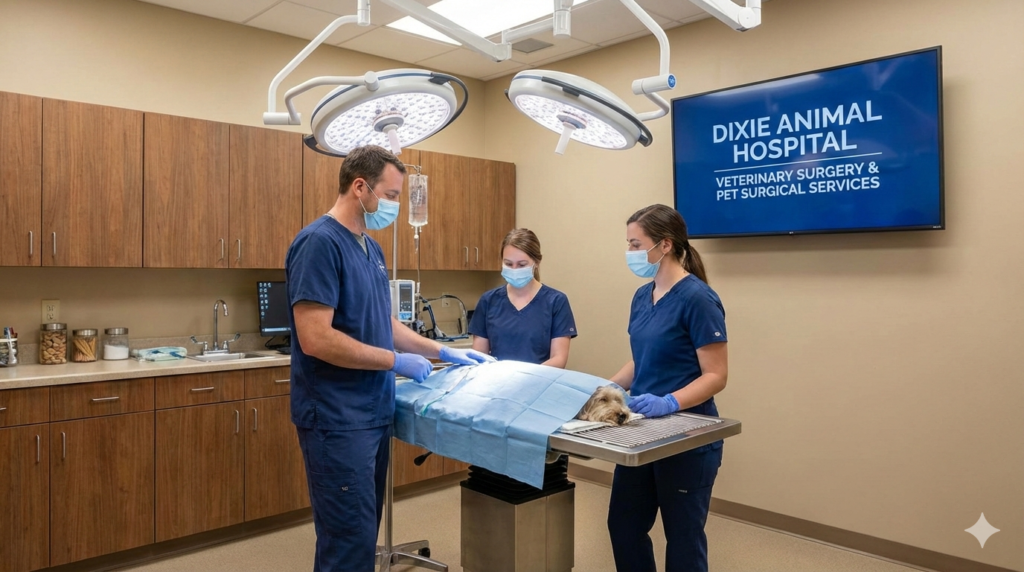
When your beloved companion needs surgical care, the experience can feel overwhelming. Questions flood your mind: Is this the right decision? What will the procedure involve? How long is recovery? As pet parents ourselves, we understand these concerns completely. At Dixie Animal Hospital in Mississauga, our surgical team has spent years perfecting our approach to ensure your pet receives exceptional care from consultation through recovery.
Understanding When Your Pet Needs Surgery
Surgery isn’t always an emergency situation. Sometimes, the signs develop gradually. Your dog might start limping after walks, or your cat could be having trouble eating. Other times, routine checkups reveal issues that require surgical intervention before they become serious problems.
Common situations that lead to surgical recommendations include persistent lumps that change in size or texture, dental disease affecting your pet’s ability to eat comfortably, injuries from accidents or rough play, and reproductive health procedures. Spay and neuter surgery remains one of the most frequently performed procedures, offering long-term health benefits beyond population control.
The decision to proceed with pet surgery should never feel rushed. During your consultation, our veterinary surgical team takes time to explain exactly what we’ve found, why surgery represents the best path forward, and what alternatives exist. We believe informed pet parents make confident decisions.
The Range of Surgical Procedures We Perform
Veterinary surgery encompasses far more than people typically imagine. At our animal hospital in Mississauga, we’ve invested in advanced equipment and ongoing training to handle both routine and complex procedures.
Soft Tissue Surgery
Soft tissue procedures involve organs, skin, and muscles rather than bones. These surgeries address a wide variety of health concerns. Mass removals are among the most common, whether we’re dealing with benign lipomas or something requiring further investigation. The earlier unusual lumps are addressed, the better the outcome typically becomes.
Gastrointestinal surgeries help pets who’ve swallowed foreign objects or developed blockages. We’ve removed everything from socks to children’s toys over the years. Bladder stone removal improves quality of life dramatically for pets suffering from urinary issues. Hernia repairs, wound reconstruction, and emergency procedures for bloat or internal bleeding all fall under this category.
Orthopedic Surgery
When bones, joints, or ligaments suffer damage, specialized orthopedic intervention may be necessary. Cruciate ligament repairs are particularly common in active dogs who love to run and jump. Fracture repairs require precision and expertise, whether caused by accidents or underlying bone disease.
We also perform procedures to address hip dysplasia, luxating patellas (loose kneecaps), and other structural issues affecting mobility. Watching a pet regain pain-free movement after successful orthopedic surgery never gets old.
Dental Surgery
Many people don’t realize that dental work often requires dentistry services under anesthesia. Advanced periodontal disease, fractured teeth, or oral tumors need surgical attention. The connection between oral health and overall wellbeing is stronger than most pet owners realize. Chronic dental infections can affect the heart, kidneys, and liver over time.
Ophthalmic and Specialized Procedures
Eye surgeries, tumor removals, and other specialized procedures require specific expertise. We’ve built relationships with specialists for cases requiring highly focused skills, but we handle many ophthalmologic emergencies and routine eye procedures in-house. Our endoscopy capabilities allow us to perform minimally invasive procedures for diagnostic and therapeutic purposes.
What Happens Before Surgery
Preparation makes all the difference in surgical outcomes. When you schedule a procedure at our vet clinic near me in Mississauga, we walk you through each step well in advance.
Pre-surgical bloodwork gives us a detailed picture of your pet’s internal health. Reference laboratory testing and in-house diagnostics help identify any underlying conditions that might affect anesthesia or healing. We check kidney and liver function, blood cell counts, and other vital markers.
Fasting requirements vary depending on the procedure, but generally, we ask that pets don’t eat after midnight the night before surgery. Water is usually permitted until a few hours before arrival. These precautions prevent complications during anesthesia.
We also discuss your pet’s current medications. Some need to continue right up to surgery, while others should be temporarily stopped. Pain management plans are established ahead of time, so we’re ready to keep your companion comfortable from the moment they wake up.
The Day of Surgery: What to Expect
Dropping off your pet for surgery ranks among the hardest moments of pet ownership. We get it. Our team makes the process as smooth as possible while keeping you informed every step of the way.
Morning drop-off typically happens between 8am and 9am, though our extended hours (8am to midnight, seven days a week) mean we can accommodate various schedules. A veterinary technician reviews the consent forms with you, answers last-minute questions, and takes your pet back to our pre-surgical area.
Your companion receives a thorough physical examination immediately before the procedure. We verify identity using tags and microchipping identification when available. An intravenous catheter is placed to deliver fluids and medications throughout the procedure.
Modern anesthesia protocols are remarkably safe. We tailor the anesthetic plan to each individual pet based on age, health status, and procedure type. Continuous monitoring of heart rate, blood pressure, oxygen levels, and body temperature happens throughout surgery. A dedicated technician focuses solely on anesthesia monitoring while the surgeon operates.
The surgical environment maintains strict sterility standards. Instruments are properly sterilized, surgical sites are clipped and scrubbed, and the team follows precise protocols to minimize infection risk.
Recovery and Post-Operative Care
The first few hours after surgery are critical. Your pet wakes up in our recovery area under close supervision. We monitor vital signs, manage pain proactively, and ensure they’re stable before calling you with an update.
Most pets can go home the same day for routine procedures, though some surgeries require overnight monitoring. When you arrive for pickup, we provide detailed written instructions covering medication schedules, activity restrictions, incision care, and warning signs that require immediate attention.
Pain management doesn’t end when your pet leaves our facility. We send appropriate medications home and explain exactly how and when to administer them. Contrary to outdated beliefs, we want your pet comfortable throughout recovery. Pain-free pets heal faster and return to normal activity sooner.
Activity restriction challenges many pet parents. Your normally energetic dog suddenly needs to stay calm for two weeks. We share practical tips for keeping pets entertained while limiting physical exertion. Short leash walks for bathroom breaks, puzzle toys for mental stimulation, and separation from other pets during playtime all help.
Incision monitoring is straightforward but important. We teach you what normal healing looks like versus concerning changes. A bit of redness right at the incision line is expected. Significant swelling, discharge, or your pet obsessively licking the area requires a call to our office.
Why Choose Dixie Animal Hospital for Vet Surgery
Selecting where your pet receives surgical care is one of the most significant decisions you’ll make. Several factors set our practice apart in providing exceptional surgical services.
Experience and Expertise
Our surgical team has performed thousands of procedures across all common and many uncommon situations. Experience matters tremendously in surgery. We’ve handled complications, adapted to unexpected findings, and refined our techniques over years of practice.
Continuing education keeps our skills current. Surgical techniques and technologies evolve constantly. Our veterinarians regularly attend conferences, complete advanced training programs, and stay connected with specialist communities.
Advanced Equipment and Facilities
We’ve invested significantly in modern surgical equipment. Our surgical suite includes high-quality monitoring systems, precise anesthetic delivery, and specialized instruments for various procedure types. The right tools enable better outcomes.
Comprehensive Pre and Post-Operative Care
Surgery is just one piece of the puzzle. Our approach emphasizes wellness and preventive care throughout your pet’s life, including thorough pre-surgical assessment and attentive post-operative follow-up.
Extended Hours and Accessibility
Located at 1760 Dundas St E in Mississauga, we’re easy to reach and offer something most practices can’t match: we’re open from 8am to midnight, seven days a week, including weekends and holidays. This extended availability means you can reach us for post-surgical concerns without waiting until the next business day.
Need to discuss your pet’s recovery at 10pm on a Sunday? Call us at (905) 270-5444. Have questions three days after surgery while preparing for work? We’re here. This accessibility provides peace of mind during the stressful recovery period.
Clear Communication
We believe you deserve to understand exactly what’s happening with your pet’s health. Our team takes time to explain procedures in plain language, answer questions thoroughly, and provide realistic expectations about outcomes and recovery timelines. You can also reach us at petcare@dixieanimalhospital.ca for non-urgent questions.
Preparing Your Home for Post-Surgical Recovery
Before your pet comes home from surgery, a few simple preparations make recovery smoother. Create a quiet, comfortable space away from stairs, other pets, and household chaos. A spare bedroom or quiet corner of your living room works well.
Gather supplies in advance: medications, an Elizabethan collar if needed, clean towels, and familiar bedding. Having everything ready means you won’t be scrambling while trying to keep your recovering pet calm.
Consider your pet’s normal routine and how surgery will impact it. If your dog usually sleeps upstairs but can’t climb stairs for two weeks, set up sleeping arrangements on the main floor now. If your cat’s litter box is in the basement, move it somewhere accessible before surgery day.
Special Considerations for Different Pets
Dogs and cats have different needs during surgical recovery. Dogs generally want to resume normal activity quickly, making rest enforcement challenging. Cats often hide when they feel unwell, so monitoring incisions requires extra attention.
Senior pet care requires additional considerations. Older animals may need longer recovery times, adjusted pain medication protocols, or special accommodations for pre-existing conditions. We factor age into every surgical decision and plan.
Small pets like rabbits, guinea pigs, and birds also require surgical care occasionally. These cases demand specialized knowledge about anesthesia, pain management, and species-specific healing processes.
Common Questions About Pet Surgery
-
How long does the typical procedure take?
Surgery duration varies widely based on complexity. A routine spay might take 30-45 minutes, while orthopedic repairs could require two hours or more. We always call with an update once your pet is in recovery.
-
Will my pet be in pain?
Pain management is a top priority. We use multimodal approaches including pre-emptive pain medication, local anesthetics when applicable, and appropriate post-operative pain control. Our goal is keeping your pet comfortable throughout recovery.
-
When can normal activity resume?
Most pets need restricted activity for 10-14 days, though this varies by procedure type. We provide specific timelines during discharge and adjust recommendations at follow-up appointments based on healing progress.
-
What if I notice something concerning during recovery?
Call us immediately at (905) 270-5444. Our extended hours mean you can reach us when concerns arise rather than waiting or seeking emergency care elsewhere. We’d rather answer ten unnecessary calls than have you worry about one genuine concern.
-
Are there alternatives to surgery?
Sometimes yes, sometimes no. We always discuss non-surgical options when they exist. For certain conditions like foreign body obstructions or some tumors, surgery represents the only effective treatment. For others, medical management might be viable. We’ll explain all options honestly.
Moving Forward with Confidence
The decision to proceed with veterinary surgery for your companion deserves careful consideration and access to complete information. At Dixie Animal Hospital, we’re committed to providing both.
Whether you’re facing a scheduled procedure or dealing with an unexpected surgical need, our team is ready to answer questions, address concerns, and provide exceptional care throughout the process. Our combination of experienced veterinary surgical expertise, modern facilities, and genuine compassion for pets and their families sets a high standard for animal surgical care in Mississauga.
From initial consultation through final recheck appointments, you’ll find our approach centered on your pet’s wellbeing and your peace of mind. We maintain the same high standards whether performing a common procedure or handling a complex surgical challenge.
Surgery is never easy, but with the right team supporting you and your pet, the experience becomes manageable. Our doors are open seven days a week, from 8am to midnight, because pet health emergencies and concerns don’t follow a convenient schedule.
If your pet needs surgical care or you’re seeking a second opinion about a surgical recommendation, we invite you to contact our vet clinic. Call (905) 270-5444 to schedule a consultation or visit us at 1760 Dundas St E in Mississauga. You can also email petcare@dixieanimalhospital.ca with questions.
Your pet’s health deserves nothing less than the comprehensive, compassionate surgical care we provide every single day. We look forward to being your partner in keeping your companion healthy, comfortable, and by your side for years to come.