
If you’ve recently adopted a puppy or kitten, or you’re revisiting the decision for an older pet, the question of spay and neuter tends to come up quickly — and with it, a lot of terminology that sounds clinical but doesn’t always get explained clearly.
Both procedures are among the most common surgeries performed at veterinary clinics, yet many pet owners walk into their first consultation without a solid understanding of what each one actually involves, why it matters, or when the right time is to schedule one. This guide covers all of it, from the basic biology to what the recovery period looks like, so you can make an informed decision for your animal.
The Core Difference: Which Pet, Which Procedure
The simplest way to frame it: spaying is for female pets, neutering is for male pets. Both are sterilization procedures, meaning both prevent reproduction — but the surgical approach, the anatomy involved, and a few of the health benefits differ between the two.
Spaying refers to the surgical removal of a female animal’s reproductive organs. The technical term is ovariohysterectomy, which means the ovaries and uterus are removed entirely. In some cases, a procedure called an ovariectomy (removal of only the ovaries) is performed, but full removal of both organs is the more common standard in North American veterinary practice. Once spayed, a female pet can no longer go into heat, cannot become pregnant, and no longer produces reproductive hormones from those organs.
Neutering refers to the surgical removal of a male animal’s testicles — a procedure technically called orchiectomy or castration. After neutering, a male pet can no longer produce sperm or testosterone from the testes. This stops reproduction and reduces hormone-driven behaviors that many owners find challenging to manage.
The term “neutering” is also sometimes used as a general term for sterilization in either sex, though most veterinarians in practice use it specifically to refer to the male procedure.
What Each Surgery Involves
Understanding what actually happens during each procedure helps demystify the experience and makes the recovery instructions easier to follow.
The Spay Procedure
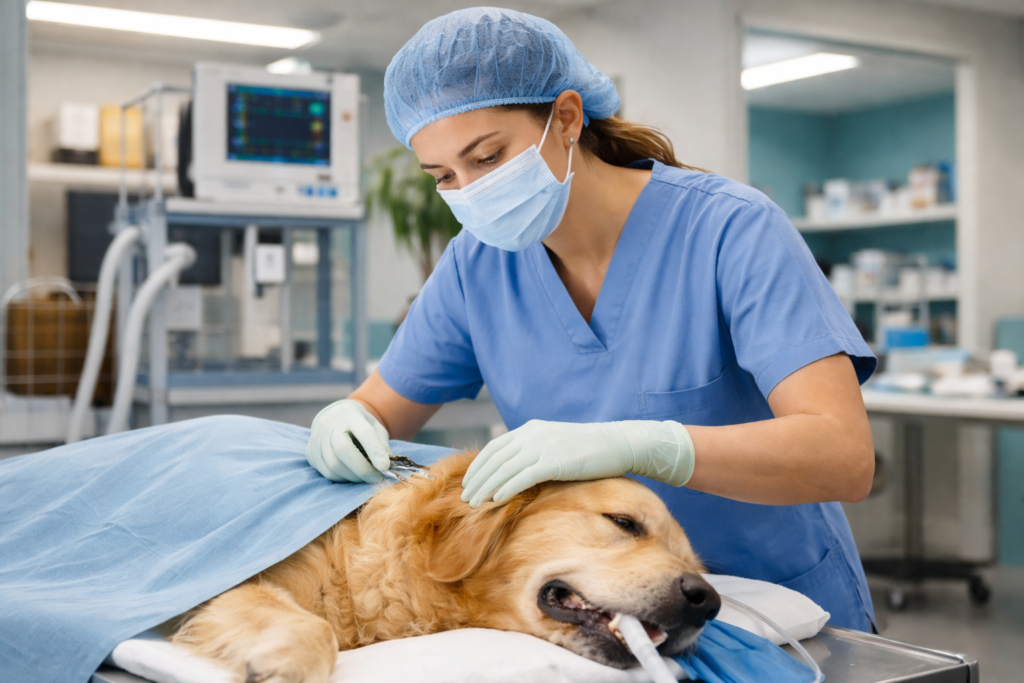
Spaying is an abdominal surgery. Your pet is placed under general anesthesia, and the veterinarian makes a small incision in the abdomen — typically in the midline of the belly. Through this incision, the ovaries, fallopian tubes, and uterus are carefully removed and the blood vessels are ligated to prevent bleeding. The incision is then closed in layers.
Because it involves entering the abdominal cavity, spaying is considered a more involved procedure than neutering, and recovery typically takes a bit longer. That said, it is still considered routine surgery, and a veterinary team experienced in pet spay and neuter surgery performs it with careful anesthesia monitoring and standardized protocols to keep the process as safe as possible.
The Neuter Procedure
Neutering is typically a shorter procedure. After general anesthesia is administered, a small incision is made near the base of the scrotum, and the testicles are removed through it. The blood supply is tied off, and the incision is closed — often with internal sutures that dissolve on their own.
Because the surgery doesn’t enter the abdominal cavity, recovery tends to be quicker and activity restrictions are slightly less demanding. Most male pets are moving around relatively comfortably within a day or two, though full healing still takes about 10 to 14 days.
Why These Procedures Are Recommended
The most obvious reason for spaying or neutering a pet is population control. Unplanned litters are one of the leading contributors to shelter overcrowding, and responsible ownership includes taking steps to prevent them. But the health case for these procedures goes well beyond that.
Health Benefits of Spaying
Spaying eliminates the risk of pyometra — a serious, life-threatening uterine infection that affects unspayed females, particularly as they age. It is a genuine emergency when it develops, requiring immediate surgery and intensive care. Removing the uterus eliminates that risk entirely.
Spaying also significantly reduces the risk of mammary (breast) tumors in dogs and cats. Research consistently shows that spaying before the first heat cycle provides the greatest protective effect, though benefit exists with spaying at later ages too. Given that mammary tumors in cats have a high rate of malignancy, early spaying carries real preventive value.
Beyond cancer risk, spaying ends the heat cycle — which brings obvious benefits for indoor cats whose vocalizing and behavior during heat can be difficult to manage, and for dogs whose cycles create mess and the stress of managing unwanted male attention.
Health Benefits of Neutering
Neutering eliminates the risk of testicular cancer entirely — a relatively common condition in older intact male dogs. It also reduces the likelihood of prostate problems, including benign prostatic hyperplasia, which is almost universal in intact male dogs as they age and can cause urinary and defecation difficulties.
From a behavioral standpoint, neutering reduces roaming behavior (which directly reduces the risk of traffic injuries), urine marking, and certain forms of aggression toward other males. These changes aren’t guaranteed for every dog, and behaviors that are deeply established before neutering may persist — but for most pets, the reduction is meaningful.
For cats specifically, neutering dramatically reduces the strong urine odor that intact males produce, and significantly decreases roaming and fighting behavior that leads to bite wound infections and the transmission of diseases like FIV.
When Should You Spay or Neuter Your Pet?
Timing varies depending on your pet’s species, breed, and size — and the recommendations have evolved somewhat in recent years as research on hormonal development has grown.
For cats, both spaying and neutering are generally recommended around 4 to 6 months of age — before the first heat cycle in females, and before testosterone-driven behaviors are established in males.
For dogs, the traditional recommendation was also around 6 months. However, for larger breeds, some research now suggests waiting until closer to 12 to 18 months may be beneficial for musculoskeletal and hormonal development. This is worth discussing directly with your veterinarian, who can weigh your dog’s specific breed, size, and health profile.
If you have an older pet that has not yet been spayed or neutered, the procedures can still be performed safely in adult animals with appropriate pre-surgical assessment. In-house diagnostics including bloodwork help confirm that an older pet is healthy enough for anesthesia before surgery proceeds.
How to Choose the Right Spay and Neuter Clinic
When you start searching for a spay neuter clinic near you, it’s worth looking past the nearest result and evaluating a few specifics.
Pre-surgical protocols. A reputable animal spay neuter clinic will perform bloodwork before any procedure to confirm your pet is healthy for anesthesia. Skipping this step in the name of convenience isn’t a tradeoff worth making.
Anesthesia monitoring. Continuous monitoring of heart rate, oxygen levels, blood pressure, and temperature throughout surgery significantly reduces risk. Ask whether a dedicated technician monitors anesthesia from start to finish, separate from the surgeon’s responsibilities.
Post-operative support and hours. Recovery questions don’t always arise during business hours. Knowing that your clinic is reachable if your pet’s incision looks unusual on a weekend evening is meaningful. As a Mississauga animal hospital open from 8 AM to midnight every day, including weekends and holidays, Dixie Animal Hospital is available when those questions come up — without having to track down an emergency line.
Clear discharge instructions. A good clinic sends you home with written instructions that cover activity restrictions, incision care, signs to watch for, feeding, and when to follow up. This information should be communicated in plain language, not medical shorthand.
What the Recovery Period Looks Like
Whether your pet has been spayed or neutered, the first two weeks after surgery are the most important for healing.
Activity needs to be restricted during this period. Running, jumping, and rough play put strain on the incision and can cause it to open or become infected. For dogs, leash walks only — no off-leash time, no stairs if avoidable. For cats, a single level of the home with no jumping opportunities is ideal. An e-collar (the cone) is typically recommended for the first 10 to 14 days to prevent licking and chewing at the incision.
Most pets feel noticeably more alert within 24 to 48 hours. Mild lethargy, reduced appetite, and some tenderness at the incision site on the first day are normal. Swelling or redness that worsens after day two, any discharge from the incision, persistent vomiting, or an inability to urinate are reasons to call your vet.
A follow-up appointment is usually scheduled around 10 to 14 days post-surgery to assess healing and remove sutures if non-dissolvable ones were used.
Frequently Asked Questions
-
Does spaying or neutering change my pet’s personality?
Both procedures can reduce hormone-driven behaviors — roaming, marking, certain types of aggression. Core personality traits, however, are shaped by genetics and environment, not reproductive hormones. Most owners describe their pets after surgery as calmer in specific situations without any loss of the characteristics that make them who they are.
-
Is it safe to spay or neuter an older pet?
Yes, with appropriate pre-surgical screening. Pre-operative bloodwork through a clinic with in-house diagnostic capabilities can identify any underlying conditions that need to be managed before anesthesia. Older pets are not automatically excluded from these procedures — the assessment is just more thorough.
-
What is a “neuter and spay clinic” — is it different from a regular vet?
The term refers to a clinic that performs these procedures, not necessarily one that only does them. Full-service veterinary hospitals like Dixie Animal Hospital offer spay and neuter surgery as part of a broader range of surgical and medical services, which means the team caring for your pet during surgery is also equipped to handle any complications that arise.
-
How do I know if my pet has already been spayed or neutered?
Male pets are easy to check visually. For females, a small tattoo — typically a green or blue line near the incision site — is sometimes placed during surgery as a permanent indicator. If you’re unsure, a quick examination by a vet near you can confirm it definitively.
-
Will my pet gain weight after the procedure?
Metabolism can slow slightly after spaying or neutering due to hormonal changes, and weight gain is possible if food intake and exercise aren’t adjusted. Your veterinarian can advise on appropriate feeding following the procedure. This is also a good time to revisit nutritional counseling to keep your pet at a healthy weight through different life stages.
Booking a Spay or Neuter Surgery in Mississauga
If your pet is approaching the recommended age for the procedure — or you’ve adopted an older animal that hasn’t been altered — the first step is a consultation with a veterinarian who can assess your pet’s individual health and give you a clear timeline.
At Dixie Animal Hospital, the process begins with a thorough health evaluation and bloodwork to confirm surgical readiness. The team walks through what to expect before, during, and after the procedure so you’re not left guessing at any stage. And because the hospital is open from 8 AM to midnight every day of the week, reaching someone with a post-operative question is never a matter of waiting until Monday morning.
Dixie Animal Hospital 1760 Dundas St E, Mississauga, ON, L4X 1L8 Phone: (905) 270-5444 Email: petcare@dixieanimalhospital.ca Hours: 8 AM – Midnight, 7 days a week, including weekends and holidays