
Three months ago, a golden retriever named Bailey came through our doors acting completely off. Her owner couldn’t pinpoint exactly what was wrong, just that something wasn’t right. Bailey was drinking more water than usual, seemed tired during walks, and had lost a bit of weight despite eating normally. The physical examination looked relatively unremarkable, but those subtle signs told us we needed to dig deeper.
Within twenty minutes of running bloodwork through our in-house laboratory, we had answers. Bailey’s kidney values were significantly elevated, indicating early kidney disease that we could immediately begin managing. Had we sent those samples to an outside lab and waited days for results, Bailey would have continued declining. This is exactly why modern veterinary diagnostics matter so much, and why having comprehensive diagnostic laboratory services available makes such a difference in patient outcomes.
What Are Veterinary Diagnostics and Why Do They Matter?
When you bring your pet to an animal diagnostic clinic, you’re accessing technology that allows us to see beyond what physical examinations reveal. Your cat can’t tell us their stomach hurts or their liver feels off. Your dog won’t mention feeling dizzy or experiencing joint pain. We need objective data to understand what’s happening inside their bodies.
Veterinary diagnostics encompass everything from blood tests and urinalysis to imaging studies and specialized screenings. These tools transform veterinary medicine from educated guessing into precise, evidence-based treatment. Think of diagnostics as the detective work that solves medical mysteries before they become emergencies.
The advancement in animal health laboratories over the past two decades has been remarkable. Tests that once took a week and required shipping samples across the country now happen in-house within minutes. This speed isn’t just convenient; it’s often lifesaving. When a pet arrives in critical condition, waiting three days for lab results simply isn’t an option.
The Power of In-House Laboratory Testing
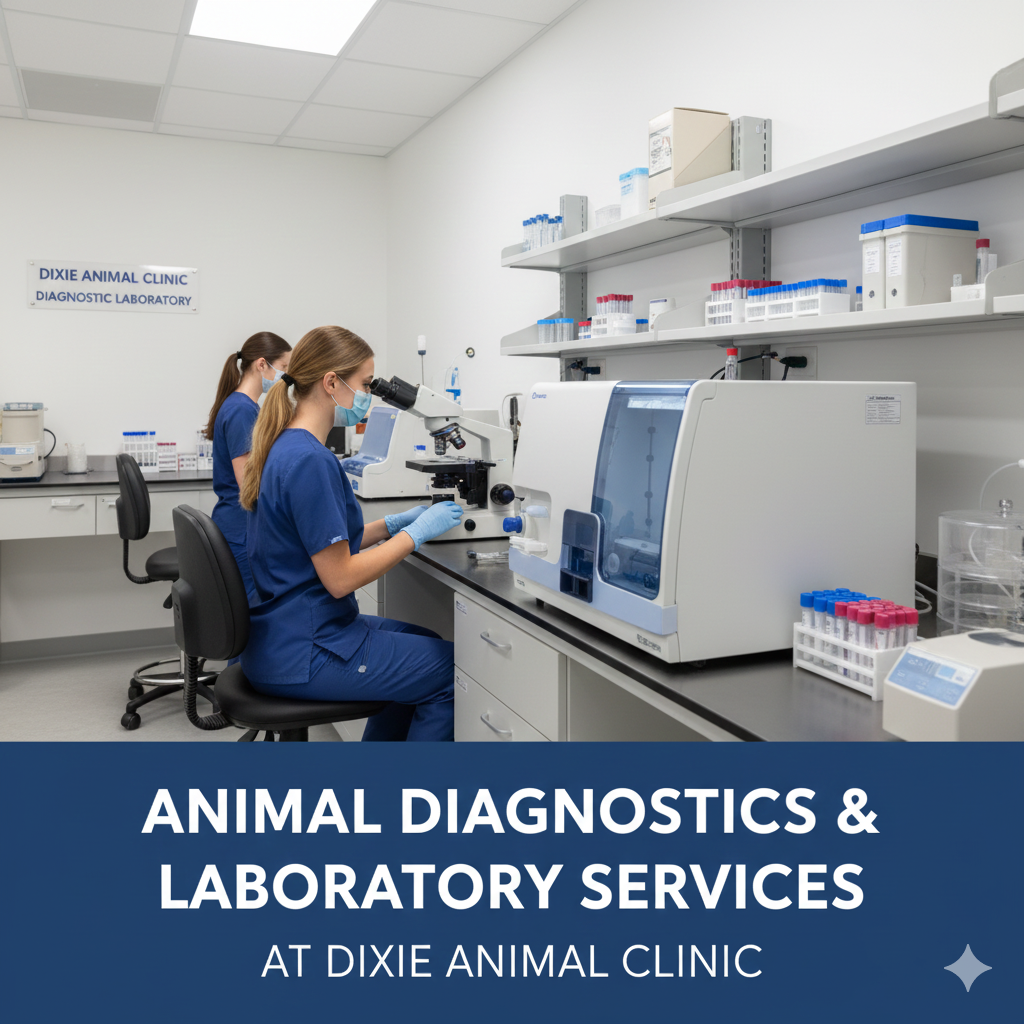
Our in-house diagnostics capability at Dixie Animal Hospital Mississauga represents one of our most valuable resources. Having sophisticated laboratory equipment on-site fundamentally changes how we practice medicine.
Immediate Results When They Matter Most
Speed saves lives in emergency situations. A dog hit by a car needs immediate assessment for internal bleeding. A cat struggling to breathe requires instant evaluation of oxygen levels and organ function. When someone searches for emergency vet near me open now at 10pm on a Saturday, they need more than just a facility that’s open. They need complete diagnostic capabilities ready to go.
Our in-house pet laboratory near me capabilities mean we’re running critical tests while you’re still in the exam room. Complete blood counts, chemistry panels, electrolyte levels, blood glucose, and urinalysis all happen rapidly. This immediate feedback allows us to start treatment right away rather than playing a dangerous waiting game.
Real-Time Treatment Adjustments
Diagnostics don’t just happen at the beginning of treatment. Monitoring how your pet responds to therapy often requires repeated testing. A dog with severe vomiting and diarrhea might need electrolyte levels checked every few hours. A diabetic cat requires blood glucose monitoring throughout the day as we adjust insulin doses.
In-house testing makes this kind of intensive monitoring practical. We’re not waiting on outside laboratories or batching samples for efficiency. We’re testing when needed and adjusting treatment in real-time based on results.
Common In-House Tests We Perform
Our dog laboratory and pet diagnostic equipment handles a comprehensive range of tests:
Complete Blood Count (CBC): Evaluates red blood cells, white blood cells, and platelets. This test detects anemia, infection, inflammation, blood clotting problems, and certain cancers.
Blood Chemistry Panel: Assesses organ function including liver, kidneys, pancreas, and more. We measure protein levels, glucose, electrolytes, and enzymes that indicate how well organs are working.
Urinalysis: Examines urine for signs of infection, crystals, kidney disease, diabetes, and other conditions. Urine is remarkably informative about overall health.
Electrolyte Testing: Measures sodium, potassium, chloride, and other minerals critical for body function. Imbalances can be immediately life-threatening.
Blood Glucose: Monitors diabetic patients and diagnoses diabetes in pets showing symptoms like excessive drinking and urination.
Thyroid Testing: Evaluates thyroid hormone levels, particularly important in older cats who commonly develop hyperthyroidism.
Coagulation Testing: Checks blood clotting ability before surgeries or when bleeding disorders are suspected.
When External Reference Laboratories Are Necessary
Despite our extensive in-house capabilities, some situations require the specialized expertise of a clinical reference laboratory. This is where reference laboratory testing comes into play.
Specialized Testing Beyond In-House Capabilities
External veterinary laboratories agency facilities maintain equipment and expertise for tests that wouldn’t be practical for individual clinics to offer. These include specialized endocrine testing, certain cancer markers, infectious disease panels, genetic testing, and advanced pathology work.
For instance, when we remove a suspicious lump during surgery, that tissue goes to a pathologist at a reference lab. They examine it microscopically, determine if it’s cancerous, identify the specific tumor type, and provide prognostic information. This level of analysis requires specialized training and equipment.
Certain infectious disease testing happens through reference labs. While we can screen for common infections in-house, confirming unusual diseases or running titers for specific antibodies often requires outside expertise.
Strategic Use of Both Systems
The most effective approach combines in-house and reference laboratory capabilities. We run immediate tests in-house to guide initial treatment, then send samples for specialized testing when needed. This hybrid approach gives you the best of both worlds: speed when it matters and specialized expertise when the situation demands it.
Bailey’s case illustrates this perfectly. Our in-house testing identified kidney disease immediately, allowing us to start treatment that same day. We then sent additional samples to a reference lab for more detailed kidney function assessment and to screen for underlying causes. The in-house results got treatment started; the reference lab results refined our long-term management plan.
Diagnostic Testing in Different Scenarios
Understanding when and why we recommend testing helps you make informed decisions about your pet’s care.
Wellness Screening
Not all diagnostics happen because something’s obviously wrong. Wellness and preventive care includes baseline testing to catch problems before symptoms appear.
Young, healthy pets benefit from establishing baseline values. Knowing what’s normal for your individual pet makes it easier to identify concerning changes later. Annual or biannual wellness bloodwork becomes increasingly important as pets age.
Many serious conditions develop silently. Kidney disease, for instance, doesn’t cause obvious symptoms until about 75 percent of kidney function is lost. Catching it earlier through routine screening dramatically improves outcomes. The same applies to liver disease, diabetes, and thyroid disorders.
Pre-Anesthetic Testing
Before any procedure requiring anesthesia, whether it’s surgical services or a dental cleaning, we recommend bloodwork. Anesthesia affects multiple organ systems. We need to know those organs are healthy enough to handle anesthetic medications.
Pre-anesthetic testing identifies hidden problems that increase surgical risk. Occasionally we discover issues that require addressing before surgery can safely proceed. Better to find these problems beforehand than mid-procedure when options are limited.
Diagnosing Illness
When your pet is sick, diagnostics pinpoint the problem. Vomiting, diarrhea, lethargy, decreased appetite, increased thirst, weight loss, and countless other symptoms warrant investigation. Physical examination provides clues, but diagnostics confirm what’s actually happening.
Sometimes the diagnosis is straightforward. Other times it’s complex, requiring multiple tests to piece together the puzzle. Veterinary diagnostics give us objective data to work with rather than relying solely on symptoms that could have many different causes.
Monitoring Chronic Conditions
Pets with ongoing health issues need regular monitoring. Diabetic animals require periodic blood glucose curves and fructosamine testing. Pets on long-term medications need organ function monitoring to ensure the drugs aren’t causing problems. Senior pet care often involves managing multiple chronic conditions that all require laboratory oversight.
Regular monitoring allows us to catch complications early and adjust treatments before small issues become big problems. It’s the difference between maintaining stable disease and dealing with crisis management.
Advanced Diagnostic Capabilities
Beyond standard laboratory work, comprehensive diagnostic services include additional tools that provide different types of information.
Imaging and Visualization
While not technically laboratory work, imaging is crucial to complete diagnostics. Digital radiography (x-rays) shows bone structure, organ size and position, and can identify foreign objects, tumors, and fluid accumulation. Ultrasound visualizes soft tissue structures in real-time, excellent for examining organs, detecting fluid, and guiding certain procedures.
Our endoscopy capability allows us to visualize inside the gastrointestinal tract, respiratory system, and other areas without invasive surgery. We can see inflammation, ulcers, foreign bodies, and masses directly while collecting tissue samples for laboratory analysis.
Specialized Screening
Certain situations call for targeted testing. Breeding animals might need genetic screening for inherited conditions. Pets traveling internationally require specific disease testing and titer documentation. Exposure to toxins necessitates specialized blood tests.
The breadth of available testing means we can investigate almost any medical question when needed. From rare metabolic disorders to obscure infectious diseases, modern veterinary laboratories provide answers that weren’t available to veterinarians just a generation ago.
A Day in the Life of Our Laboratory
Understanding what happens behind the scenes might interest pet parents who’ve never thought about the process.
Every morning starts with running quality control on our equipment. Precision matters enormously in laboratory work. Regular calibration and quality checks ensure accurate results. An incorrectly calibrated machine could read normal values as abnormal or vice versa, leading to wrong treatment decisions.
Throughout the day, samples arrive from examinations. Blood tubes get carefully labeled with patient information, the tests needed, and the time collected. Our veterinary technicians are trained in proper sample handling because technique affects results. Hemolyzed blood samples, contaminated urine, or improperly stored specimens can give false readings.
Different tests require different sample preparation. Some need whole blood, others require separating plasma or serum. Timing matters for certain tests. Our team coordinates the workflow to ensure samples are processed correctly and efficiently.
While automated analyzers handle most routine testing, interpretation requires expertise. Our veterinarians review results in context with the patient’s history, physical exam findings, and other diagnostic information. Numbers on a printout mean nothing without clinical interpretation.
For samples going to reference labs, proper packaging and documentation ensure they arrive in good condition and results come back to the right patient. We track samples carefully and follow up to ensure timely result delivery.
Common Questions About Veterinary Laboratory Services
-
Why can’t you just tell me what’s wrong without testing?
Physical examinations provide valuable information, but they can’t see inside organs or measure biochemical parameters. Many conditions cause similar symptoms, and testing distinguishes between them. Guessing leads to ineffective treatment that wastes time and money while your pet continues suffering.
-
How long do results take?
In-house testing typically provides results within 15 to 30 minutes. Reference laboratory testing varies from one day to a week depending on the test complexity. Urgent cases get priority processing.
-
Are all these tests really necessary?
We recommend testing based on clinical need. If we’re suggesting multiple tests, it’s because they each provide different information necessary for accurate diagnosis or monitoring. We’re happy to explain what each test tells us and why it matters for your pet’s specific situation.
-
What if my pet is scared or difficult for blood draws?
Our experienced team handles anxious pets gently and efficiently. Sometimes we use mild sedation for particularly fearful animals. The brief stress of sample collection is minimal compared to the value of diagnostic information obtained.
-
Do results ever come back wrong?
Laboratory errors are rare but possible. This is why we interpret results alongside clinical findings. If something doesn’t make sense, we retest to confirm. Quality control protocols minimize error risk.
-
Can I get copies of the results?
Absolutely. Many pet parents appreciate having their own records, especially if they see multiple veterinarians or want to track trends over time. Just ask and we’ll provide copies of all laboratory work.
Why Dixie Animal Hospital’s Diagnostic Services Stand Out
Choosing where your pet receives diagnostic care matters more than many people realize. Not all veterinary facilities offer equivalent capabilities or quality.
Comprehensive In-House Testing
Our investment in advanced diagnostic equipment means we’re not sending out routine tests and waiting days for basic information. The analyzers in our facility match what you’d find at larger specialty hospitals. This isn’t about convenience; it’s about medical capability.
Having both in-house diagnostics and access to reference laboratory testing means we choose the right tool for each situation. Immediate in-house results when speed matters, specialized external testing when expertise is needed.
Extended Hours Mean Access When You Need It
Laboratory capabilities only help if they’re available when your pet needs them. We’re open from 8am to midnight, seven days a week, including weekends and holidays. This isn’t just about examination availability. Our diagnostic equipment is ready to go whenever you arrive.
That 10pm emergency on Sunday night gets the same comprehensive diagnostic workup as a scheduled Wednesday morning appointment. When pet parents search emergency vet near me open now in a panic, they need full-service capability, not just someone to look at their pet and refer them elsewhere.
Experienced Interpretation
Running tests is only half the equation. Interpreting results requires clinical expertise and experience. Our veterinarians review laboratory findings in context with each patient’s complete picture. We know when results need follow-up testing, when they indicate urgent intervention, and when they’re within normal variation.
Years of experience mean we’ve seen patterns emerge across thousands of cases. We recognize subtle combinations of findings that less experienced practitioners might miss. This expertise directly impacts the accuracy of diagnosis and treatment decisions.
Continuity of Care
When we’re monitoring ongoing conditions, having consistent diagnostic capabilities matters. We’re comparing new results to previous baselines from the same equipment. This consistency makes trend analysis more reliable than comparing results from different laboratories with different reference ranges.
Location and Accessibility
Finding us at 1760 Dundas St E in Mississauga is straightforward, serving families throughout the region. But location is more than physical accessibility. It’s about being available when needed. Call (905) 270-5444 any day, any time within our extended hours. Email petcare@dixieanimalhospital.ca with questions about your pet’s laboratory results or upcoming diagnostic needs.
The Future of Veterinary Diagnostics
Technology continues advancing, and we invest in staying current. Point-of-care testing becomes more sophisticated each year. Tests that once required large laboratory facilities now happen in compact, precise analyzers.
Artificial intelligence is beginning to assist with result interpretation, flagging patterns that might indicate specific diseases. While this won’t replace veterinary expertise, it adds another layer of analytical support.
More importantly, the trend toward preventive testing continues growing. As pet parents increasingly recognize the value of catching problems early, wellness screening becomes standard rather than exceptional. This shift prevents disease rather than just treating it after symptoms appear.
Making Diagnostic Testing Work for Your Pet
Understanding the role of laboratory testing in your pet’s healthcare empowers you to make informed decisions. When we recommend diagnostics, we’re not adding unnecessary expenses. We’re gathering information essential for accurate diagnosis and effective treatment.
Questions are always welcome. If you don’t understand why we’re suggesting specific tests, ask. We want you to comprehend what we’re looking for and why it matters. Informed pet parents are partners in their companion’s care.
Sometimes test results lead to more questions rather than immediate answers. This is normal in complex medical cases. Medicine isn’t always straightforward. We work through the diagnostic process systematically, using each piece of information to guide next steps.
The goal is always the same: accurate diagnosis leading to effective treatment and the best possible outcome for your pet. Laboratory testing is simply the most reliable tool we have for achieving that goal.
Getting Started with Diagnostic Services
If your pet needs diagnostic testing, whether for illness, pre-surgical screening, or wellness monitoring, Dixie Animal Hospital provides comprehensive diagnostic laboratory services to meet those needs.
Schedule an appointment by calling (905) 270-5444. Our extended hours make finding a convenient time easier. We’re open 8am to midnight every single day, including weekends and holidays.
During your visit, we’ll discuss your pet’s symptoms or health concerns, perform a thorough examination, and recommend appropriate diagnostic testing. We explain what each test evaluates and how results will guide treatment decisions.
For emergencies requiring immediate diagnostic workup, we’re equipped and ready whenever you arrive. You won’t hear that we need to wait until morning or that certain tests aren’t available. Our diagnostic capabilities are comprehensive and accessible throughout our operating hours.
Your pet’s health deserves accurate diagnosis based on objective data. With modern veterinary diagnostics combining in-house speed with reference laboratory expertise, we provide answers that lead to effective treatment and better outcomes. Contact us today to learn more about our diagnostic services or to schedule testing for your companion.